

Kings Shared Beds
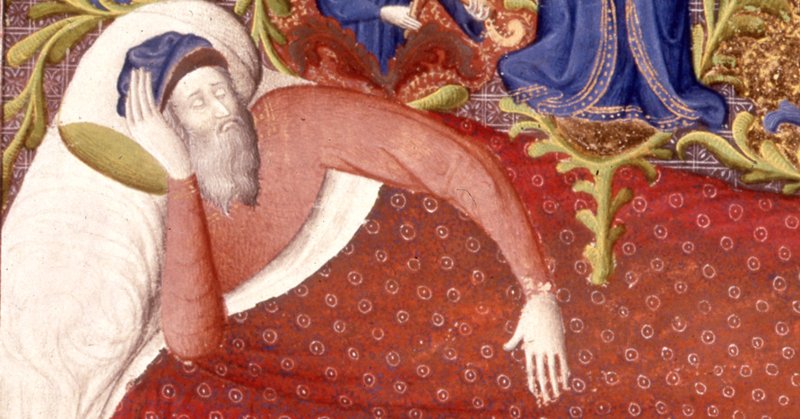
26. In the middle ages, it was an accepted political act for two kings to sleep in the same bed as a symbol of unity between their two countries, much like the modern-day photo-op.
27. There was a form of medieval torture, where the victim’s feet were covered in saltwater and then a goat would start licking them. Sometimes the laughter and stress from the intense tickling resulted in a heart attack or a brain hemorrhage.
28. In medieval games of chess, pawns that had been promoted to queen would be given the title of an “advisor,” so as to not imply that the king had more than one queen or was unfaithful.
29. In the Middle Ages, a psychiatric disorder existed among the upper class causing people to fear that they were made of glass “and therefore likely to shatter into pieces.” One famous sufferer was King Charles VI of France, who wore reinforced clothing to protect himself from “shattering.”
30. Medlar was a fruit that was once popular in ancient and medieval times but was nearly forgotten in the 20th Century.
31. During the Middle Ages, small triangular-shaped stones, thought to be the tongues of snakes turned to stone by Saint Paul, were highly sought after as cures for poison and plagues. Centuries later, the “tongue stones” were identified as fossilized shark teeth.
32. “Flyting” was medieval England’s version of a rap battle, in which participants exchanged witty and insulting verses.
33. In the middle ages, some people used to “clip” coins because coins in Medieval Europe were based on gold or silver. The aim of clipping was to shave slivers of this material from the coin’s edge. Repeated enough times, this would produce enough for a new coin. If caught, the punishment was death.
34. In medieval times, there was a real fear that some people would kill holy men and women to sell off their body parts as relics. Guards even had had to watch over mortally ill holy men and women to prevent their body parts being sold soon as they died.
35. During the middle ages, saffron was so expensive some traders would try to increase their profits by bulking up the herb with yellow marigold petals. When authorities in Nuremberg, where the herb was mainly traded, found out about these tainted parcels of saffron, the traders were burned alive.
Floors Into Cesspits
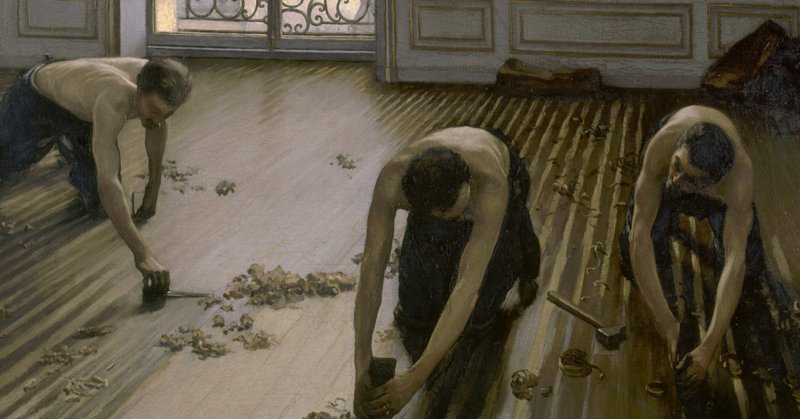
36. Historical accounts from the Middle Ages tell of people falling through their floors and drowning in the cesspools of feces stored beneath the floorboards.
37. When the medieval scholar Rhazes had to choose where a new hospital in Baghdad should be located, he hung meat at locations around the city and selected the place where it decayed the most slowly.
38. Women in the middle ages completely removed their eyelashes and eyebrows to emphasize their foreheads, which were considered their most important feature at that time. The Catholic church even made it a sin and an offense to God to show hair of any kind in public.
39. Whipping boys were used in the English court in the middle ages. Since the King’s aides were not allowed to punish the prince, they would assign the prince a regular friend and then punish him instead if the prince misbehaved.
40. Many medieval manuscript illustrations depict armored knights fighting giant snails. No one knows what these images mean.
41. Physicians in the middle ages would drink their patient’s urine to diagnose medical conditions. They could accurately diagnose diabetes because the urine tasted sweet.
42. In Medieval times, “quintessence” was called the fifth element, the most powerful element that binds the four other elements of nature, earth, air, fire, and water. In Greek, it is regarded as the place where the Gods dwelt and was associated with the sky and the heavenly bodies.
43. The plagues of the Middle Ages have made around 10% of Europeans resistant to HIV. These people carry a genetic mutation, known as CCR5-Ä32, that stops the virus from entering the cells of the immune system. The plagues of the Middle Ages helped create these mutations.
44. The average male medieval peasant ate between 160% to 200% more calories than the average male now.
45. The origins of driving on the left side go back to Medieval England, where Knights rode their horses on the left side of the road so that if they encountered an enemy their sword hand would be on the correct side. Nearly all countries that drive on the left now were once English colonies.
Cats in the Convent
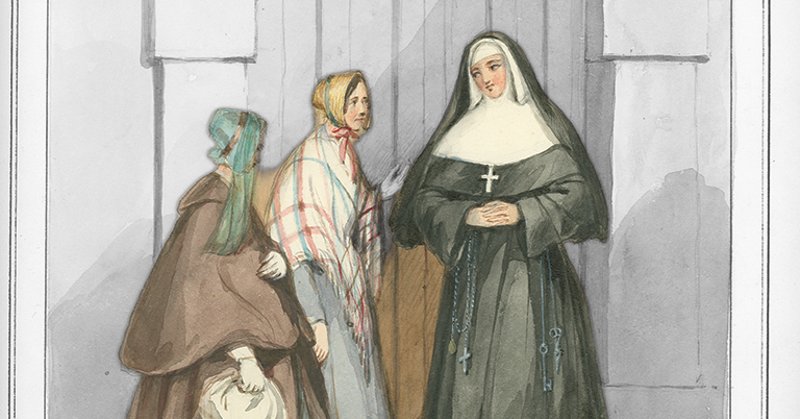
46. A convent of nuns in the Middle Ages started meowing like cats, and the others joined in until they were all meowing together at a certain time for several hours together. This went on until the nearby village summoned soldiers to make the nuns stop meowing.
47. The “ill Week” was a late medieval kind of “The Purge.” When queen Elizabeth I died, people widely believed that the laws of a kingdom were suspended between the death of a sovereign and the proclamation of the successor. This incident was limited to the notoriously lawless Anglo-Scottish border region. Lowland Scots and North English horse riding clansmen and river pirates known as ‘reivers’ had little regard for the rules in normal times, but with the excuse of the dead queen they used the popular myth to cross borders en masse to settle rivalries, or simply in search for profit.
48. During the Middle Ages, wild wolves lived in forests near Paris. In the severe winter of 1450, a hungry pack of wolves got into the city and ate 40 people.
49. During the Middle Ages, members of guilds were called “masters.” Artisans who wanted to enter a guild had to create a “master piece” to be judged for qualification. If the masters approved of the piece, that artisan was accepted into the guild.
50. Medieval blue dye was produced by soaking the leaves of the woad plant in human urine. Urine from men who had been drinking a great deal of alcohol was said to improve the color.




Add Comment