

Life in the Middle Ages was shaped by unusual customs, strict social rules, strange medical ideas, everyday hardships, and traditions that can seem surprisingly unfamiliar today. These 60 facts reveal more of the curious details behind medieval life.
Arthurian Banquet Traditions
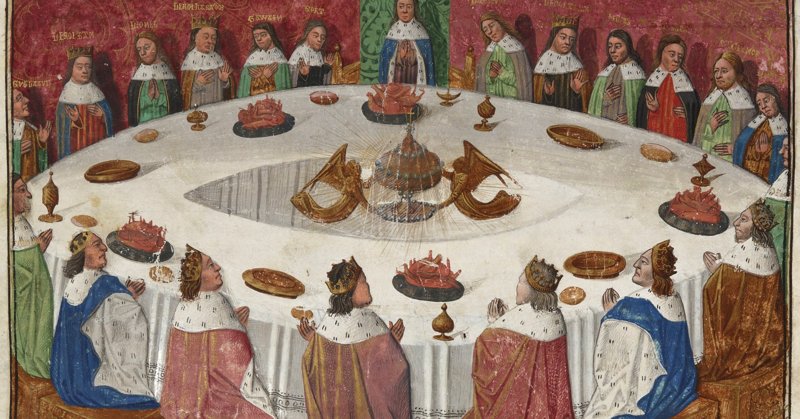
1. During the Middle Ages, many aristocrats staged Round Table festivals inspired by the legend of King Arthur. People wore costumes modeled on well-known knights from the story and acted out their roles as the characters. For one Round Table in 1446, an entire castle was constructed to host the festival in.
2. Across medieval Europe, the price of bread was often controlled. Because bread was vital to medieval people’s lives, these laws shielded ordinary people from dishonest bakers.
3. In the Middle Ages, European dishes were far richer, with intricate flavors and spices. That changed only after those spices became available to the lower class, and the upper class decided that those spices and dishes were no longer “fashionable.”
4. Almost all Middle Age scholars thought that the Earth is spherical. The idea that people in the Middle Ages believed the earth is flat seems to have originated in the 17th century as part of Protestant efforts against Catholic teaching.
5. The stereotype that “Jews are money-hungry” can be traced to the Middle Ages, when Jews were permitted to lend money with interest, while Christians were not because it went against their religion.
6. In Russia during the middle ages, a community custom involved gathering to construct an entire church in one day in order to ward off plagues and epidemics.
7. In medieval times, clothes were kept close to the toilet shaft (Garderobe), because the ammonia fumes would kill any fleas.
8. During the Middle Ages, there was an Order of Temperance whose members promised to drink no more than 7 glasses of wine with each meal.
9. Lice were so common in the middle ages that delousing turned into a social activity. People would sit together and chat or gossip while removing each other’s lice.
10. In medieval castles, stairwells curved clockwise, so attackers climbing the stairs had their sword hands (right hand) against the wall’s interior curve, which made it difficult for them to swing their swords. Defenders kept their swords on the outside wall, which gave them more room to swing.
Court Jesters of Flatulence
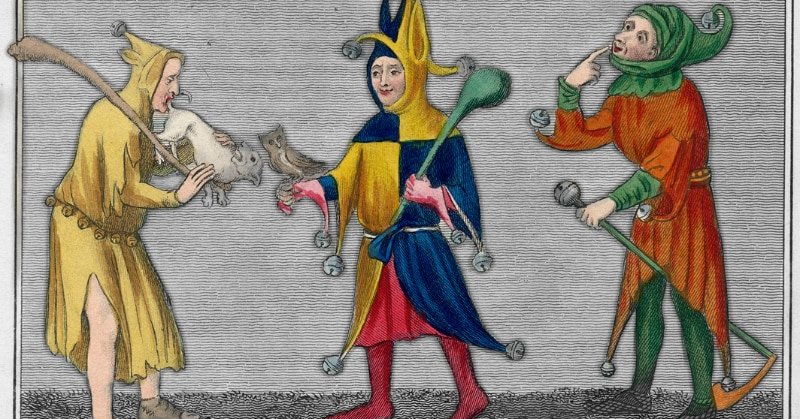
11. Medieval royal courts employed professional farters who were given houses and land as rewards. The best known was the 12th Century Roland the Farter. Another professional farter named Pujol was able to shoot water up to 5 feet.
12. In the Middle Ages, Catholic women were forbidden to have sex on Sundays, Wednesdays, or Fridays, on feast days, while fasting for Lent or Advent, or while “impure” (menstruation, pregnancy, 40 days after giving birth and while nursing). Everything except the missionary position was regarded as sodomy.
13. In medieval Germany, married couples could legally resolve their disputes by taking part in a Marital Duel. To level the field, the man had to fight from inside a hole with one arm tied behind his back. The woman was allowed to move freely and was armed with a sack filled with rocks.
14. Christman Genipperteinga was the most prolific serial killer in medieval Europe, and possibly ever. He was executed by having all of his limbs broken and threaded through the spokes of a wheel. He was kept alive and conscious on the wheel for 9 days by a daily dose of a “strong drink.”
15. In the medieval ages, book owners would chain their books to the shelves and curse them in order to prevent theft.
16. In medieval times, it was common on the battlefield to spare warriors who wore especially strong armor from being killed. Instead, such warriors were taken captive, and a ransom was demanded because only ‘well off’ warriors wore such good armor.
17. In medieval times, all fruit and vegetables were cooked because it was believed that raw fruit and vegetables caused disease. One book from 1500 even warns: “Beware of green salads and raw fruits, for they will make your master sick.”
18. In medieval times women’s hairstyles showed whether they were single or married. Married women kept their long hair tied up in braids beneath some kind of head covering. Single women let their hair fall freely over their bodies, signaling that they were available for marriage.
19. In medieval England, pregnancy was considered impossible without orgasm. Therefore, if a woman was raped and didn’t conceive, there was no evidence, but if she did conceive, it was assumed she enjoyed it. Either way, the rapist would not be convicted.
20. Middle Age courts sometimes called on a “fool”, or court jester, to criticize masters/mistresses. In a court composed largely of yesmen, the fool was the only one who could criticize without fear of reprisals.
Cathar Beliefs In Europe
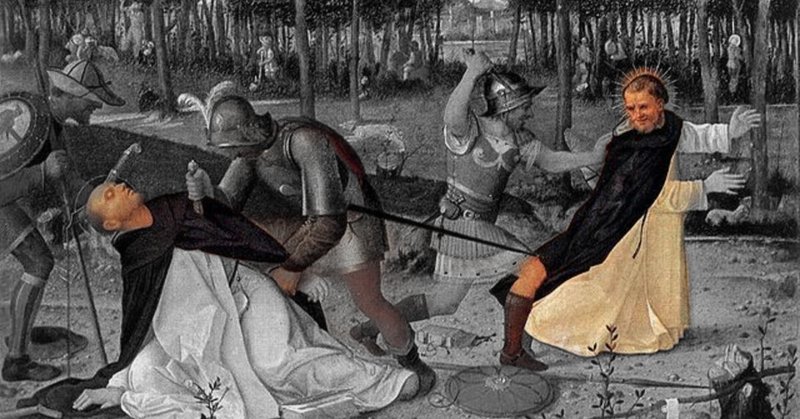
21. In medieval Europe, there was a religion called Cathar. It was a branch of Christianity, and it held women and men to be equal, while homosexuality was tolerated by them.
22. In Medieval Europe, it was widely believed that a magnet would lose its strength when near, among other things, garlic, goats’ blood and diamonds. This was disproved by surrounding a lodestone with 75 diamonds, then picking it up with a lump of iron.
23. During the Middle Ages, onions were so important as food that people would pay their rent with onions, and even give them as gifts.
24. Medieval mapmakers are said to have written the phrase “Here Be Dragons” on maps of unknown parts of the world. Unfortunately, however, it seems that, apart from an inscription on a single, 16th-century globe, this claim is unfounded.
25. Many people in the Middle Ages blamed toothaches on a mysterious “tooth worm”, a small, maggot-like creature that bored holes in their teeth and caused all kinds of dental disorders. Some doctors at the time believed that people’s nerves were the worms themselves, and thus removed them.






Add Comment