

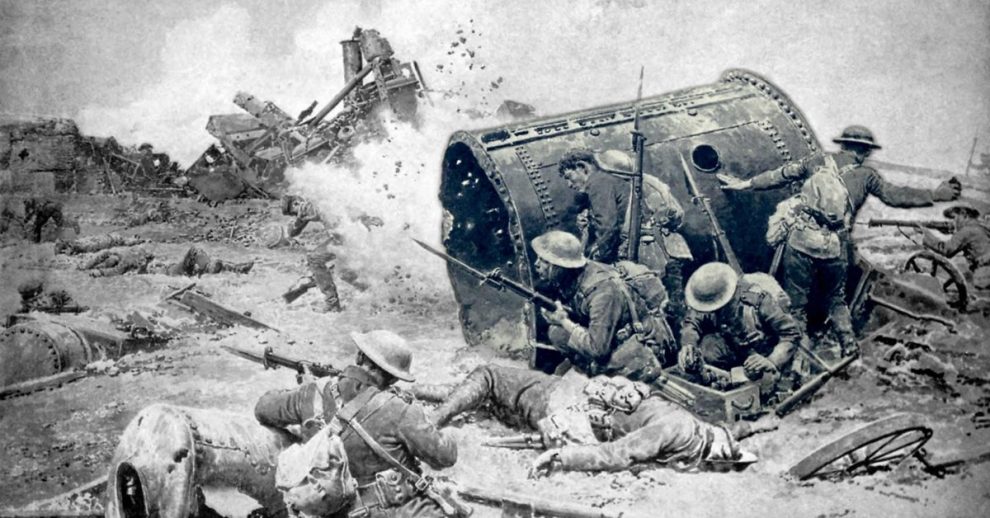
World War I produced countless stories of courage, strange battlefield innovations, harsh military realities, and moments that seem almost unbelievable today. These 40 facts explore more of the people, decisions, and unexpected details that shaped the conflict.
Lower Height, New Battalions
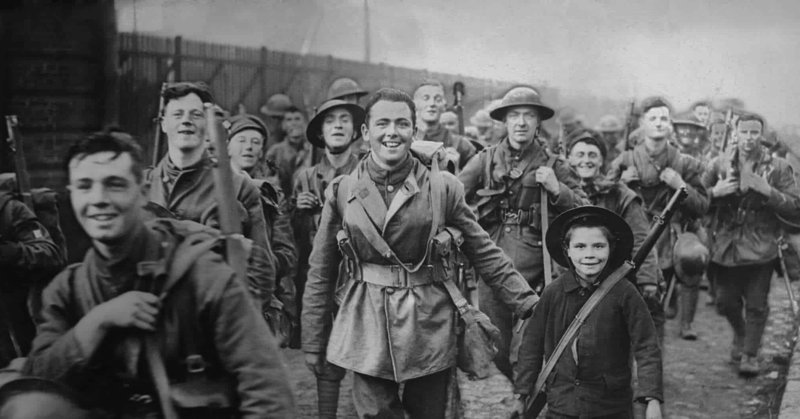
1. During World War 1, after protests, the British army reduced the minimum height requirement from 5 feet 3 inches to 5 feet and formed ‘Bantam Battalions’- units of small people.
2. During World War 1, London was shielded by huge lengths of steel cables hung from observation balloons to defend against air raids. These “balloon aprons” made pilots fly above their reach or too low to escape AA fire.
3. During World War 1, German Saboteurs detonated bombs on Black Tom island in New York harbor. The blast could be felt as far away as Philadelphia and caused over $100,000 in damage to the statue of liberty and is the reason its right arm is still closed to tourists today.
4. During World War 1, the 369th Infantry Regiment spent 191 days under fire, never lost a man through capture, lost a trench or a foot of ground to the enemy, but was not allowed to march in the victory parade.
5. Many World War 1 battlefields remain so polluted with unexploded ordnance and chemicals that human development is not allowed and won’t be for at least another 300 – 500 years.
6. During World War 1, French commander Joseph Joffre had professional car racer Georges Boillot drive him through the conflict zone at blazing speeds.
7. During World War 1, the British executed soldiers afflicted with Shell Shock (Combat Stress Disorder) for cowardice because Shell Shock was not regarded as a psychiatric disorder.
8. During World War 1, soldiers were not given helmets until the summer of 1915, after nearly a million and a half had been killed or wounded. Before then, they wore headgear made of felt, cloth or leather.
9. John Monash was an Australian World War 1 general who was so skilled at organizing battles and looking after the wellbeing of his troops that during the Battle of Hamel in 1918, he arranged for hot meals to be delivered to troops, even as far as the front line.
10. During World War 1, French prostitutes with severe cases of syphilis charged more than uninfected prostitutes, because soldiers infected with syphilis were taken off the front line.
Mustaches Required, Then Reversed
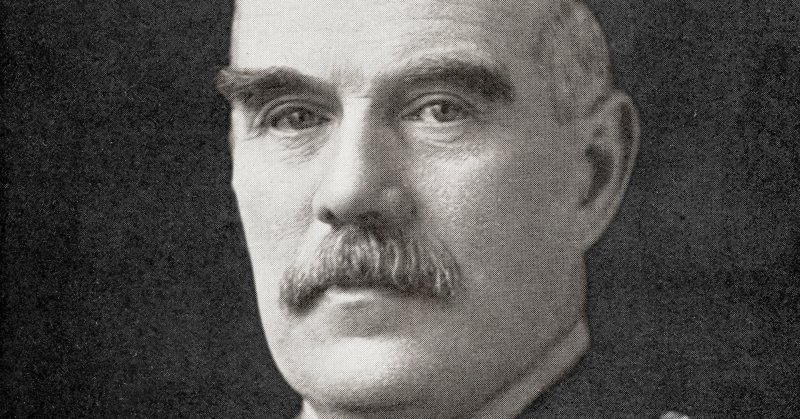
11. When World War 1 started, every British officer had to wear a mustache. That rule was later canceled in October 1916, because the new recruits were so young that some could not manage more than a thin, mousey streak.
12. So many men died in World War 1 that serious suggestions were made to restore polygamy. A German expert estimated that Europe had 10 million more women than men, and said that unless farmers and others were permitted two wives, “30-40% of German women will remain spinsters.”
13. In World War 1, before the traction splint was introduced, femur fractures had an 80% mortality rate. Once the splint was introduced, the rate fell to around 8%.
14. Italy’s World War 1 special forces were among the finest in the world. They were known as Arditi, meaning “Daring Ones.” They focused on mountain warfare and used knives, flamethrowers, grenades, and machine pistols in battle.
15. In World War 1, trench guns were issued to US soldiers who were skilled at trapshooting so they could shoot incoming grenades out of the air.
16. During World War 1, ‘f*cking’ and ‘bloody’ were used as palliatives, so the command to ‘get your f*cking rifles’ was understood as far less urgent than the command to ‘get your rifles.’
17. A goat named Sergeant Bill became a Canadian war hero during World War 1 after he head-butted three soldiers into a trench to escape an exploding shell.
18. A British soldier called Patrick Fowler spent most of World War 1 concealed in a wardrobe. A French family in German-occupied France had taken him in, but 16 German soldiers were later billeted at the house, spending their time in the same room as the wardrobe. Each day he stayed silent and motionless to avoid being discovered.
19. During World War 1, cotton was needed in large quantities to make uniforms and explosives. For bandages, doctors turned to sphagnum moss, which can hold up to 22 times its own weight in liquid, twice as absorptive as cotton. The moss is also antiseptic, which makes the surrounding environment acidic.
20. In World War 1, darts were dropped from aircraft to attack infantry.
Rivets Became Deadly Shrapnel
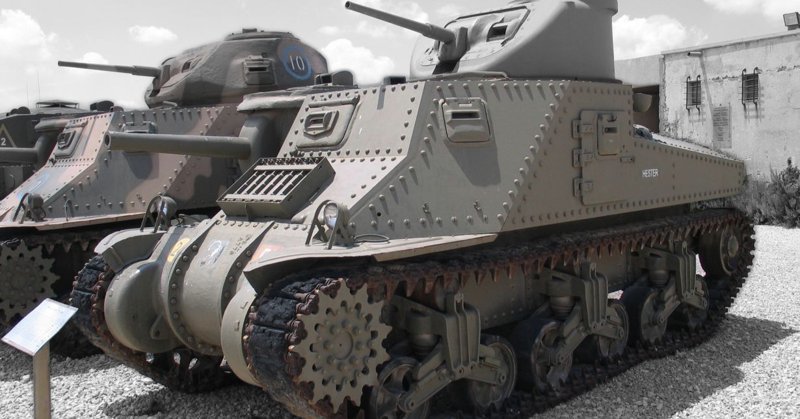
21. The earliest tanks in World War I were fastened with rivets until it was learned that explosions would cause the rivets to become shrapnel, wounding soldiers inside the tank even when the blast did not break through the armor.
22. In World War 1, glow worms were collected and placed in lamps to illuminate the trenches. Also, because of their extreme ability to sense particles in the air, slugs were used to identify gas attacks. If the slugs shut their breathing spires and shrank, troops would know to put on their gas masks.
23. During World War 1, every Army recruit took intelligence tests, which became the largest mass testing ever attempted. By the war’s end, close to 2 million soldiers had been tested. Because of the results, roughly half of the recruits were classified at or below the level of “moron.”
24. Near the end of World War 1, the small fortified French town of Le Quesnoy was freed from the Germans after 4 years of occupation by New Zealand soldiers in a sneak attack, with zero civilian casualties. Multiple memorials and many of the town’s streets are named in New Zealand’s honor.
25. During World War 1, the Ottoman government murdered over 1,500,000 Armenians living in their empire. The event coined the word “Genocide”. The Armenian Genocide is the second most-studied case of genocide after the Holocaust.



Add Comment