

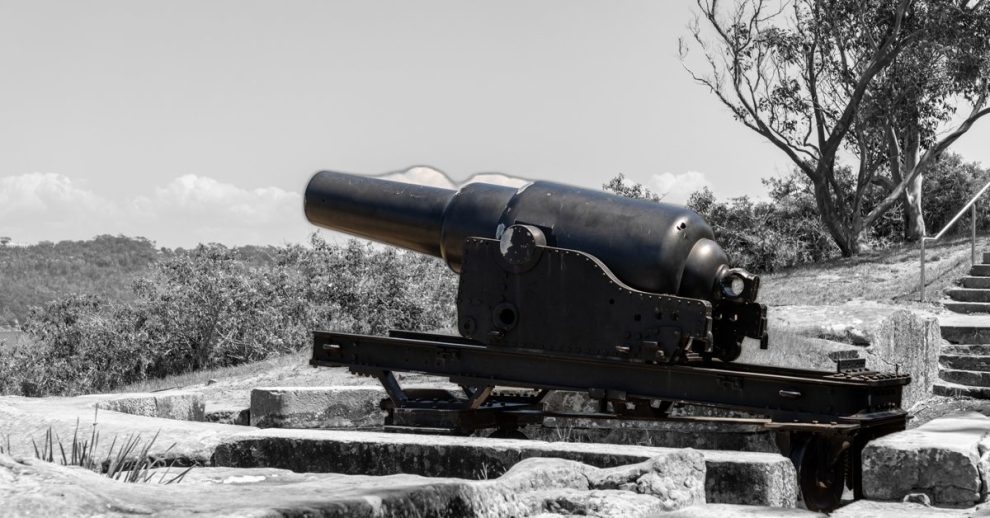
Ancient and medieval warfare produced far more than swords and shields. These 40 facts explore ingenious weapons, unusual armor, brutal battlefield tactics, and massive siege machines designed to give armies an edge.
Hot Shot Fire Cannonballs
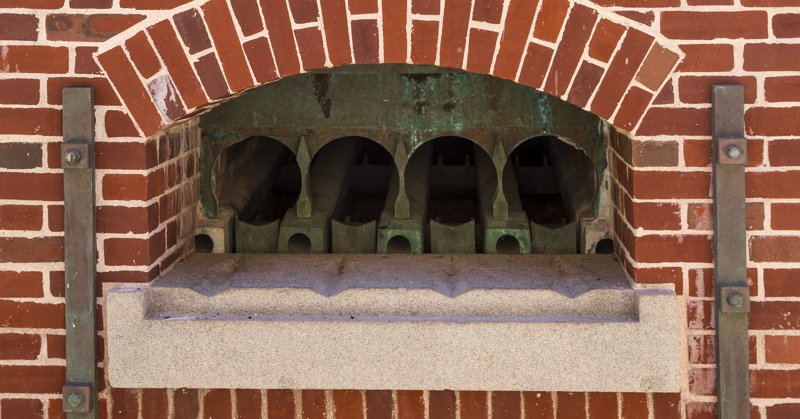
1. A “Hot Shot” was first a cannonball heated in a furnace and then launched at wooden ships so they would catch fire.
2. In the late 1700s, an Indian king created rocket artillery that fired swords in order to battle the British.
3. Persian soldiers assaulting a Roman-occupied city may have been the first to use weaponized chemicals in battle. The Romans faced a wall of poisonous black smoke that turned into acid in their lungs.
4. Ancient Egyptian cat goddess Mafdet was said to rip the hearts out of criminals before setting them at the pharaoh’s feet, the same way cats today bring their owners mice or birds they have hunted. “Mafdet’s Claw” was an Ancient Egyptian execution weapon named for her.
5. In 1974, a Norwegian student went to the Lendbreen ice patch in search of historical artifacts. He found a spear from the Viking age. More than 1000 years old, it had been kept in the ice and is still one of the best examples of these weapons know to date.
6. Archimedes created an anti-ship weapon known as the Claw of Archimedes. It raised a ship by the prow and then dropped it, often making the vessel capsize or at least severely damaging it.
7. The Pilum, or the Roman javelin, was made with a soft shank that bent after impact. This had two purposes: it stopped enemies from reusing it, and enemies with pilum stuck in their shields had to throw away the shield or spend time taking the pilum out.
8. The Aztecs used obsidian swords called macuahuitl, which could decapitate horses with just one swing.
9. The first gunpowder weapon was actually a melee spear with a one-shot flamethrower attached, called a fire lance. It was used by the Chinese around 1000 A.D.
10. The Samurais wore a cloak, Horo, that inflated when the wearer rode a horse, which protected him from incoming arrows from behind.
Chain Ball History
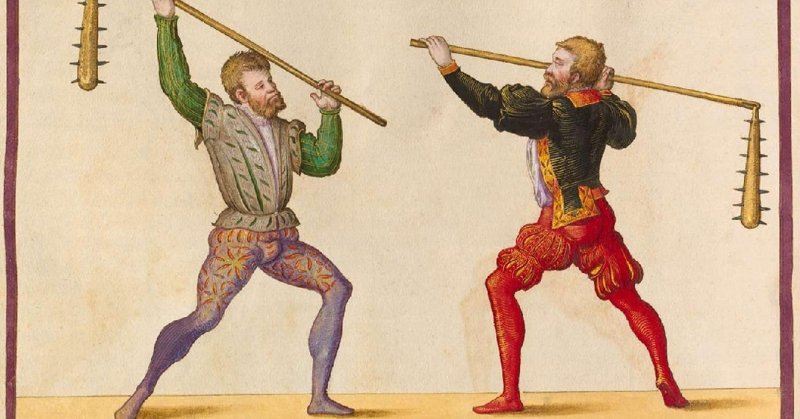
11. A spiked ball attached to the end of a chain is a “ball and chain flail”, not a morning star, which has spikes but no chain. Even though fiction made them popular, there is little historical evidence that ball-and-chain flails were ever used widely.
12. The Sword of Goujian is a completely untarnished sword from 2000 years ago that was discovered in an ancient Chinese tomb. It also shows unusual sharpness for its age. This comes from its unique copper composition and the air-tight scabbard it was found in, which kept it sealed from the elements.
13. During the Second Punic War (218 – 202 BC), Greek scientist Archimedes is said to have driven off the attacking Roman ships by igniting them with a “burning glass.” It may have only been an arrangement of mirrors.
14. In the Viking period, Ulfberht swords were made from crucible, very pure steel all the way from India. The exceptional quality of this steel made them so valuable that forgers copied the name Ulfberht onto lower-quality swords, the equivalent of present day fake designer logo.
15. The Urumi is a flexible whip sword that is no longer used in battle. It is still practiced in India as an extremely dangerous martial art weapon.
16. Ancient Greek slingers used to inscribe “ΔΕΞΑΙ” (Dexai), meaning “take that” or “catch,” on their lead sling bullets. So soldiers writing sarcastic taunts on their weapons is nothing new.
17. There is an ancient arrow throwing weapon called the atlatl that can launch an arrow up to around 100 mph.
18. Tsujigiri or “crossroad killing” was a Samurai practice in which they tested the sharpness of their new katana by attacking a random passerby.
19. Hellburners were 16th-century fire-ships whose decks were packed with gunpowder sandwiched between bricks and tombstones. They are considered to be an early form of weapons of mass destruction.
20. A weapon of war called a Scythed Chariot consisted of spinning blades powered by horses, and its purpose was to saw the legs off of the enemy soldiers.
Honey Used Against Romans
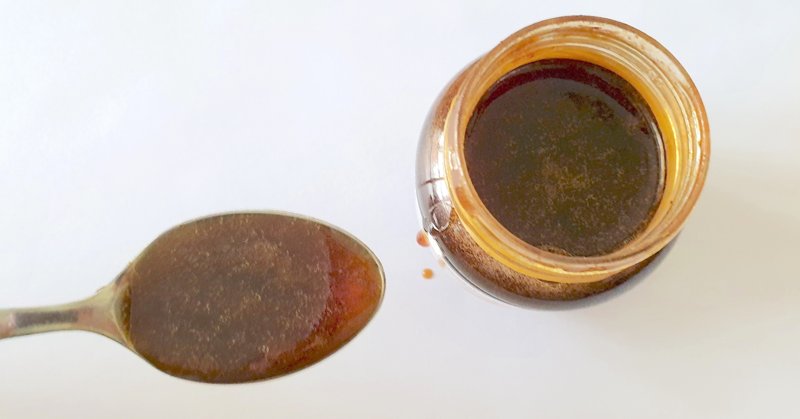
21. In the 1st century B.C., the Heptacomitae used “crazing honey” as a weapon against the Romans. The Romans ate the honey and experienced mental derangement, which let the Heptacomitae easily overrun them.
22. During medieval times, corpses of sick people were employed as catapult ammunition as a form of biological weapon.
23. In the Age of Discovery, Portuguese soldiers used black swords so they would not reflect light and reveal their presence on ships, and to avoid rusting when used near salt water.
24. Alexander the Great’s army conquered the world while wearing armor made of linen that could stop any arrow made at the time.
25. There was an ancient Korean weapon named Hwacha that fired 200 arrows in one explosion.






Add Comment