

Coups and political overthrows have reshaped governments in ways that were sometimes violent, sometimes bizarre, and often deeply consequential. These 50 stories explore the plots, rebellions, power struggles, and unexpected moments behind regime change across history.
Thailand’s Wartime Expansion
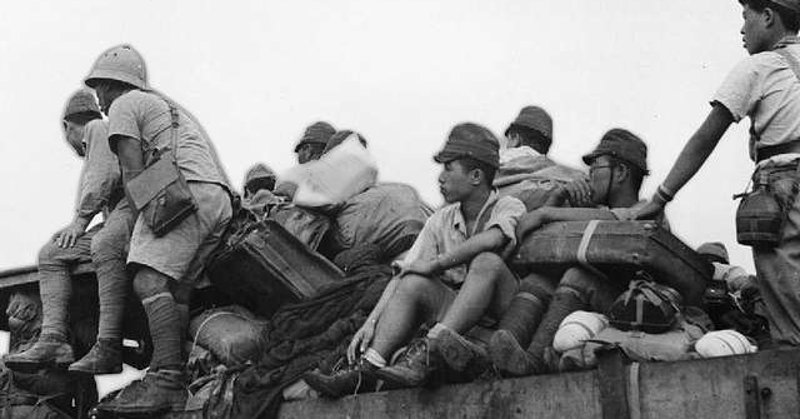
1. While Thailand was part of the Axis, it invaded and held land in Burma, Laos, Malaysia, and Cambodia until a resistance movement removed the Thai government in 1944.
2. In 2012, the dead body of Malawi’s President (Bingu wa Mutharika) was flown to South Africa “for medical treatment” for a fatal heart attack. This was a failed attempt to hide his death and arrange a coup while stopping the Vice President from taking office.
3. Turkey became an official ally of the U.S. after the CIA supported a right-wing coup there in 1980.
4. In 1981, a group of white African mercenaries attempted a coup d’état in Seychelles by posing as a rugby and beer social club that donated toys to orphans. The toys did not hide the AK47s in their luggage well enough, and the plot failed completely.
5. In 1987, Thomas Sankara, then president of Burkina Faso, was killed in a coup led by Blaise Compaoré. Ten years before that, they had been in a band together called ‘Tout-à-Coup Jazz.’
6. The CIA initially backed and financed the July 26th movement, Fidel Castro’s rebel group that toppled the Cuban dictatorship.
7. In 1972, military pilots carried out a failed coup against King Hassan II of Morocco. They attacked his Boeing 727 jetliner with four Northrop F-5 jets. After damaging the fuselage, the king himself took the radio and shouted “Stop firing! The tyrant is dead!,” which tricked the rebel pilots into ending their assault.
8. In 1893, Hawaii’s monarchy was overthrown after a group of businessmen and sugar planters forced Queen Liliuokalani to abdicate. The coup resulted in the Kingdom of Hawaii being dissolved two years later, its annexation as a U.S. territory, and its eventual admission as the 50th state in the union.
9. Japan had no plan to surrender after the nukes were dropped until emperor Hirohito intervened. This angered some generals enough that they tried to launch a coup to remove the emperor and keep the war going.
10. The CIA carried out a coup in Syria in 1949 so it could freely build an oil pipeline. That overthrow triggered decades of counter-coups, and the CIA also tried on multiple occasions to engineer coups throughout the 1960s until the Assad family came to power in 1970.
Corn Harvest Foils Coup
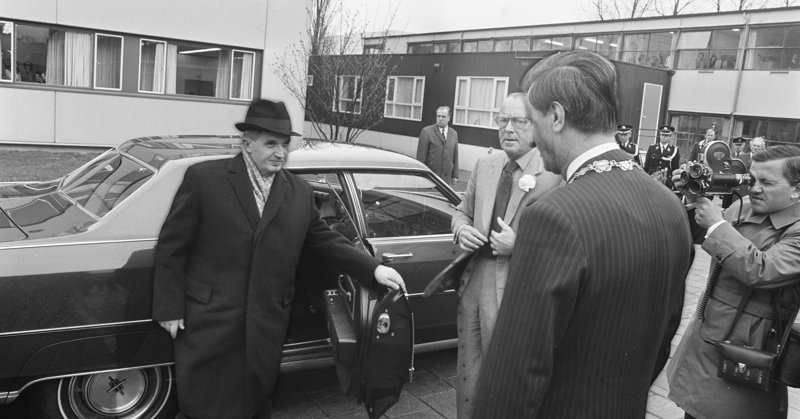
11. In 1984, a coup against Romanian dictator Nicolae Ceausescu failed after the military unit assigned to carry it out was sent to harvest corn instead.
12. Yukio Mishima was a world-renowned Japanese writer and artist who recruited over 100 students to build his own private army, Tatenokai. Later, in 1970, he carried out seppuku, ritual suicide by disembowelment, in public after his failed coup attempt in an effort to restore imperial rule in Japan.
13. The University of Paris lasted for 820 years from 1150 A.D. to 1970, when it was broken up because it was the main source of student revolutionaries who nearly overthrew the French government in May 1968.
14. British Prime Minister Harold Wilson was so disliked by senior members of the army and MI5 that there were allegedly discussions about a military coup against the government in 1974.
15. The “30 September Movement” in Indonesia was an attempted coup by the Indonesian National Forces in 1965 in which a wing of the army killed 7 generals and tried to seize the capital. The motive is not confirmed, but evidence implicates the CIA and a double-crossing general.
16. A revolt by textile workers in 14th century Florence caused the son of a washerwoman to become president after he entered the palace barefoot and overthrew the oligarchic government. For 4 years, the republic was governed almost entirely by middle-class artisans and shopkeepers.
17. Sam Zemurray founded a highly profitable banana company by purchasing cheap leftover bananas from Honduras. When tax-free deals were threatened by collectors in the US, he planned and carried out a successful coup of the Honduran government and saved his company.
18. The only attempted coup by a radical Islamist group in the western hemisphere took place in the Republic of Trinidad and Tobago in 1990. During the attempted coup d’état, Trinidad and Tobago’s Prime Minister A. N. R. Robinson was held hostage for days. When told to order the army to stop firing where they were held hostage, Robinson instead told them to “attack with full force,” which got him a beating. He was also shot in his leg.
19. Brazil remained a monarchy until Crown Princess Isabel signed a law freeing all slaves in Brazil in 1888. This action was so unpopular with the rich plantation owners that the imperial family was removed in a military coup.
20. A group of German soldiers planned a coup against the Nazi regime in 1938, but the French and the British told them to ‘forget about it because they approved of the present situation in Germany and hoped to make an alliance with it against Communism.
Sanjurjo Dies In Coup
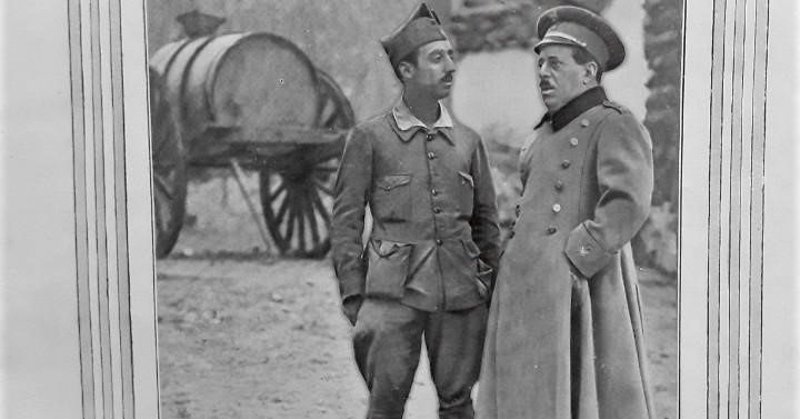
21. José Sanjurjo, a senior leader of the 1936 coup that started the Spanish Civil War, died at the start of the coup because his plane crashed, after being dangerously overloaded with his luggage. When warned of the danger he said, “I need to wear proper clothes as the new leader of Spain.”
22. In 1933, America’s most senior, most decorated Marine, General Smedley Butler, told the House of Representatives that wealthy businessmen tried to recruit him to overthrow President Franklin D. Roosevelt in a coup and install a fascist government.
23. In 1975, the Indian intelligence agency warned the Bangladeshi president (Sheikh Mujibur Rahman) about a possible coup. He ignored their advice by saying “These are my own children and they will not harm me.” Seven months later he was assassinated by some military officers. The coup was plotted by his closest political associates.
24. Laos once had two coups independently occur on the same day, January 31st, 1965. Two separate and simultaneous coups struck the Kingdom of Laos.
25. In 1951, Guatemalan president Jacobo Árbenz carried out an agrarian reform under which uncultivated portions of large land-holdings were expropriated in return for compensation and redistributed to poverty-stricken agricultural laborers. The US disliked this and the CIA engineered a coup d’etat in 1954 for the benefit of an American fruit company.




Add Comment