

Coprolite’s True Origin
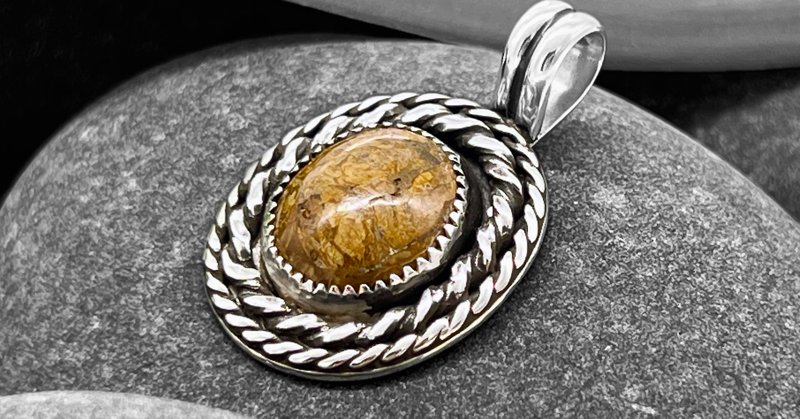
26. Coprolite, a fossil commonly used in jewelry, is actually fossilized dinosaur feces.
27. Crinoid fossils are prehistoric remains of marine animals that appeared in the seas about 300 million years before dinosaurs. These fossils have also been found on the peak of Mount Everest, thus showing that over millions of years, because of tectonic movement, the sea bed has ultimately been pushed up to the highest peaks on earth.
28. A very rare and special gemstone can only be found and formed in fossils of extinct species of cephalopods over the process of hundreds of millions of years. The most expensive opal in the world is one of these, an opalized fossil valued at over $1,000,000.
29. Dreadnoughtus is one of the largest dinosaurs that ever existed. Its only fossil that has been found was from an individual who was 85 feet/26 meters long, but the specimen was not even a full-grown adult and it might have grown even larger had it not died.
30. In 1940s, a Californian night school teacher uncovered fossils in a local quarry and formed a group of students whom he taught how to uncover them. One of their discoveries included an Antelope with four antlers.
31. Australia’s oldest dingo fossils are around 4,000 years old, so the ancestors of dingoes must have arrived in Australia by boat. Whole-genome studies consistently place dingoes between wolves and wolflike dog breeds.
32. In 2017, hundreds of fossilized Pterosaur eggs were found in the Gobi desert. The eggs belong to a previously known species of pterosaur that lived in China more than 100 million years ago. One such fossil suggests a wingspan of 36 feet, making it one of the largest animals ever to fly.
33. The “first recorded murder victim” came from a 430,000 year old hominin fossil record. This is the earliest clear case of deliberate, lethal interpersonal aggression, showing that this is an ancient human behavior.
34. Fossil remains of a dinosaur named borealopelta were dubbed “Dinosaur Mummy” because it was discovered with its protective armor, skin, and partial stomach still intact. It has been preserved so well that scientists considered it closer to a mummy than a fossil.
35. The largest known fossil spider is only about half the size of its modern relatives. This means that the biggest spiders alive today might be the biggest spiders that have ever existed.
Tiny Fossil Fraction
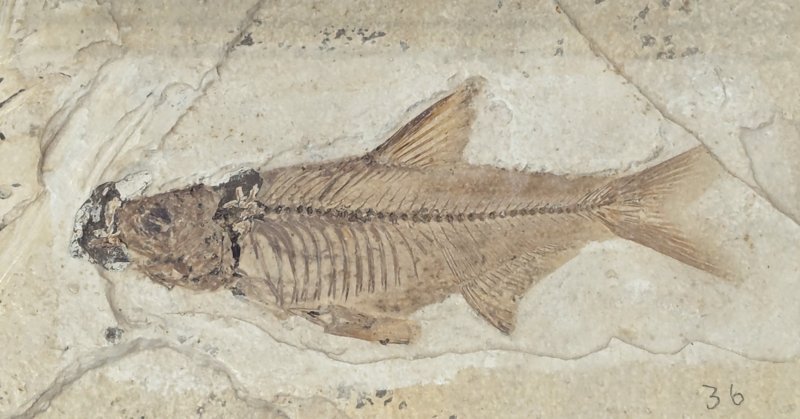
36. Across all species that have ever existed in Earth’s entire history, only a tiny fraction have become fossils. Humans have discovered even fewer. Most of life’s history will remain forever unknown.
37. No one knows why so many bird and dinosaur fossils show a “death pose,” the distinctive posture with the head thrown back, tail stretched out, and mouth wide open.
38. In 2008, we recovered fossilized ink sacs from preserved remains of Belemnotheutis cephalopods. After mixing them with ammonia solution, the team was able to restore the ink to liquid form and used the approximately 150 million-year-old ink to draw a replica of the original illustration of Belemnotheutis.
39. In 1972, archaeologists in York, England, uncovered the largest piece of fossilized human feces ever found. The dung was 7 inches long and 2 inches wide and came from a Viking in the 9th century whose diet included meat and bread and who was riddled with intestinal worms.
40. In June 2013, a fossil analysis uncovered a large lizard in Myanmar. The extinct reptile was named Barbaturex morrisoni in honor of Rock Legend Jim Morrison. “This is a king lizard, and he was the lizard king, so it just fit,” said Jason Head, a paleontologist at the University of Nebraska-Lincoln.
41. The Griffin myth likely started after fossils of Protoceratops skulls were discovered in gold mines near ancient Greece.
42. In 2007, a paleontologist discovered the fossilized embryo of Hyphalosaurus, a small aquatic reptile. The embryo had two heads, which made it the earliest known case of bicephaly.
43. Formations known as “the Devil’s Corkscrew” were first discovered around Harrison, Nebraska, in 1891, and were once believed to be extinct sea sponge forms, but it turns out they are actually fossilized dens of an extinct type of beaver called Palaeocastor.
44. In the middle ages, toadstones were thought to be magical gems found in the heads of toads. The small ‘stones’ are actually the rounded fossilized teeth of an extinct fish.
45. In 2014, scientists found what appears to be a fossilized sperm cell from an ancient marine species which lived between 23 million and 16 million years ago. This is the oldest and biggest fossil of sperm ever found, at least of its kind.
South African Giant Hominins
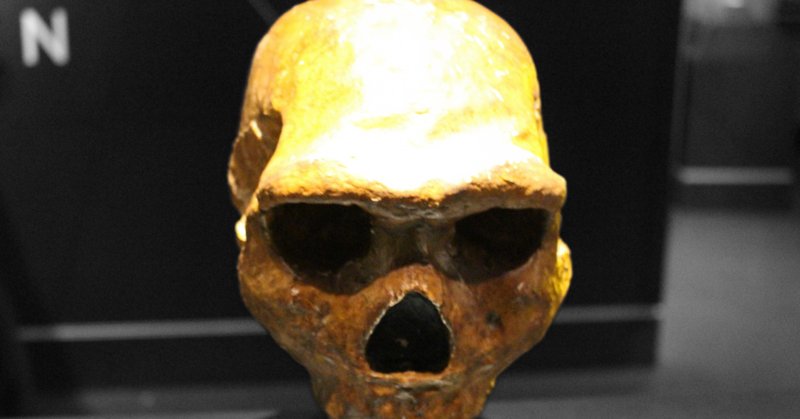
46. Numerous fossil bones show that some populations of Homo heidelbergensis were “giants” who regularly stood over 2.13 meters (7 feet) tall and lived in South Africa between 500,000 and 300,000 years ago.
47. The Cerrejon Coal mine in Northern Columbia yields over 30 million tons of coal each year, but it also has an unusual tie to paleontologists because it digs holes over 300 feet deep, which has enabled them to uncover thousands of fossils and the largest snake on record.
48. Shanidar 1 is a Neanderthal fossil discovered in 1957. Examination of his remains showed that although he had developed several severe disabilities while he was alive, he lived to be 35-45 years old because his social group fed and cared for him.
49. A 41 million-year-old piece of fossilized amber was discovered containing two long-legged flies that were trapped while mating and are still perfectly preserved.
50. In Mongolia, scientists found a fossil of a prehistoric creature called a “Murder Swan,” which had a bill with teeth, claws on its feet, and extra claws on flipper-like arms.







Add Comment