

The 1700s were an age of revolutions, scientific breakthroughs, strange fashions, remarkable personalities, and unforgettable historical moments. These 50 facts reveal just how unpredictable and fascinating the eighteenth century really was.
Snow Buries New England
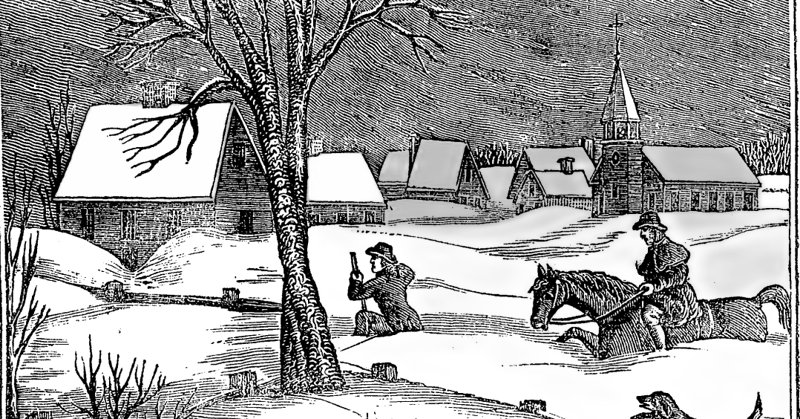
1. On February 27, 1717, a chain of huge snowstorms started in New England. One week later, 95% of the deer population had died, and many one-story houses were entirely covered.
2. The first student protest in the United States took place at Harvard in 1766, when a student shouted, “Behold, our butter stinketh!— give us, therefore, butter that stinketh not.” This set off The Great Butter Rebellion.
3. One of the 13 articles in the 1781 US Articles of Confederation says that if Canada asks to join the United States, it will be admitted automatically.
4. In 1781, a British slave ship called Zong threw more than one hundred enslaved people into the ocean in order to collect insurance on their deaths.
5. Throughout history, there have been five attempts to outlaw coffee, with the most recent one in 1777 by Frederick the Great of Prussia, who released a manifesto saying beer was superior to coffee. He thought coffee was reducing the nation’s beer drinking.
6. An 18th century British game known as cock throwing involved binding a rooster and then, in turns, hurling sticks at it until it died. Children especially enjoyed this pastime.
7. During the 18th century, clockmaker John Harrison said he could make a clock that would stay accurate to within one second over 100 days. His claim drew broad ridicule at the time. In 2015, a clock made to his exact specifications was built, and it was proclaimed the most accurate mechanical clock.
8. In the 18th century, the word macaroni referred to fops who wore very fashionable clothing and tall, powdered wigs. The joke in “Yankee Doodle” is that Americans were supposedly so unsophisticated that they thought a feather in a hat was enough to make someone a macaroni.
9. Whipping Tom was the name used for two serial spankers in London during the 17th and 18th centuries. When he saw a woman alone, he would seize her, raise her dress, and repeatedly slap her buttocks before running away. He sometimes shouted “Spanko!” while carrying out his attacks.
10. In 1783, Charles Byrne, known as “The Irish Giant,” worried that grave robbers would take his body and dissect it after he died. He asked for his coffin to be weighted down and for him to be buried at sea. Before that burial could happen, his corpse was stolen and dissected, and his skeleton remains on display in the Hunterian Museum at the Royal College of Surgeons.
Drinking Slang Goes Viral
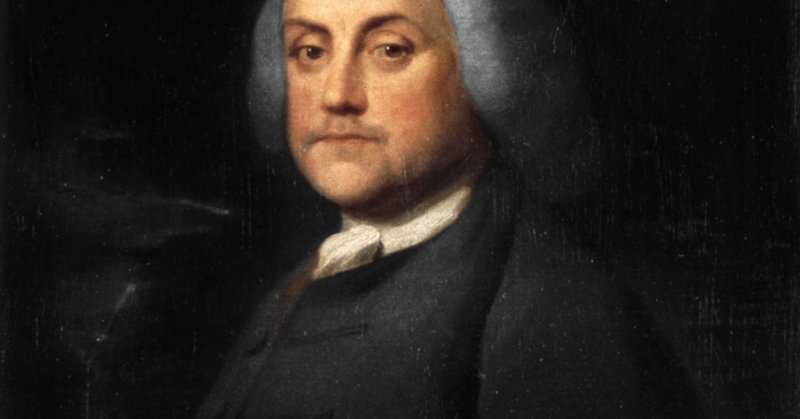
11. In 1737, Benjamin Franklin compiled a list of 250 alternative words for being drunk. At the time, the list became widely popular as a way to impress people in pubs.
12. Shakespeare’s last home, called New Place, was torn down in 1756 by the same person who had bought it. In 1759, Reverend Francis Gastrell destroyed it because he was annoyed by the many tourists coming to Shakespeare’s former house. He was then expelled from the town for doing so.
13. Charles Domery was an 18th-century soldier famous for his enormous appetite. While serving, he ate many live cats, several pounds of uncooked meat and grass, and once tried to eat a crew member’s amputated leg after cannon fire struck the man, before other crew members took it away from him.
14. When vaccines and similar treatments were first introduced in the 18th century, religious leaders denounced them, claiming that diseases were sent by God as punishment for sinners. They said that trying to cure those sinners would oppose God’s will.
15. In a 1789 letter to James Madison, Thomas Jefferson said that the Constitution and laws ought to end after 19 years. He wanted new generations to study the past and adapt based on it. He also wanted to stop older generations from “binding” those that followed.
16. Hannah Twynnoy, who worked as a barmaid at the White Lion pub in Malmesbury, was the first person in Britain to be eaten by a tiger, in 1703.
17. In 1713, Venetian Baroque composer Giuseppe Tartini dreamed that he had sold his soul to the devil. In the dream, the devil performed a brilliant sonata on his violin. After Tartini awoke, he composed Violin Sonata in G minor.
18. Following the collapse of the South Sea company in 1720, which bankrupted many people and badly damaged England’s economy, Parliament received a proposal to put bankers into sacks filled with snakes and cast them into the River Thames.
19. In 1770, the British Parliament enacted a law against lipstick, declaring that women who were found guilty of luring men into marriage by cosmetic means could be prosecuted for witchcraft.
20. In 1730, a French scholar named Louis de Jaucourt spent 20 years producing a six-volume work on anatomy. He sent it to Amsterdam for publication to avoid French censorship, but the ship carrying the only manuscript sank.
Fashionable Lightning Protection
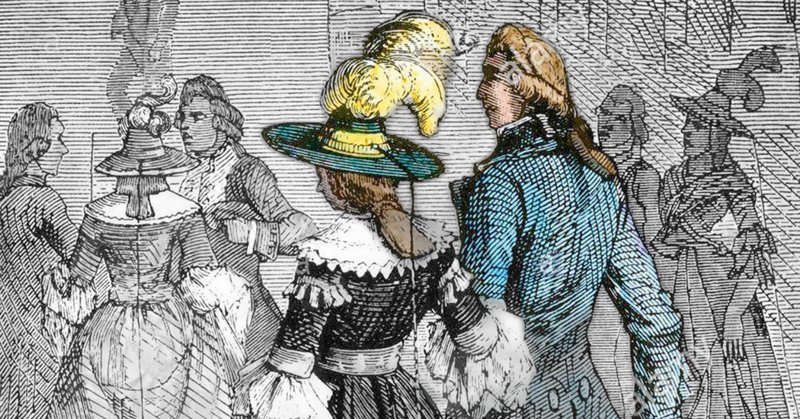
21. Lightning rods were a style trend intended to protect people from lightning strikes. A woven metal ribbon was worn around a hat, and a small silver chain was attached to the ribbon. The chain was supposed to hang down the back of the dress and drag along the ground. In theory, electricity from a lightning strike to the ribbon would travel down the chain and into the ground, thereby protecting the hat wearer. This was a popular Paris fashion trend in 1778.
22. When the first US ship reached China in 1785, the Chinese admired the American flag and called it “as beautiful as a flower”. Since then, an informal Chinese name for the United States has been the “flower flag country”.
23. In 1790, Benjamin Franklin attempted to end slavery by submitting a petition to Congress and writing many essays against slavery.
24. A French mathematician named Abraham de Moivre said that he observed that he was sleeping 15 minutes longer each night and worked out the date of his death as the day when the sleep time reached 24 hours, which was November 27, 1754. On that exact same day, Moivre was found dead in London.
25. In December 1777, Morocco became the first country to recognize the United States, and together they have the United States’ longest continuous treaty.





Add Comment