

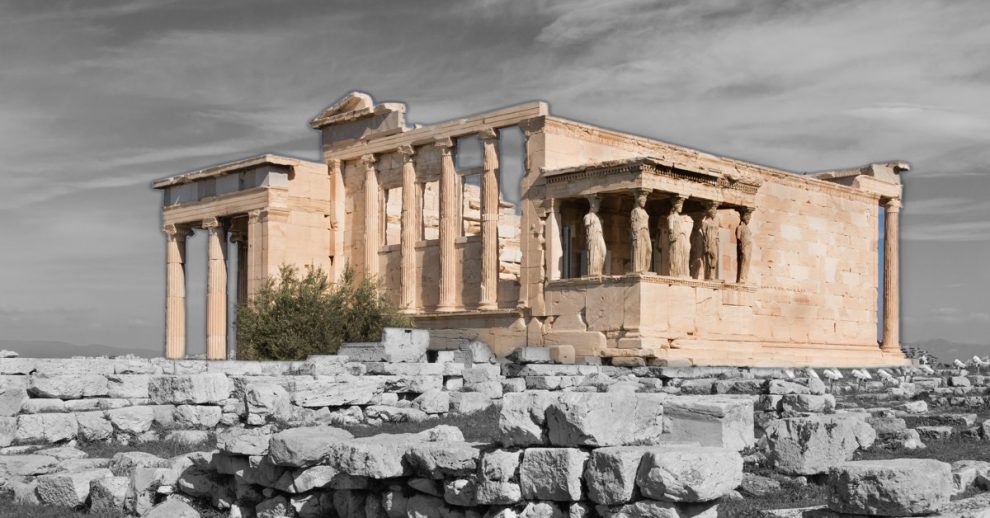
Ancient Greece shaped philosophy, science, politics, mythology, and everyday language in ways that still influence the modern world. These 40 fascinating facts uncover the civilization’s brilliant ideas, unusual customs, legendary figures, and surprising true stories that continue to captivate historians today.
Pause Marks on Stage
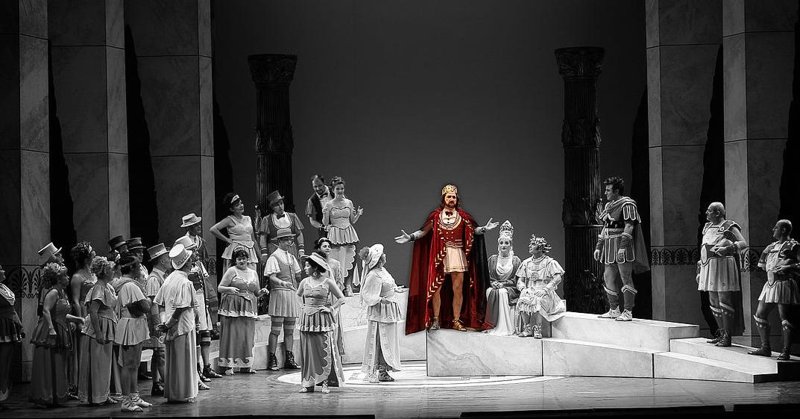
1. The ancient Greeks first created commas to indicate to actors where to pause and take a breath.
2. No original copies of Socrates’ work survive. Everything attributed to him was written by Plato, with notes from Xenophon, Aristotle, and Aristophanes.
3. Rich Ancient Greeks sometimes had their slaves sit on the public toilets to warm them up in anticipation of their arrival.
4. In Greek mythology, the god Phosphorus stood for the planet Venus, also called the Morning Star, as the Bringer of Light. The Latin form of Phosphorus is Lucifer.
5. One theory says the Cyclops legend began when Greeks found dwarf elephant skulls and took the trunk opening to be a single eye socket.
6. Plato did not favor democracy, but instead supported a governing elite that was most fit to make decisions for the community.
7. During the Greek War of Independence in 1821, the Ottoman Turks ran out of bullets and began removing lead from the Parthenon columns. After learning this, the Greeks collected bullets and sent them to the Turks to be used against them in order to safeguard their ancient heritage.
8. When Plato described humans as “featherless bipeds,” Diogenes carried a plucked chicken into Plato’s classroom and said, “Behold! I’ve brought you a man!”. Following that incident, Plato changed his definition by adding “with broad flat nails”.
9. The Ancient Greeks used the term akrasia for the absence of willpower that keeps us from doing something we know is beneficial for us.
10. In ancient Greece, there was a practice called Ostracism in which every citizen could vote to banish any politician for 10 years.
Eagle Dropped Turtle Fate
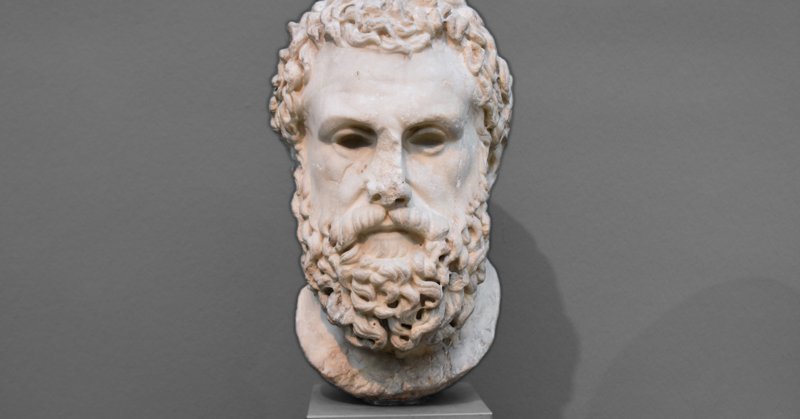
11. In 458 B.C., Aeschylus, an ancient Greek tragedian, was killed by a tortoise dropped by an eagle that had mistaken his bald head for a rock suitable for shattering the shell of the reptile.
12. The Greek origin of the word “idiot” was used to mean someone who did not participate in politics and public affairs.
13. Young Greek hoplites (citizen soldiers) had to dress in heavy armor and run a foot race of 1,300 feet in the Olympics. This was done to develop the battlefield tactic of rushing to the Persian lines in rapid pace so as to counter their archers.
14. Ancient Greek cities honored victorious Olympian athletes by demolishing part of the city wall so that, on their return, they wouldn’t have to use the gate like ordinary mortals.
15. The Greek mathematician Pythagoras created his own cult which forbids the consumption or touching of the beans, and according to legend died when being chased by assassins and refusing to escape through a bean field.
16. In ancient Greek literature, after Odysseus returned home following 20 years away and in the disguise of a beggar, the only creature that recognized him was his elderly dog Argos, who wagged his tail at his master and then died.
17. Plato thought that love between friends fostered a greater level of consciousness and closeness than physical love, and that it ought to be valued more highly, which is why relationships of this kind are called “platonic”.
18. Plato, the well-known ancient Greek philosopher, held that people possess knowledge “from past incarnations” and that learning consists of “rediscovering” it.
19. When Diogenes, the Ancient Greek philosopher, was ridiculed at a party by members of the Athenian Elite who compared him to a dog and tossed him bones across the room, he got up, walked over, lifted his leg, and took a big old steaming piss all over them.
20. Aristotle thought the brain was only a minor organ that cooled the blood and heart and served as a place for the spirit to live.
Apelles Through Ancient Eyes
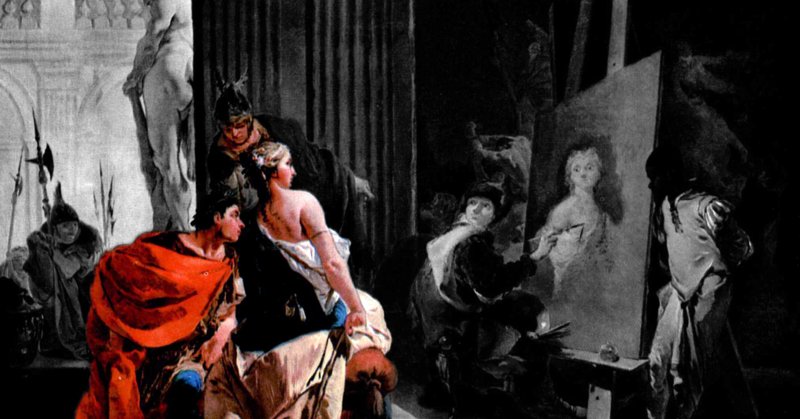
21. Apelles, an ancient Greek painter, was regarded by many people, including Pliny, as the finest artist in the world. Pliny wrote that Alexander the Great admired Apelles’s work so much that he gave him his concubine. None of Apelles’s original works survive today.
22. The term “panic” is derived from the Greek woodland god Pan, who was thought to be the cause of unexplained sounds in forests that spread irrational fear among animals and humans alike.
23. The Temple of Artemis, one of the seven wonders of the world, was set on fire by an arsonist who wanted to become famous for the act. After he was executed, the Ancient Greeks made it punishable by death to speak his name.
24. Pyrrhus of Epirus, an ancient Greek general, was killed while battling an enemy soldier in the streets of Sparta. The soldier’s mother, who was observing the fight from a rooftop, hurled a tile that struck Pyrrhus in the head and left him paralyzed, deciding his fate.
25. The ancient Greek astronomer Eratosthenes of Cyrene proved in 240 B.C. that the earth was round, and he also developed latitude and longitude. He was able to calculate the earth’s circumference, with an error of less than 2% compared with the modern value of 40,041 km.







Add Comment