

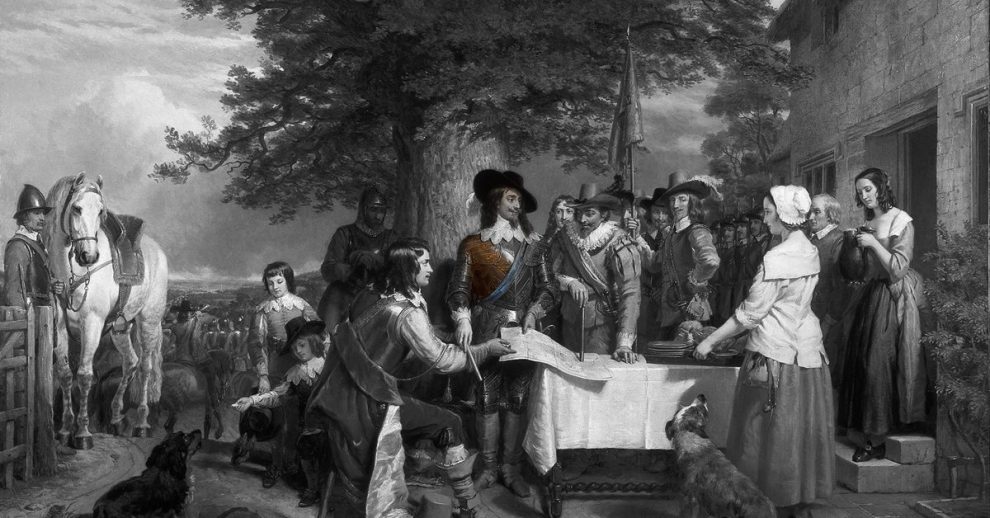
The 1600s were filled with scientific discoveries, global exploration, unusual customs, political intrigue, and stories that seem almost unbelievable today. These 50 facts uncover a fascinating century that was far stranger and more inventive than most history books let on.
Reindeer Distance Unit

1. In the 1600s, Finns used a measure known as Poronkusema, meaning the distance a reindeer could travel before it had to urinate.
2. Uriel Acosta was a Jewish philosopher from the 17th century. After being convicted of heresy, he received 39 lashes and was made to lie in the entrance of his synagogue while the congregation walked over him as they came in. So humiliated, he then took a pistol and shot himself.
3. Zildjian, the cymbal maker, is among the world’s oldest companies. Established in 1618, it is a little under 400 years old. Zildjian means “Bell Maker,” a name given to the Alchemist employed by the Ottoman Sultan to make war noise-makers. The production method is still a family secret today.
4. An essay written by 17th century philosopher Leo Allatius says that the circumcised foreskin of Jesus Christ went to Heaven at the same time as he did and turned into the rings of Saturn.
5. An old English tale says that the name “Sirloin steak” comes from an event in 1617 when King James I of England, while being entertained at Hoghton Tower, was so impressed by the quality of his steak that he knighted the beef loin, after which it was called “Sirloin.”
6. France sent 800 women to Quebec in the 1600s. The “Filles du Roi” (“Daughters of the King”) were poor women who in 1663 agreed to go to the mostly male New France colony to marry them. It succeeded, the population more than doubled in 10 years, and two-thirds of French Canadians today are their descendants.
7. Miyamoto Musashi was a 17th century Japanese swordsman who twice showed up late to duels and defeated both opponents. In his next duel, he arrived early and ambushed the force that was gathering to ambush him.
8. The marble masterpiece “Sleeping Hermaphroditus” was discovered around 1608 after centuries underground. In 1620, 22-year-old Italian sculptor Gian Lorenzo Bernini carved the marble mattress on which s/he lies today, and it is so realistically striking that visitors feel compelled to prod it for a test.
9. Until the 17th century, most scientists thought the speed of light was infinite. In 1676, Ole Rømer and Giovanni Cassini made the first measurement of light’s speed by watching the orbits of Jupiter’s moons, and their estimate was only 27% away from the true value.
10. Isaac Newton was like a Dirty Harry figure in 17th century London. He pursued counterfeiters of the Royal Mint, bribed criminals for information, threatened criminals and their families, eventually zeroed in on his enemy, and then burned all his notes to hide his dirty methods of catching crooks.
Four Rulers Hidden
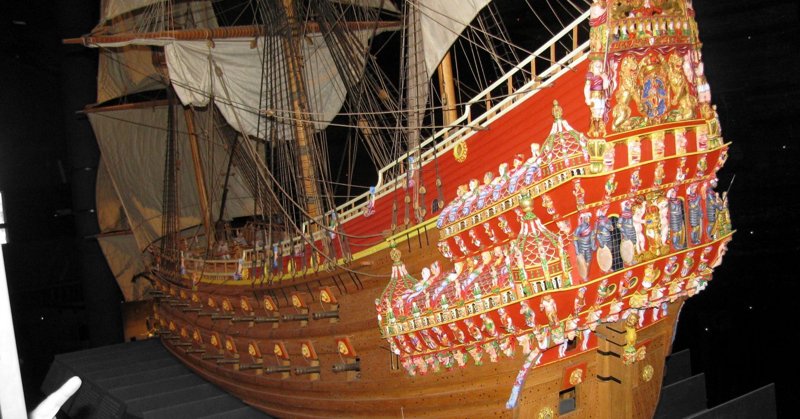
11. The Swedish warship Vasa, which is well known for sinking in 1628 less than a mile into its first voyage, was constructed unevenly. Archaeologists have identified four separate rulers used by the workers. These rulers were based on different measurement standards of the period. Two were Swedish feet, each divided into twelve inches. The other two were Amsterdam feet, with eleven inches to a foot.
12. The word “Guy” comes from Guy Fawkes, the man who attempted to destroy the British Parliament in 1605.
13. Between 1613 and 1620, the Japanese samurai Hasekura Tsunenaga traveled to Rome through Mexico, where he met the Pope and became a Roman citizen. It was the last official Japanese trip to Europe until 1862.
14. In 1648, a military drummer in French Canada received a death sentence for being homosexual. He was pardoned on the condition that he serve as the colony’s first permanent executioner.
15. In 1623, the German polymath Wilhelm Schickard created what was probably the first mechanical digital computer. Schickard died of bubonic plague shortly afterward, but his machine was later recreated and is likely to have functioned despite some flaws.
16. Three slaves were executed in 1661 for the 1660 killing of their master, William Harrison. In 1662, William Harrison came back aboard a ship after escaping slavery, having been abducted by pirates. This led to the “no body, no murder” rule.
17. In 1602, the Dutch East India Company carried out the world’s first initial public offering and thus became the first public company to issue stock.
18. In 1692, a man named Thiess avoided execution before a werewolf tribunal by stating that he was a werewolf serving God in a long-running battle against the witches of the underworld.
19. In 1664, New Amsterdam was handed over to the Duke of York as an 18th birthday gift from his father. He then changed the city’s name to New York.
20. In the 1650s, an African man named Anthony Johnson won a court ruling that allowed him to keep another African man, John Casor, as his slave rather than ending his indentured servitude. This meant the first legally recognized owner of a permanent slave in America was an African man.
Blunted Knives, Safer Courts
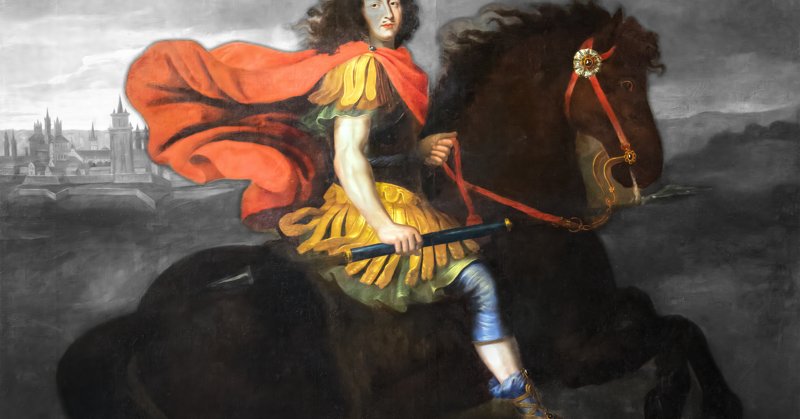
21. The table knife has a rounded point because, in 1669, Louis XIV of France ordered that all pointed knives be dulled to lessen violence in courts and on the streets.
22. A man called Jeronimus Cornelisz survived a shipwreck in 1628 and became a murderous dictator over the other survivors. He and his henchmen killed more than 100 men, women, and children over a two month period while stranded. In the end, he was defeated by a group loyal to the ship’s captain and was executed.
23. In 1603, the Sultan of Morocco and Queen Elizabeth I made a plan to conquer the Spanish Americas and divide them between Morocco and England. Historians think that if the Sultan and the Queen had not died the following year, Morocco might have colonized much of the New World.
24. In the 17th century, fashions that exposed women’s breasts were widespread in society, from queens to ordinary prostitutes, and were imitated by all classes. An exposed ankle, however, was seen as more risqué.
25. Kit Kat was a political club in 17th century London, and a Kit-Kat portrait is a specific kind of portrait made for club members.





Add Comment