

Byzantine Fire Mystery
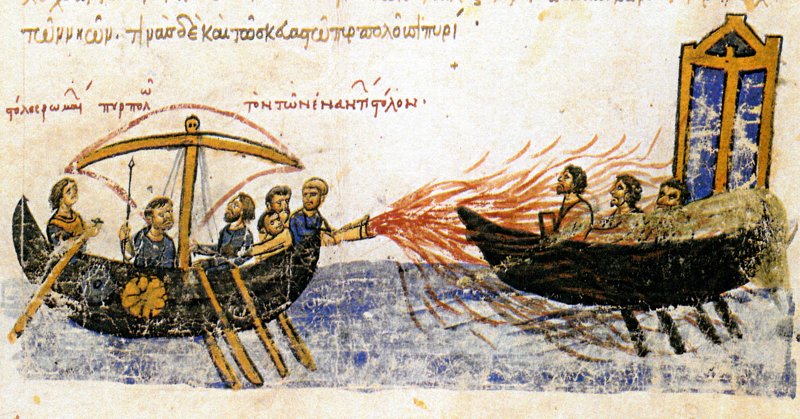
26. Greek Fire was an incendiary weapon developed by the Byzantines in the 7th century. It was used on ships and in handheld tubes, functioning similarly to a flamethrower. Water didn’t extinguish it. Its exact chemical composition is still unknown.
27. A Flemish medieval polearm, which is basically an elongated club with a spearhead, is called Goedendag, literally meaning “good day” in English.
28. Medieval English longbows could shoot an arrow more than 300 yards and demanded so much strength that the skeletons of medieval archers can be recognized by their enlarged left arms.
29. The Helepolis was a 130-feet multi-story siege tower fitted with 16 catapults, eight wheels, and a 3400-man crew.
30. In the 1500s, Incas had cotton armor woven so densely it could repel spears and arrows almost as well as metal armor.
31. Because of the advanced metallurgy of the ancient Chinese, some weapons from the Terracotta Army, after 2,200 years underground, were still sharp, rust-free, and shiny once a thin oxide layer was removed.
32. The Plumbata was an ancient Roman weapon that was essentially a lead-weighted lawn dart. Multiple ones were carried in the hollow of a legionary’s shield and thrown at the enemy.
33. Ancient Hawaiians created a weapon called Leiomano that had blades made out of shark’s teeth.
34. The Man Catcher was one of the few examples of non-lethal medieval weapons. It was used mainly to pull a person from horseback and drag them to the ground, but it was also used to capture opponents for ransom and to trap and contain violent prisoners.
35. When the Romans first met war elephants, they used tow ropes attached to chariots to bind their legs and topple them much like the Rebels on Hoth in Star Wars.
Beehives Before Boarding
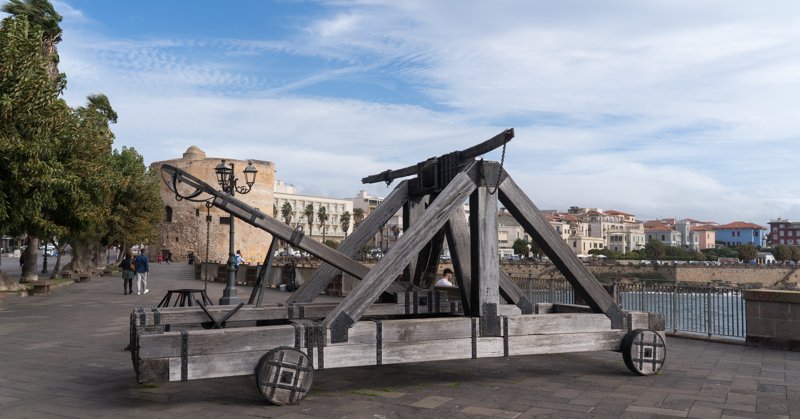
36. In the 14th century, ships would catapult beehives onto the decks of enemy ships to clear the way for boarding parties.
37. The pike or spear known as the sarissa in Alexander’s army actually weighed around 12-15 pound and was 15-18 feet long.
38. King Edward I of England built the largest trebuchet ever made called “The Warwolf”. The Scots inside the castle surrendered by the mere sight of it, but Edward used it anyway because he wanted to see it in action.
39. A “Damascus Steel” sword from the 1600s was found to contain carbon nanotubes and nanowires. Researchers say these tiny structures may account for the legendary strength of Damascus Steel.
40. War pigs were used by the Romans because their squeals scared the war elephants into fleeing and trampling their own armies.




Add Comment