

History is full of moments that are so ridiculous, ironic, and downright absurd that they sound like jokes someone made up. Yet every one of these unbelievable stories really happened, proving that the past often has a better sense of humor than fiction.
Assassination By Sandwich Stop
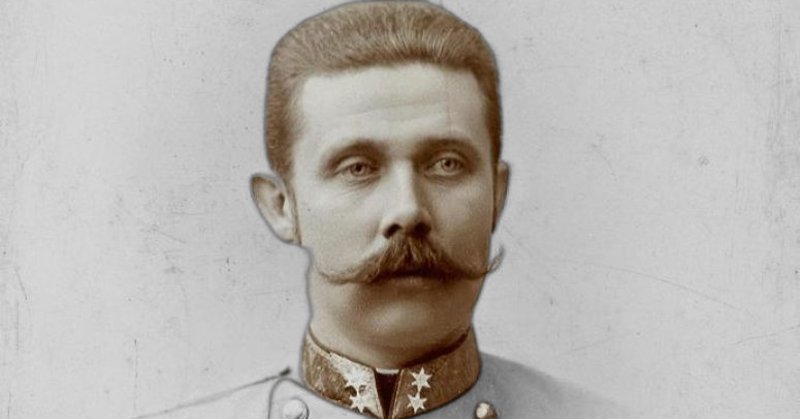
1. The immediate trigger for World War 1 was the assassination of the archduke. What many people do not know is that the first attempt on his life failed when the bomb detonated behind Ferdinand’s car. He was killed only because one of the terrorists, from a Serbian group called the Black Hand, paused to buy a sandwich and spotted Ferdinand in the store. Also, the man who hurled the grenade that exploded behind Franz Ferdinand did not realize the grenade had a 10 second timer. It gets better. He swallowed the cyanide given by the Black Hand to kill himself after the attack, but it was expired, so he only ended up vomiting a lot. To “seal the deal” of death, he jumped into a nearby canal that was only two inches deep. It did not go very well for him.
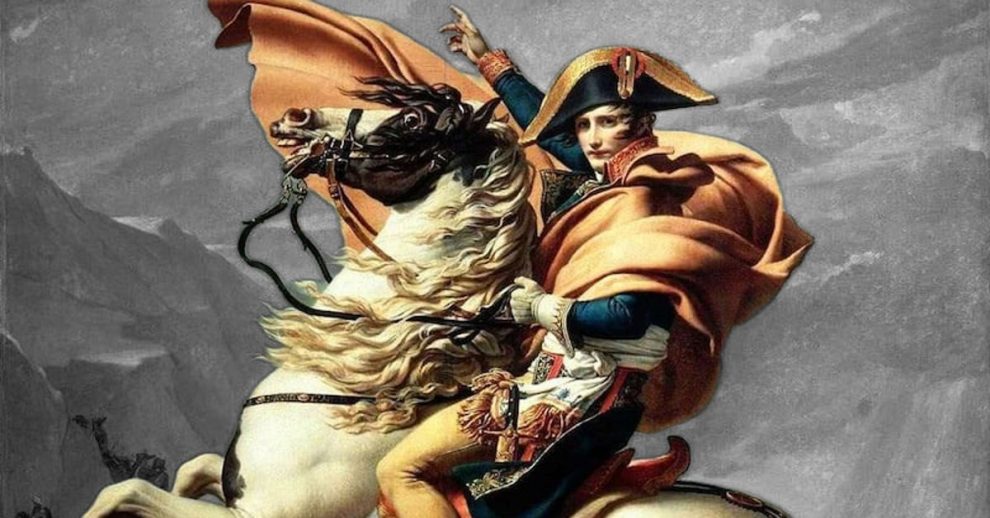
2. In 1807, after winning at Friedland, Napoleon suggested a rabbit hunt as a celebration. He invited the army’s top officers and gathered a colony of rabbits. When the bunnies were released, they did not run away in fear. Instead, they charged toward him and his men. The assault stopped only after their coach drove off.
3. Franklin D. Roosevelt once walked into a room without warning during a visit from Winston Churchill. Churchill happened to be naked, having just gotten out of the bath, and Churchill, being Churchill, said, “The Prime Minister of the United Kingdom has nothing to hide from the President of the United States!”
4. King Pyrrhus of Epirus died in 272 B.C. while battling an enemy soldier in the streets of Sparta. The soldier’s mother, watching the fight from a rooftop, threw a tile that struck Pyrrhus in the head and left him paralyzed, which let the soldier finish him.
5. In 1847, Robert Liston carried out an amputation in 25 seconds, moving so fast that he also cut off his assistant’s fingers by accident. The patient and the assistant later died of sepsis, and a spectator was reportedly so shocked that he died too, making it the only known surgery with a 300% mortality rate.
6. During the opium war, the Chinese set monkeys on fire and sent them toward British ships in an effort to create chaos.
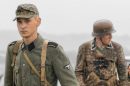
7. At the Battle of Crete in World War II, New Zealand’s Maori Battalion was entrenched in an orchard against a German unit. The Germans tried to frighten them by having their officers shout orders to “fix bayonets” for a bayonet charge. The next event shocked the Germans. They started to withdraw quietly when the Maoris began cheering, since personal close combat was highly esteemed. The Germans chose not to charge and retreated quietly. Among British soldiers, the name Māori was nearly a byword. Their repeated bayonet attacks and the destruction they inflicted on the Germans with cold steel earned them the nickname of the “Knife Men.”
8. The English national anthem “God Save the Queen” did not originate in England. It was written by the French Duchess of Brinon (Grand Dieu sauve le Roi) to mark King Louis XIV of France recovering from anal fistula. At the time, the surgery was extremely dangerous and involved opening the infected area, his royal a*s, and thoroughly cleaning it. None of this could be done with anesthesia. George Frideric Handel, a British composer, copied the melody after hearing it in France, without knowing why it had been written.
9. In 1919, a tank holding 2,300,000 gallons of molasses for sweetening drinks burst during a heatwave, covering Boston’s streets with molasses moving at 35 mph, killing 21 people and injuring 150. The incident became known as the Great Molasses Flood, and for many years afterward, local residents said the area still smelled of molasses on hot summer days.
10. In 1895, there were only two cars on the roads across all of Ohio, and the people driving those two cars collided with each other.
Brahe’s Nose and Moose
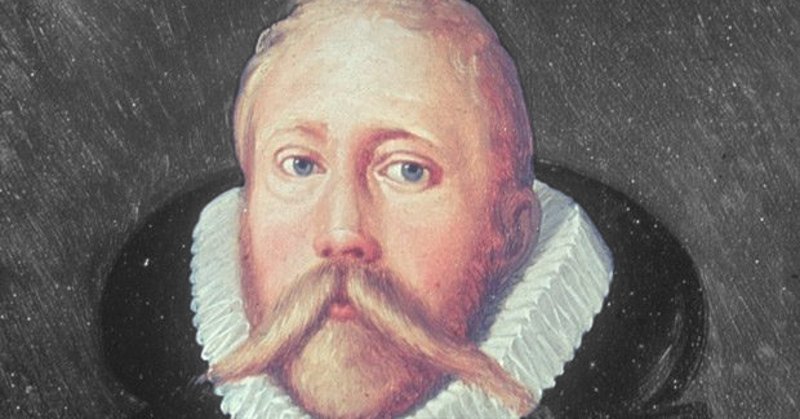
11. Danish astronomer, alchemist, and nobleman Tycho Brahe lost his nose after he challenged another scientist to a duel to decide once and for all whose mathematical formula was superior. He wore a metal false nose for the rest of his life. He also owned a pet moose that died after it drank too much beer and fell down a staircase. In 1601, Tycho went to a party where he held himself in from using the bathroom, later suffered a burst bladder, and died 10 days afterward.
12. Wolfgang Amadeus Mozart once composed a 6-part canon called “Leck mich im Arsch,” which loosely means “Lick me in the Arse.” He also kept a journal in which he recorded his farts.
13. Caligula, the Roman Emperor, once called a large meeting only to tell those present that, if he wished, he could have them all killed. He then ended the meeting. He also once declared war on Poseidon. He led 10,000 soldiers to the sea and ordered them to stab it with spears. Another time he marched his whole army to the English Channel in an attempt to invade Britain. When he arrived at the channel, he decided he no longer wanted to invade Britain, so he ordered his men to gather seashells before returning home.
14. The highest-ranking combat death in the US Civil War was General John Sedgwick. He was known for riding among his troops while they were ducking a sniper’s shots. He once said, “I’m ashamed of you, dodging that way. They couldn’t hit an elephant at this distance,” and then he was shot in the head and killed.
15. The first recorded “mooning” happened in 66 A.D., when a Roman soldier exposed himself to Jewish pilgrims on their way to Jerusalem. This sparked a riot, an excessive Roman military response, and the deaths of thousands.
16. A celebrated 18th century racehorse was called Potoooooooo. Before that, his name had been Potatoes. He got the odd spelling of his nickname, Pot-8-Os, after a stable boy was told to write it on a feed bin. The boy wrote Potoooooooo instead, and it was said to amuse his lordship so much that he kept it.
17. The infamous pirate hunter Benjamin Hornigold once seized a ship only to take every crew member’s hat. After his men got drunk and lost their hats at a party the night before, they chose to board a ship to find replacements.
18. In London in 1814, a vat holding more than 610,000 liters of beer burst, which caused other vats to fail as well. This led to over 1,470,000 liters of beer pouring into the streets. The wave from the London Beer Flood ruined two houses and knocked down the wall of a nearby pub. Eight people died.
19. In the late 1700s, a letter ran in a major London newspaper saying England was being made to accept deported Prussian prisoners. The British were enraged and wanted it to stop. The Prussians were offended too, because the uproar suggested that England was too good for Prussian prisoners. Both governments got involved, and war nearly followed before the whole thing was exposed as a hoax. Years later, it was found that Benjamin Franklin had written the original letter while spending six months in England as an ambassador, and he was simply bored, causing trouble and watching from the sidelines.
20. Adolf Hitler used 28 different pills for what was described as agonizing flatulence. The treatment included cocaine, amphetamines, human placenta, strychnine, and atropine. Reported side effects included violent mood swings, euphoria, lapses in attention, and erratic behavior. His severe diet, repeated stomach troubles, likely psychosomatic, and dependence on quack drug pushers such as Morell made dinner with him awful for his guests.
Kettle Shot, Quick Surrender
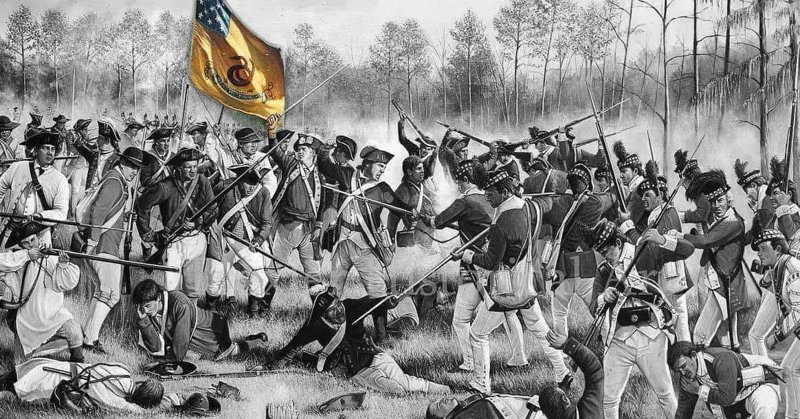
21. The Kettle War was a short clash between the Dutch and the Austrians. Only one shot was fired, and it struck an Austrian soup kettle. The Austrians then surrendered immediately.
22. At the start of the Spanish Civil War, a Nationalist garrison was under siege. Because the Nationalists had local air superiority, they chose to drop supplies from the air. The amusing part is the way they tried to keep the packages from being damaged on the way down. Instead of using parachutes, they tied a turkey to each package. The turkey could not carry the load, but it could slow the fall somewhat, and unlike a parachute, a turkey can be eaten.
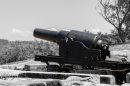
23. In the First Sino-Japanese War, a Chinese admiral pawned one of the principal guns on his flagship to a scrap dealer so he could pay gambling debts. This was also the war in which the Empress stole from the army to pay for renovations to her palace.
24. In Liechtenstein’s final military engagement in 1886, none of the 80 soldiers sent were hurt, and 81 came back, including a new Italian friend they picked up along the way.
25. In the Victorian Era, “Female Hysteria” was a broad label for many feelings of malaise, including when a woman was horny. Doctors treated the condition by masturbating the women until they reached “hysterical paroxysm,” or what we now call an orgasm. The electric vibrator was the fifth home electronic ever invented. Doctors developed vibrators after becoming tired of masturbating “hysterical” women. It was then prescribed to women who had “hysteria.”


Add Comment