

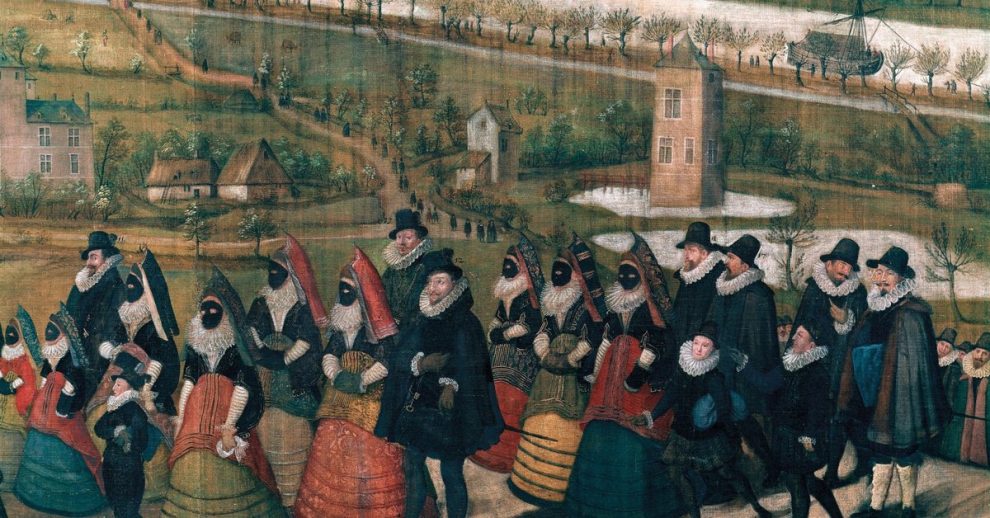
The 1500s were filled with strange customs, bold inventions, brutal punishments, and events that sound almost too unusual to be real. These 50 facts reveal just how surprising life could be during the 16th century
Pingu’s Old Clown Tongue

1. The gibberish language heard in the stop-motion clay animated series ‘Pingu’ is actually a language that clowns and mimes have used since the 16th century.
2. The symbol ⸮ has been suggested as a punctuation mark for indicating irony since the 1580s.
3. In the 16th century, Filipino hunters used a rock yo-yo to hunt prey. The weapon could be pulled up and thrown back down for repeated attempts at the prey.
4. In 1567, Hans Steininger, the man claimed to have the longest beard in the world, died after he tripped over his beard and broke his neck while running away from a fire. He usually kept his beard bundled in a leather pouch, but he had not done so that day.
5. During the 16th-century rise of increasingly large weapons, soldiers used Zweihänders, which were enormous swords that measured 1.8 meters and could weigh 3.5 kg. Frisian hero, Pier Gerlofs Donia, was reputed to have beheaded several people with one blow.
6. When the Portuguese brought chili peppers to Japan in the 16th century, people usually did not eat them and instead commonly placed them in socks to warm toes.
7. The Aztec capital of Tenochtitlán was the largest city in the Americas with over 200,000 inhabitants. It stood on a man-made island in the middle of a lake, linked to the shore by 3 causeways. The city featured huge pyramids, floating gardens, aqueducts, and canals. The Spanish destroyed it in 1521.
8. One of the oldest chess strategy books, from 1561, advises playing with your back to the sun so your opponent is blinded. If the game is at night by a fire, it tells you to cast a shadow over the board with your hand, so your opponent “will not be able to see where to play his pieces.”
9. In the 16th century, Western Ireland was ruled by Pirate Gráinne Ní Mháille. After years of resisting England, Queen Elizabeth agreed to meet her in person. Gráinne arrived with a dagger, would not bow, and threw a noblewoman’s handkerchief into a fire.
10. The coats of arms of the islands Åland and Öland are nearly the same because the islands were confused in the 16th century, as their names are very similar.
Gold Execution in Ecuador
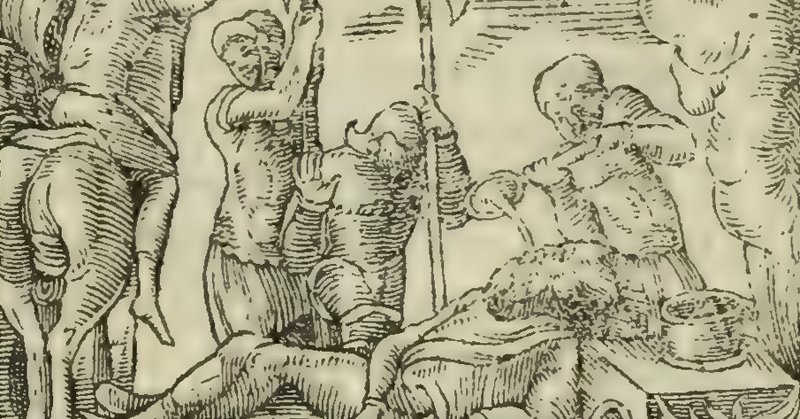
11. In 1599, a Spanish governor in early colonial Ecuador was put to death by having molten gold poured down his throat. Native Indians of the Jivaro tribe thought they were being taxed unfairly in their gold trade and, as a result, attacked the settlement of Logrono and executed the governor.
12. In 1586, a pregnant widow wrote a letter to her partner named Eung-Tae-Lee, who had died at the age of 30. Archaeologists found this in South Korea in 1998, intact with the man’s mummified body and a pair of sandals woven from hemp and the woman’s hair.
13. In 1524, a statue of Virgin Mary was accused of being a witch in Riga (the current capital of Latvia) and was sent to a trial by water in the Daugava River. The statue floated, so it was declared a witch and burnt at Kubsberg.
14. Martin Guerre, a French peasant of the 16th century, was at the center of a famous case of imposture. Several years after Martin Guerre had departed from his wife, child, and village, a man claiming to be him returned. He lived with Guerre’s wife and son for 3 years. The false Martin Guerre was eventually suspected of the impersonation. He was tried, found to be a man named Arnaud du Tilh, and executed. The real Martin Guerre came back during the trial.
15. During the Ming dynasty (approximately 1570 A.D.), powdered smallpox scabs were blown into the noses of healthy people. The patients would then come down with a mild case of the disease but would be immune to it afterward.
16. Leonardo DaVinci, who is now renowned as a great Italian artist and inventor of the 16th century, also worked as a party planner.
17. The Dutch 16th-century painting “The Adoration of the Christ Child” is speculated to feature a shepherd and an angel with Down syndrome.
18. 16th century Puritans saw common names as too worldly, so they opted for virtuous/religious names instead. This led to names such as If-Christ-had-not-died-for-thee-thou-hadst-been-damned.
19. In 1589, English pamphleteer named John Stubbs was sentenced by Queen Elizabeth to have his hand severed for seditious writing, and before the ax fell, he cried out, “My calamity is at hand!” – thus becoming the only known victim of Elizabeth to incorporate a pun at his dismemberment. He then fainted.
20. In 1557, a Welsh mathematician named Robert Recorde invented the equals sign. He did so only because he was tired of the ‘tedious repetition’ of the phrase is ‘is equal to.’.
Cagayan’s Unique 1582 Clash
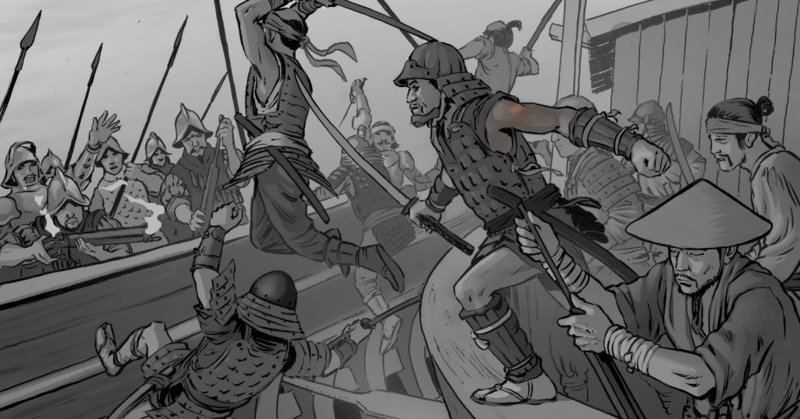
21. The Cagayan Battles of 1582 in the Philippines were the only recorded battle in history fought between European infantry and samurai.
22. The expression “Yo” has been in use since the 16th century.
23. The deadliest earthquake in recorded history struck the Shensi province of China in 1556, killing about 830,000 people.
24. Beauty and the Beast could be based on the real-life story of Petrus Gonsalvus, a 16th century royal with a condition that covered his entire face and body in hair, who married a beautiful Parisian woman named Catherine.
25. There is a “prophecy” written in 1595 that predicts the future Popes. The next Pope to be corresponds with the last one on the list.





Add Comment