


History is full of events so strange that they sound like urban legends, yet they really happened. These incredible true stories reveal the bizarre coincidences, astonishing decisions, and unforgettable moments that make the past far more surprising than fiction.
Mud-Splattered Agincourt Victory
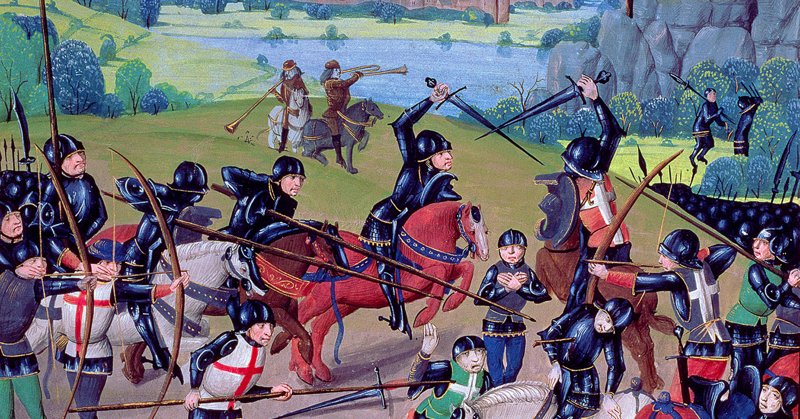
1. At the Battle of Agincourt, most English archers fought with no pants on because they had severe diarrhea and were literally shi*ting themselves while battling. They won as well. It is believed that the archers also soaked their arrows in their diarrhea as a kind of biological warfare and for psychological effect.
2. The accounts of identical twins whose lives turned out almost exactly alike are often amazing, but perhaps none more so than those of these identical twins born in Ohio. A pair of twin boys was separated at birth and adopted by different families. Neither family knew about the other, and both named the boys Jim. The coincidences had only started. Both Jameses grew up unaware of each other, yet both pursued law enforcement training, both had skill in mechanical drawing and carpentry, and each married women named Linda. They both had sons, one naming his James Alan and the other James Allan. The twin brothers also got divorced and married other women, both named Betty. They both owned dogs named Toy. Jim Lewis and Jim Springer finally met on February 9, 1979, after 39 years apart.
3. In the 1950s, Borneo was dealing with a malaria outbreak, so with help from the World Health Organization, DDT was sprayed across the island to destroy mosquitoes. But the DDT also wiped out the island’s wasps, which helped keep down the number of caterpillars that ate thatch, the material people’s homes were made from, and because of this, their roofs started to cave in. Many other small insects were also affected by the DDT, and geckos ate those insects. The geckos became tolerant to the DDT, but the cats that ate the geckos did not, and the cat population began to die. This caused the island’s rat population to grow sharply. And that is the story of how an island with a malaria issue led to cats being airdropped into Borneo.
4. The first ship ever sunk in war by a submarine happened during the American Civil War. No one aboard the submarine survived, though. H.L. Hunley was a fully working naval submarine used by the Confederacy in the Civil War. Driven by hand cranks and armed with buoyant torpedoes, it was the first submersible vessel in history to successfully sink an enemy ship. The first time a submersible was used in combat was during the American Revolution in 1776. It was called Turtle.
5. More planes were destroyed in World War II than currently exist on Earth today. The US produced about 30,000 heavy bombers in WWII, with 15,000 built in 1944 alone, and the USA made about 200,000 combat aircraft altogether during the war. At one point, a B-25 bomber was coming off the assembly line every 25 minutes. It was not only America: during the Battle of Britain, the UK was making more aircraft than Germany despite constant bombing. Together with the fact that British pilots shot down over the UK could return to duty instead of spending the war in a POW camp, this meant Germany could not win a war of attrition.
6. In 1959, President Eisenhower wanted to demonstrate America’s greatness to the Soviet Union, so the United States organized an American National Exhibition. There, Nixon and Soviet leader Khrushchev argued about Communism versus Capitalism. As tensions rose, the President of Pepsi intervened and offered Khrushchev a Pepsi. Khrushchev enjoyed it and wanted Pepsi introduced in his country. The issue was that their currency was not accepted worldwide. Instead, the Russians agreed to exchange vodka for Pepsi. That arrangement worked until the late 1980s, when the contract was about to expire and vodka alone would no longer serve as payment. So Russia traded Pepsi 17 submarines, a cruiser, a frigate, and a destroyer in exchange for $3 billion worth of Pepsi, briefly making Pepsi the sixth-largest military force in the world. Unfortunately, rather than terrorizing the seas and firing harpoons at enemies, Pepsi sold the fleet to a Swedish scrap metal company.
7. During World War 2, Japan bombed Australia. In the first raid on Darwin on 1942-02-19, they dropped more bombs than at Pearl Harbor, though the death toll was much lower. Over the next two years, they carried out about 100 raids on Northern Australia.
8. Galvarino was a Chilean warrior whose hands were both cut off by the conquistadors for taking up arms against the Spanish. Rather than allow himself to become a symbol of helplessness before the invaders, he tied swords to his stumps and kept fighting. One account says that after he was defeated again, the Spanish were so impressed that they offered him surrender, but he spat in the commander’s face, so they literally fed him to their dogs.
9. The Warwolf was supposedly the largest trebuchet ever constructed and used. When taken apart, it would occupy 30 wagons. King Edward I built it to lay siege to a Scottish castle, but before it was even completed, the Scots tried to surrender. Edward answered with a clear refusal, saying, in effect, “You do not deserve any grace, but must surrender to my will” because he had built the trebuchet over 40 days and intended to use it. He then used the trebuchet anyway.
10. Flamethrowers were not banned in warfare simply because being set on fire is bad. They were banned because firing them into enclosed areas such as bunkers, caves, and tunnel systems effectively fills everyone inside with carbon monoxide. In caves in the Pacific theater of World War 2, dozens of Japanese soldiers were killed by a single flamethrower operator. Many, if not most, had no burns at all, and some never even saw the flames. Apparently, the Americans did not actually learn that this was how they had been killing them until after the war.
Tragic Liners, One Survivor
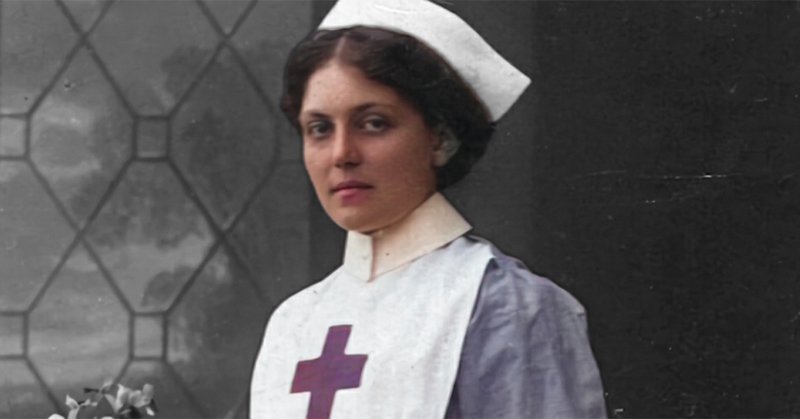
11. Each of the three Olympic-class ocean liners was involved in an accident: RMS Olympic was damaged in a collision with HMS Hawke, RMS Titanic hit an iceberg and sank, and HMHS Britannic struck an underwater mine during World War I and sank. A woman named Violet Jessop survived all three accidents.
12. Frane Selak, a Croatian music teacher, started his run of bad luck in 1962 on a train traveling from Sarajevo to Dubrovnik. The train somehow left the tracks and plunged into an icy river, killing 17 passengers. Selak swam to shore with hypothermia and a broken arm. A year later, while he was on an airplane, the door flew off and Selak was pulled out of the plane. The plane crashed, and he woke up in a hospital. He was found in a haystack. In 1966, Selak was on a bus that went off the road and into a river. Four people were killed, but he suffered only minor injuries. In 1970, his car caught fire and he stopped it and got out just before the whole car exploded. In 1973, Selak was driving another car when a faulty fuel line sprayed gas over the engine and flames blew through his air vents. His only injury was losing most of his hair. In 1995, he was hit by a bus, but he only had minor injuries. Finally, in 1996, he was driving on a mountain road when he rounded a bend and saw a truck coming straight at him. He drove through a guardrail and jumped out to watch his car explode 300 feet below him. In 2003, Selak bought a lottery ticket for the first time in 40 years at age 74. He won $1 million.
13. Around 112 people died while Hoover Dam was being built. The first was J. G. Tierney, a surveyor who drowned on December 20, 1922, while searching for the best location for the dam. His son, Patrick W. Tierney, was the final person to die while working on the dam, 13 years to the day later, in 1935. So, a father and son died on the same date, 14 years apart, while working on Hoover Dam.
14. Rome built the roads, and the roads developed ruts in them. The ruts made by the standard Roman war chariot were 4 feet 8 1/2 inches wide. Roman chariots were built so the wheels fit in a way that two horses could pull the chariots and wagons side by side, and the wheels did not sit directly in the horses’ hoofprints. As Europe expanded, it kept using the old roads with the old ruts, and to prevent wagons from breaking, they were built to fit the old Roman ruts. So that gave a 4 foot 8 1/2 inch axle. When rail lines were developed in Europe, they were made to match the original axle size of the wagons, because the tools to make wagons of that size already existed and only the wheel needed to be changed to make a basic rail car. When trolleys and simple rail came to the US, they were originally designed by experienced European craftsmen, so they too were built with the standard 4 foot 8 1/2 inch axle. As the US rail system expanded, it went through mountains with tunnels cut to fit the trains as they passed and turned. That brings us to the Solid Rocket Boosters and the Space Shuttle. Thiokol designed the Solid Rocket Boosters and built them in a factory in Utah, then shipped them by rail to Florida. That meant the boosters’ width had to be planned to fit through the mountain tunnels the rails passed through, which were designed to match European rail standards, which were based on carts that had to match the old Roman roads, which were rutted by chariots designed to fit the width of a horse’s a*s. That is the connection between the width of an old Roman horse’s a*s and the US space program.
15. Rosa Parks was a plant. Months before Rosa Parks, a 16-year-old pregnant girl named Claudette Colvin refused to give up her seat. In fact, she knew Rosa Parks personally. The issue was that an underage pregnant girl who resisted arrest violently, since she scratched one of the officers removing her from the bus, was a difficult choice for the face of a civil rights movement. The case went to trial, and MLK and the company supported her as much as they could, but they did not seek national attention for it. Instead, they simply recreated the situation with Rosa Parks, a respectable member of society who was calm and composed when arrested.
16. One of the biggest fault lines in the United States is located in Missouri rather than California. The New Madrid fault caused a chain of earthquakes in 1811 and 1812 that did not only ruin houses, livestock, and wildlife habitat, but also formed a crater that later became Reelfoot Lake. In December 1990, people in the New Madrid area and nearby counties were warned about a possible earthquake that could destroy the region. Schools were closed, businesses shut for the day, and some residents evacuated. Nothing happened. The New Madrid fault still sometimes experiences small earthquakes, and studies continue to indicate that it could still produce a quake capable of destroying parts of Missouri and neighboring states.
17. By 1869, during the Paraguayan War, 90% of Paraguay’s male population had already died at the hands of invading Brazilian, Argentinian, and Uruguayan forces. The Paraguayans made a final stand at Campo Grande, but they did not have enough men, so they gathered an army of 6,000, mostly children. The children, ranging from 6 to 15 years old, painted beards on their faces to resemble adult men. A Brazilian army of 20,000 attacked and killed them, and by day’s end there were 3,500 dead Paraguayan children and 46 Brazilian deaths. Even today, Paraguay observes Children’s Day on August 16, the date of the battle.
18. Louis XIV’s court at Versailles had very few toilets even though it housed thousands of people. Because of this, many courtiers would urinate or defecate in corners and hallways during parties and leave servants to clean it up. Wealthier guests often bribed servants to carry chamber pots to them, but there were never enough. Added to this was a large number of pets that were not house-trained, so it is no wonder that foreign dignitaries called Versailles the ‘filthiest palace in the world’. In time, the problem became serious enough that Louis ordered the servants to clean the corridors of feces ‘at least once a week.’
19. In an Olympic final, an ancient Greek boxer named Kleomedes killed his opponent by driving his fingers into the man’s chest. A rule stated that if an opponent died from the fight, he was automatically the winner. So even though he survived, Kleomedes was declared the loser. He returned to Astypalaia, fell into a deep depression, and carried out the first mass murder of schoolchildren after striking a support beam so hard that the school collapsed. All of the children died. An angry mob gathered to kill him, so he hid inside a huge chest in the temple of Athena. The townspeople stormed the temple and had to tear it apart board by board. But when they opened it, there was nothing inside. People did not know what to think, so they sent others to the oracle of Delphi, who said that Kleomedes was The Last True Astypalaian and should be worshiped as a demigod. That is how an Olympic boxer became a fertility deity after killing many children.
20. If you search for Edward Russell in history books or even on Wikipedia, you will find his military career, including serving as Admiral of the Royal Fleet in some well-known battles. What is not taught is that he hosted a party so extraordinary it is still being discussed 300 years later. In 1694, he held a party for officers, and with 6,000 guests expected, he wanted it to be memorable. So he created the world’s largest cocktail. He emptied the garden fountain and used it as a giant punch bowl filled with hundreds of gallons of liquor, more than half a ton of sugar, thousands of lemons, and more. He hired bartenders to row around in boats, scoop up the drink, and serve it to the guests. At one point it started raining, so they put a tent over the fountain to keep the mixture from being diluted. About a week after they began, every last drop had been consumed, the fountain was dry, and the party was over.
Tree Triggered Military Standoff
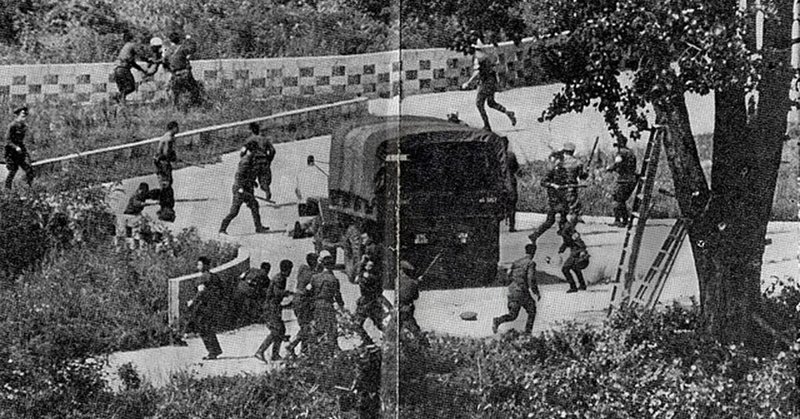
21. The United States and North Korea nearly went to war over a tree. U.S. forces wanted to remove a few branches because they could not see the DPRK guard post. After the Americans cut some branches, the North Koreans became angry. North Korean guards killed two U.S. soldiers. In response, the United States carried out Operation Paul Bunyan, whose goal was to cut down the tree. Only a small number of U.S. soldiers went to the tree to cut it down, while a U.S. infantry company of 20 utility helicopters and seven Cobra attack helicopters flew behind them. Behind those aircraft, B-52 Stratofortresses from Guam arrived escorted by U.S. F-4 Phantom IIs from Kunsan Air Base, and South Korean F-5 and F-86 fighters could be seen flying at high altitude across the sky. At Taegu Air Base, F-111 bombers of the 366th Tactical Fighter Wing from Mountain Home Air Force Base were stationed, and F-4C and F-4D Phantoms from the 18th TFW at Kadena Air Base and Clark Air Base were also deployed. The USS Midway carrier task force had also been moved to a position just offshore. In addition, a 64-man South Korean Special Forces task force accompanied them, armed with clubs and trained in taekwondo, supposedly without firearms. However, once they parked their trucks near the Bridge of No Return, they began removing the sandbags lining the bottoms of the trucks and distributing hidden M16 rifles and M79 grenade launchers. Several commandos also had M18 Claymore mines strapped to their chests, with the firing mechanisms in their hands, and were shouting at the North Koreans to cross the bridge. The mission succeeded.
22. Phryne was once the richest woman in the world. She was an Ancient Greek prostitute. She apparently had a very unusual complexion that made her green-yellow. She was so wealthy that she offered to pay to rebuild the walls of Thebes if they added a plaque reading, “Destroyed by Alexander, restored by Phryne the courtesan.” The Thebans refused her offer. As was common in those days, Phryne was eventually brought to court for impiety, which was a capital offense. If you lost an Ancient Greek trial for a capital offense, you were made to drink hemlock, a deadly poison. Her trial was not going well because she really was impious, but she had an advantage hidden somewhere in her shirt. Phryne tore off her robe and exposed her breasts to the jury. It is said the jury was so moved by her green-yellow breasts that they declared her a prophet of Aphrodite and acquitted her.
23. A dentist who was a friend of Eleanor Roosevelt suggested bat bombs. He claimed that Japanese people were not only afraid of bats, but bats could also settle in hard-to-reach parts of Japanese buildings. Combined with a timed incendiary device, the wood-and-rice-paper construction of Japanese buildings would cause devastating damage. The Army Air Force spent six months trying to develop bat bombs and accomplished little beyond burning down the test range at Carlsbad Army Air Field Auxiliary Air Base when some bats escaped, nested under a fuel tank, and exploded 6,000 miles from the intended target. After the failure at Carlsbad, the USAAF handed the project to the Navy, which wisely passed it on to the Marines. To everyone’s surprise, the Marine Corps managed to make the project work and even carried out a successful test at Dugway Proving Grounds in Utah. Unfortunately, the project was overtaken by the atomic bomb and canceled in early 1944.
24. Mohamed Bouazizi was a Tunisian street vendor whose goods were confiscated in 2010. Unable to confront the police, he went to the local governor to request his goods back, but he was refused even a meeting. In response, Bouazizi set himself on fire in public. His death was not the only cause, but it was certainly the catalyst for the Arab Spring, which led to civil war in many countries, rulers being overthrown and, in cases like Gaddafi, executed. It also saw the rise of ISIS, terrorist attacks in the Western world, and other conflicts that were still active as of 2019, all because the police would not return Bouazizi’s weighing scales.
25. The longest piano piece of any kind is Erik Satie’s Vexations. It is a 180-note composition that, according to the composer’s instructions, must be repeated 840 times so that the full performance lasts 18 hours and 40 minutes. Its first reported public performance, in September 1963 at the Pocket Theater in New York City, needed a relay group of 10 pianists. The New York Times critic fell asleep at 4 a.m., and the audience shrank to 6 people. When it ended, one person shouted, “Encore!”


Add Comment