

Jupiter’s moons revealed
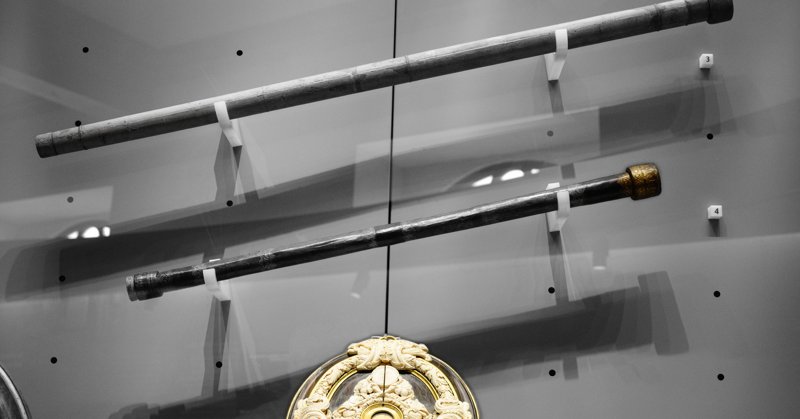
26. On January 7, 1610, Galileo Galilei enhanced the telescope’s design and used it to observe Jupiter. He found 4 of Jupiter’s moons and helped undermine the Ptolemaic model, the Earth-centered theory of the universe.
27. The Easter Bunny custom began among German Lutherans in 1682. At first, the Easter Bunny acted as a judge, deciding whether children were good or disobedient at the beginning of Eastertide. He then brought colored eggs for the children.
28. Wigs grew popular in the 17th century because they hid the scarring and baldness caused by syphilis.
29. The “Philosophers tree” experiment was a closely guarded secret among 17th century alchemists. When it was recently recreated, the experiment produced a “golden” tree.
30. An explosion in China in 1626 killed 20,000 people. The cause of the explosion has not been definitively established.
31. In 1669, an alchemist named Hennig Brand found phosphorus by boiling urine down and then heating the remaining material to very high temperatures. He was attempting to create gold, and he believed the yellow color of urine suggested it contained gold.
32. Before 1616, Yemen effectively controlled coffee as a monopoly. Merchants were not allowed to sell living coffee plants or seeds. This changed when Pieter van der Broecke, a Dutch merchant, stole coffee seeds and took them back to Holland. Forty years later, coffee had spread as far as Sri Lanka.
33. At Oxford University, since 1617, violations of etiquette have been punished by forcing the offender to drink as much as four pints of beer in a single sitting.
34. During the 17th century, Europeans would stick patches on their faces, using velvet if they were wealthy and mouse skin if they were poor, to hide blemishes or to make a fashion statement.
35. The greatest cavalry charge in recorded history took place during the Turkish siege of Vienna in 1684. Eighteen thousand Polish and German knights of the Holy League attacked the Ottoman line and utterly defeated it. The battle signaled the end of Turkish expansion into Europe.
Broadswords Meet Bayonet Fire
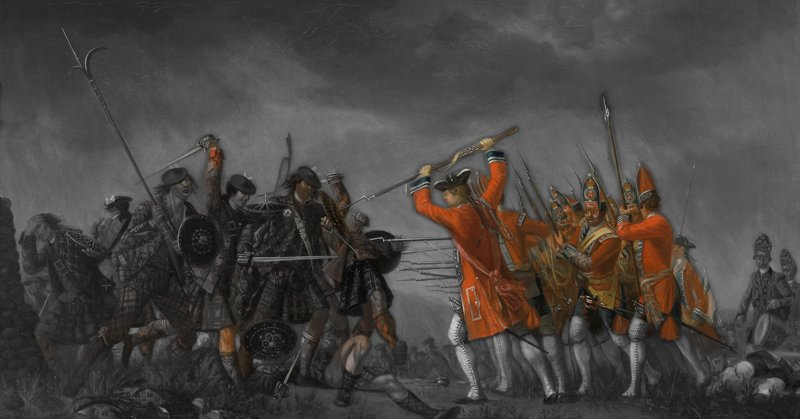
36. The Highland Charge was a 17th century Scottish method in which fighters rushed at musket lines and attacked the enemy with broadswords while they were still trying to attach their bayonets.
37. Chocolate milk was created by an Irishman named Hans Sloane while he was in Jamaica in the 1680s. Local people combined cocoa with water, which Hans Sloane found disgusting. He instead mixed it with milk to make it more agreeable. He took the recipe back to England, where pharmacists produced and sold it as medicine.
38. In 1621, the Dutch employed Japanese mercenaries to kill 40 people on Bandaneira Island in Indonesia, which was a profitable source of nutmeg. Of the 12,000 to 15,000 inhabitants, all except 1,000 were killed or made to leave the island as the Dutch established a nutmeg monopoly.
39. In 1625, English officers abandoned an invasion of Spain after their soldiers paused at a local winery and became heavily drunk.
40. The first successful anal fistula operation was carried out on Louis XIV in 1686. After that, anal fistulas became very fashionable among his royal court, with people waiting in line to have the procedure whether they required it or not, or putting bandages on their bums to make it seem like they did.
41. Though it was not actually lawful, British husbands began selling their wives in the 1690s to bring miserable marriages to an end. These sales were usually auctions advertised in newspapers, and the wife was brought there with a rope around her neck. In many cases, the purchaser had already been arranged, making the sale a symbolic breakup.
42. After the pendulum clock was invented in 1656, Dutch physicist Christiaan Huygens improved the best clock accuracy from being off by 15 minutes per day to about 15 seconds per day.
43. A few years before the famous 1611 Bible that bears his name was published, King James released a work on demonology that described the kinds of ghosts, spirits, vampires, fairies, witches, and even werewolves said to roam the land, and it inspired Shakespeare’s Macbeth.
44. During the 17th century, the usual field ration for the English Army was a full week’s supply of biscuits and cheese.
45. From 1659 to 1681, Christmas was prohibited in Boston.
Samurai Trade Voyage
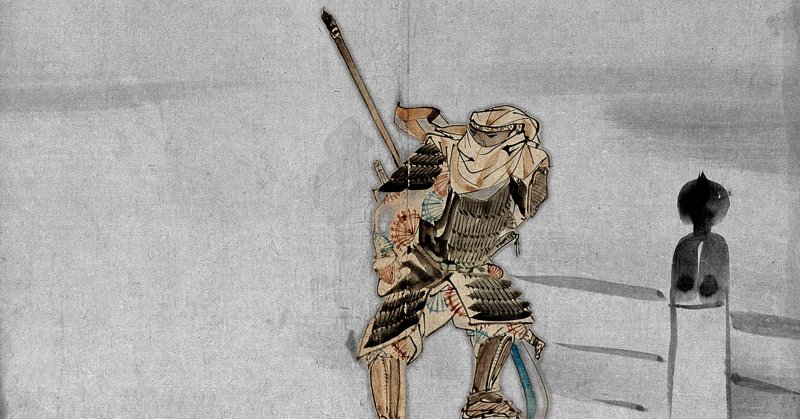
46. In 1610, a Japanese man called Tanaka Shōsuke went to Mexico to set up trans-Pacific trade ties. An Aztec nobleman’s journal documented his trip.
47. A 17th-century Damascus steel sword has been found to contain carbon nanotubes. The nanotubes, together with nanowires, are believed to be what gave the famed Damascus steel its strength.
48. In 1672, an enraged Dutch crowd ate their own Prime Minister, Johan de Witt.
49. Julie d’Aubigny was a 17th-century French swordswoman and opera singer who was challenged to duels by three different noblemen after kissing a young woman at a society ball. She defeated all three. She also once saved her lesbian lover from a covenant by setting it on fire. She was condemned to death for that, but she survived as well. She was later pardoned by the King.
50. 2012 was not the first time a Mayan calendar came to an end. It had already ended on September 18, 1618, and a new calendar started afterward.




Add Comment