

History is packed with events so bizarre, ironic, and unbelievable that they sound like something dreamed up for satire. Yet every one of these strange tales really happened, revealing just how unpredictable the past can be.
Martyr in the Cell
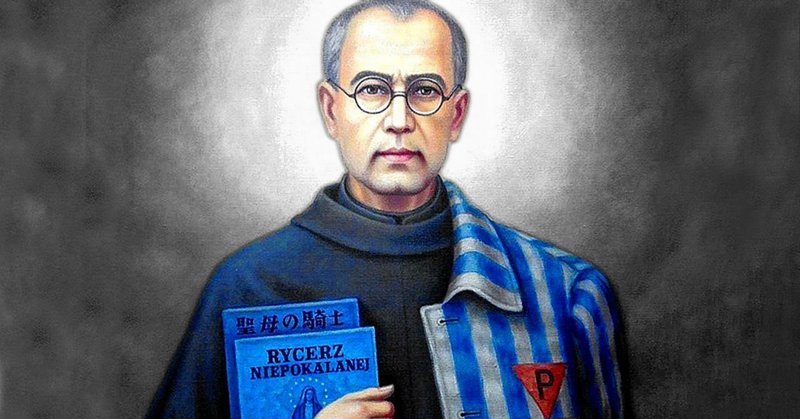
1. Saint Maximilian Kolbe was a Polish Catholic priest who was arrested and sent to Auschwitz after publishing anti-Nazi writings. When a prisoner escaped from Auschwitz, the usual punishment was to kill 10 people in his place, and on this occasion 10 were chosen to die in starvation chambers. One man selected at random cried out for mercy, and Maximilian took the stranger’s place. While the 10 were held in the starvation chamber, he led them in prayer, and even after two weeks without food or water, he remained standing and looked calmly at the Nazi guards whenever they came in to remove the dead. Eventually, the Nazi guards lost patience and killed him with lethal injection. He is a national hero in Poland.
2. In 1014 A.D., after he defeated a large Bulgarian army at the Battle of Kleidion, Byzantine Emperor Basil II ordered 99 out of every 100 prisoners to be blinded, leaving every 100th man with one eye so he could guide the others home. When the Bulgarian Emperor saw his thousands of blinded soldiers, he reportedly died of a heart attack.
3. After Ivan III of Russia married Sophia Palaiologina, the niece of Constantine XI, her uncle gave them a library along with many other treasures. This library somehow survived the Burning of Moscow in 1493 and was later passed to her son, Vasili III, and then to her grandson, Ivan IV. During Ivan IV’s reign of terror in the second half of his rule, he believed the library was too valuable and feared it might be stolen. So, with a few men, he took the collection out of Moscow, which was most likely a horse ride of 1 to 3 days, and buried the books. To make sure the library’s location would never be known, he had the men killed. Ivan IV died before the location of the library was ever revealed. We have no idea what may have been in this library or whether its contents survived. Some historians have speculated that Plato’s Hermocrates, the final dialogue about Atlantis, could have been included in the collection, but there is no proof of that.
4. While King Edward I was attacking a Scottish castle, he constructed the largest trebuchet ever built, called the Warwolf. The Scots surrendered when they saw it. Edward then ordered them back into the castle and fired on it anyway, because he wanted to see the weapon used in action.
5. In 1859, an insane homeless man from San Francisco named Joshua Norton declared himself Emperor of the United States, and the people of San Francisco actually accepted it. He was widely adored, treated with great respect, and the money he made himself was accepted at the places he visited. Because he was technically a poor homeless man, when he died he was supposed to be buried in a pauper’s redwood coffin and given little ceremony. But he was so cherished and honored by the local people that the San Francisco businessmen’s association created a funeral fund that eventually raised enough for a grand procession and an expensive rosewood casket for his burial. 10,000 people attended his funeral.
6. In the 1950s, the British government, with Winston Churchill’s support, tested biological weapons on Gruinard Island in Scotland. British scientists devised a plan to drop anthrax-coated linseed cakes into cattle fields as a kind of bio-nuke once it spread up the food chain. After early experiments wiped out nearly all life on the island, they concluded that possibly killing everything in continental Europe probably was not a good idea. The experiment left the island uninhabitable for 56 years. That was not the end of it. The government was not even planning to clean up the island until a group of scientists dropped contaminated soil at a military research facility and threatened to make more drops in order to “ensure the rapid loss of indifference of the government and the equally rapid education of the general public.” As a result, cleanup of the island began in 1986.
7. While Britain was trying to conquer India, a general named Charles James Napier was told not to attack the city of Sindh. Even so, when he had the chance, he went ahead and attacked Sindh and took it. Afterward, he sent word of his victory back to Britain in a telegram containing just one word: “Peccavi.” It is not an English word, but a Latin one, and most people know it from the Catholic Church. In English, it means “I have sinned,” which was a pun on “I have Sindh.”
8. In Qin China, two generals were late for a battle because of rain and flooding. Since the punishment for being late to a government job was death, they chose to take their soldiers and begin a rebellion for their freedom, because rebellion was also punishable by death. That was the start of the Dazexiang Uprising of 209 B.C., all because of rain. In another similar case, the Han dynasty, which led China into its golden ages, was begun by a prison transport guard who knew he would arrive late with his prisoners, so he freed them, recruited them, and then launched a rebellion.
9. In 1920, Yuan Shikai was defeated and Pu Yi was installed as the symbolic head of China, even though he remained confined to the Imperial Palace at all times and had basically no power. When he was around 15 years old, he learned what a telephone was and wanted one put in his palace, but the eunuchs were very reluctant. What if Pu Yi used the phone to build powerful contacts outside the palace? What if Pu Yi learned about communism? How would this affect the Chinese people and those in charge? What if Pu Yi became a threat? They would have to destroy the Imperial Palace and erase the imperial line completely. But he kept pushing for his phone, even threatening some people. In the end, they gave in. Pu Yi got his phone. He was delighted and insisted on being left alone with his new source of information. He then spent the whole afternoon prank calling restaurants and famous authors.
10. A German bureaucrat’s mistake on live television led to the fall of the Berlin Wall. This East German Soviet official, Gunter Schabowski, was supposed to announce that travel outside East Germany would be allowed a few days after the announcement, and that people had to wait days to get and have the special travel visa approved. He was scheduled to make the announcement on live government TV. He was hurried and exhausted on the way to the press conference and had not read the official government press release before going on live TV. An aide simply handed him the paper, which he read on camera. He read the first part of the release, which said that “the government now authorizes travel freedom” on live TV. A reporter then asked, “so when does this take effect?” He had not yet read the travel limits and visa requirements and had already had a long day. So rather than spending several live minutes reading the entire thing, Schabowski just muttered, “as far as I know…right away.” This caused thousands of East Germans to gather at the Wall and border checkpoints. People grew more and more upset as they were denied passage. In the end, to prevent a riot or being injured themselves, one guard allowed some people through. That set off a chain reaction and the Berlin Wall was gone.
Fort Detroit Falls By Bluff
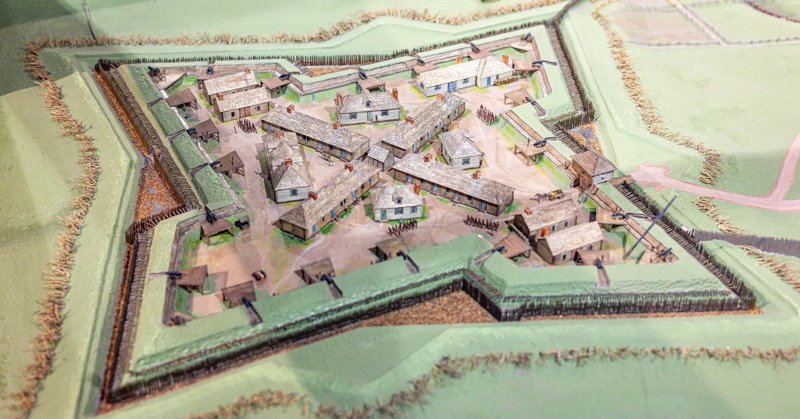
11. The taking of Fort Detroit in the War of 1812 succeeded because a major bluff worked. British general Brock captured the fort, which was defended by 582 Regulars and 1600 militiamen, with only 50 regulars, 250 volunteers, and 200 natives by bombarding the walls, shouting, and keeping his men marching in circles to make it seem as if he had several thousand regulars and natives. The British reinforced this deception by sending a letter they knew the Americans would intercept, saying that no more natives should be allowed into the area because 5000 were already there. These psychological tricks led American General Hull to think he was up against a stronger force, so he surrendered the fort without a battle.
12. In 1982, John Belushi was found dead at age 33 from an overdose of heroin and cocaine after becoming a star on Saturday Night Live by displaying his skill as a highly gifted physical comedian, which then led to a successful movie career. Fifteen years later, in 1997, Chris Farley was found dead at age 33 from an overdose of heroin and cocaine after becoming a star on Saturday Night Live by displaying his skill as a highly gifted physical comedian, which then led to a successful movie career.
13. In 1943, during Operation Cottage, United States and Canadian forces landed on Kiska Island, which had been held by Japanese forces. They managed to seize the island but suffered 32 dead. Another 50 soldiers were wounded, and 191 were reported missing. The strangest part was that the Japanese were not there at all. They had quietly departed the island two weeks before the attack. The 191 missing were said to have been caused by friendly fire, booby traps, and environmental factors.
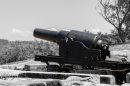
14. A museum relic that was 340 years old was once used to turn back an invasion. The Dardanelles Operation of 1870 was a relatively small clash during the Napoleonic wars. The Ottomans sided with the French against Britain and Russia. The British dispatched a fleet to threaten the Turks and make them reopen the strait. As the British ships moved toward Constantinople, French engineers and the Turkish army repaired and strengthened the shoreline defenses. This included bringing an ancient super cannon, 340 years old, back into service. It was modeled after the weapon used in the famous Turkish conquest of Constantinople in the 1400s. The cannon weighed 17 tons and fired stone cannonballs two feet across. After encountering little opposition from the Turkish fleet, the British were forced to retreat after suffering heavy damage from the shore batteries, including the huge Dardanelles Gun. So yes, trebuchets are impressive, but can they launch a 360 kg projectile more than 2400 meters?
15. Genghis Khan would give a daughter in marriage to the king of a friendly nation and set aside his other wives. He would then send his new son-in-law into military service in the Mongol wars, while the daughter assumed control of the rule. Most sons-in-law were killed in battle, which gave him a shield around the Mongol lands.
16. In the Soviet gulags, an organized criminal society known as the “Thief in laws” or the “Vors” emerged. They were intensely anti-authority and refused every order simply to insult officials. When Nazi Germany invaded the Soviet Union, Stalin let prisoners fight on the front in return for freedom. These hardened, anti-authority criminals then fought for the Soviet regime, and while some did well, others refused. Since they were habitual criminals, many returned to crime after the war and were sent back to the gulags. The Vors who had refused to fight the Nazis began calling these supposed traitors “Sukas,” meaning “bitches” in English. The Sukas became a separate group and were at the very bottom of the gulag hierarchy. But they were now battle-hardened fighters, and because the Vors mistreated them, they eventually rose up, tearing the gulags apart in extremely bloody battles. Tens of thousands of prisoners were literally killed. It was not a joke, and the guards allowed it because it helped control the population. These conflicts were known as the “Bitch Wars.”
17. In World War 2, Germany began launching the first V1 flying bombs at London, and they were striking Central London with accuracy. Germany had no agents in Britain, none at all. They believed they did, but every agent they sent was captured and then either turned or executed, while the rest were entirely fabricated, imagined as part of a British disinformation campaign that was and still is astonishing in itself. The UK government did not want to endanger the buildings, architecture, and heritage in the center of London, especially since much of it had already been bombed, so the supposed agents reported to Berlin that the V1s were going too far and landing in North London. Fake newspaper stories helped support the deception. The Germans obediently reduced the range, and the V1s devastated South London. One reason much of Croydon was built in concrete in the 1960s is the damage caused by the V1 attacks in 1944.
18. There was a reason many people wanted George Washington to become king of America. Among all his great achievements, his refusal to accept the role is perhaps his greatest legacy. He was admired by everyone, but he was also very formal and severe. One man, however, felt this reputation was exaggerated and claimed that Washington was not so impressive in person. Governor Morris believed meeting George Washington could not be that intimidating, so Alexander Hamilton made a wager. If, after meeting the general, Morris would pat him on the shoulder and say, “My dear General, how happy I am to see you look so well!” which would be the modern equivalent of saying, “Hey Georgie boy, how they hanging?”, Hamilton would pay for an expensive dinner for him and 12 friends. Morris did it and won the bet, but Washington immediately took Morris’s hand off his shoulder, stepped back, and fixed him with an angry look until the intruder withdrew in embarrassment. Hamilton paid, but at the dinner Morris said, “I have won the bet but paid dearly for it, and nothing could induce me to repeat it.”
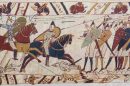
19. According to a folk tale about the Battle of Stamford Bridge on 25 September 1066, a huge Norse axeman held up the narrow crossing. Using only his large daneaxe, he single-handedly stopped an entire English army on a small bridge. No arrow was able to kill him. Only later did someone stab him from beneath the bridge in the balls, which ended his life.
20. Prince Mikhail Alekseevich Golitsyn of Russia angered Empress Anna Ivanovna by marrying an Italian woman. After his wife died, the Empress ordered a huge ice palace to be built in St. Petersburg in 1739, complete with ice sculptures and even an ice cannon. She dressed the prince as a jester and forced him to marry an ugly peasant woman in a large mock ceremony attended by animals and circus freaks. She then locked them naked in an icy room to die of cold. They survived only because the prince’s new wife bribed a guard for a coat.
Robespierre’s Final Guillotine Fate
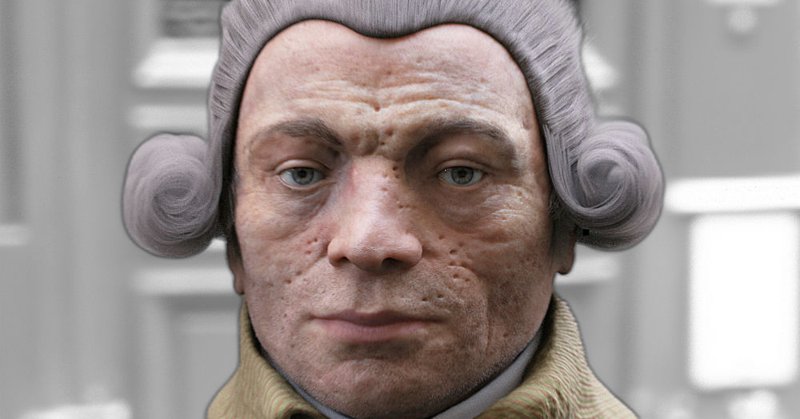
21. During the French Revolution, Maximilien De Robespierre was sending many people, including his own comrades, to the guillotine for execution. To keep the list secret, he never said who was on it, so other revolutionaries, fearing they might be included, came to “arrest” him. Robespierre then shot himself in the face, but only succeeded in shattering his lower jaw and did not die. They left him bleeding for a while in a cell, patched up his bleeding as well as they could, and executed him the next day.
22. Roman von Ungern-Sternberg was an Austrian-born Russian anti-Bolshevik lieutenant general during the Russian Civil War, and later became an independent warlord whose Asiatic Cavalry Division took Mongolia away from the Republic of China in 1921 after its occupation. What a ride this lad had? Yes, that’s right, he formed his own Mongol horde in goddamn 1921. He’s the only reason Mongolia and its people still exist today. They would otherwise have been assimilated into either China or Russia. The Dalai Lama recognized him as the incarnation of makahala, the god of death. He wanted to restore all of Europe into a Buddhist monarchist continent. When he was executed, a bullet bounced off one of his medals and killed one of the men in the firing squad. This guy was considered a demigod, and his story reads like a myth.
23. In the trenches of France during World War 1, General Monash was assigned the difficult job of breaking through the German line to take the French town of Le Hamel. The way Monash carried this out was both innovative and deceptive. German troops were well equipped, strongly fortified, reinforced with heavy artillery and machine guns, and highly trained. Facing these odds, Monash started to “condition” the German forces. Each day at dawn, he would unleash a barrage of smoke bombs followed by mustard gas canisters. The Germans, following their training, would put on gas masks that protected them. Monash continued this bombardment for two weeks, and soon the Germans grew used to the attack pattern and would instantly pull on their gas masks and take cover at the first sign of smoke. But on the dawn of the 4th of July, the smoke bombs were not followed by gas, but by the Australians. The German gas masks protected them from mustard gas and smoke, but they also greatly reduced their vision, hearing, and ability to communicate. With the noise of battle and the obscuring smoke, they were deaf and blind on the battlefield. To make matters worse, this was not an unprotected mass infantry assault, but a creeping barrage backed by a division of tanks, heavy artillery, and aircraft. The tanks shielded the vulnerable infantry, and the artillery and aircraft stopped the Germans from effectively using anti-tank measures. The battle ended in only 90 minutes and marked the rise of mixed-arms warfare.
24. In Britain, unlike in the US, the Manhattan project had almost no security. Instead, it was called “tube alloys.” It was judged to sound so dull that nobody would look into it, and that proved true because nobody did. The same was done for military tanks. The project was named ship water tanks, because the topic was bland and drew no interest. This was meant to keep armored tracked development secret. In the end, these tracked vehicles kept the name “tank” after the disguise name.
25. One of the more amusing things about the American Revolutionary era is that almost every single Founding Father was worse at handling personal finances than the average American today is (yes, it was that bad). By 1790, they had all accumulated an enormous amount of debt, much of it from extreme luxuries, such as Washington ordering marble from Italy for his new fireplace or having green wallpaper, the most expensive color in the 18th century, sent from Northern Europe. Jefferson would reportedly spend $800 a day in today’s dollars on groceries while he was in the White House, and a large part of that went to wine. He also constantly renovated Monticello, bought books on credit, and lent money to farmers. Many of them were simply buried in debt and had no clear plan for getting out of it.




Add Comment