

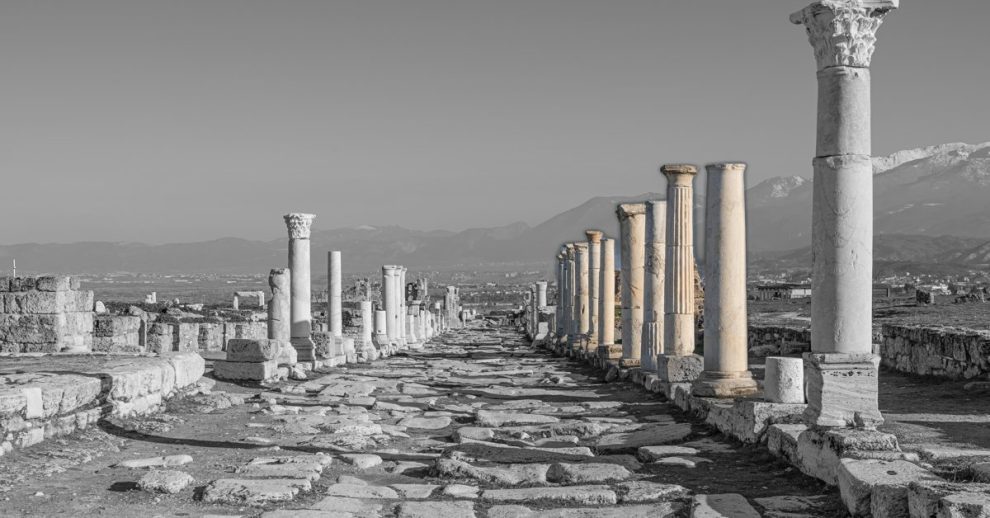
Across the world, the remains of forgotten cities still lie buried beneath deserts, forests, lakes, and even the sea, preserving remarkable stories of ancient civilizations. These fascinating places reveal how people lived, built, traded, worshipped, and sometimes vanished, leaving only ruins and mysteries behind.
Microbes Mimic Lost Ruins
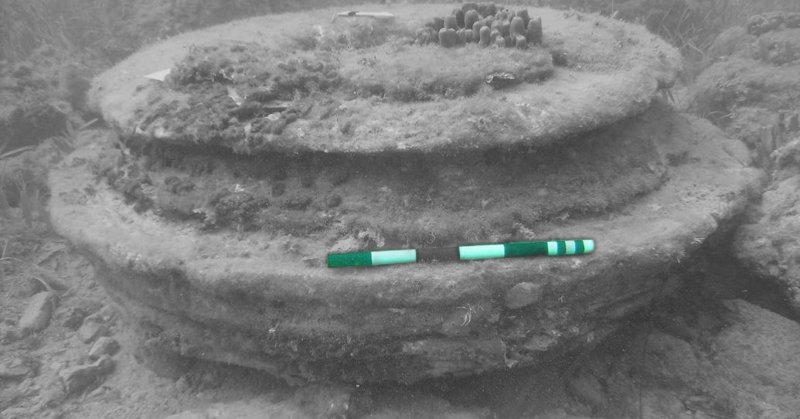
1. In 2013, snorkelers found what looked like ancient masonry off the coast of Zakynthos, the Greek island, and archaeologists sent to the location believed the strange rocks could be the remains of an ancient city. In fact, the so-called Lost City of Zakynthos was not created by humans, but by methane-eating microbes.
2. A man knocked down a wall in his home in 1963 and found a vast, intricate tunnel network behind it. He had uncovered the ancient underground city of Derinkuyu in Turkey. The city had 9 levels, could accommodate 20,000 people, and included facilities such as stables, wineries, schools, and chapels. It was built between 1200 and 800 B.C.
3. Catal Huyuk, in present-day Turkey, was among the earliest cities ever recorded, yet it had no streets. Its homes were packed together in a honeycomb-like maze. Most houses were entered through openings in the roof and side doors, with access to the doors provided by ladders and stairs.
4. Nan Madol is the only ancient city ever constructed on a coral reef. It stands as an extraordinary feat of ancient engineering. Built in a lagoon, the city is made up of a chain of small artificial islands connected by a system of canals.
5. Heracleion, an ancient Egyptian city that disappeared beneath the Mediterranean Sea 1,200 years ago, was found in 2000 and has been the focus of underwater excavation ever since. It is believed to have been flooded by an earthquake.
6. A vast ancient Mayan city called El Mirador has been uncovered in Guatemala, and it contains one of the largest pyramids in the world. The La Danta temple is about 72 meters, or 236 feet, high from the forest floor.
7. In 2900 B.C., the ancient city of Uruk had between 50,000 and 80,000 inhabitants within its 6 square km walled area, which made it the biggest city in the world at that time.
8. In the ancient city of Timbuktu in Mali, an estimated 300,000 or more precolonial African literary manuscripts are stored in different libraries and private collections, mostly in Arabic and some in local languages. Their subjects include herbal medicine, mathematics, astronomy, poetry, law, history, faith, politics, and philosophy.
9. An ancient city called Seuthopolis was found at the bottom of a lake in Bulgaria. It was founded in 323 B.C. The city was discovered and studied between 1948 and 1954. Sadly, the discovery came too late, because the reservoir dam being built nearby soon flooded the valley and submerged the city. A project is now underway to restore the city.
10. In the ancient Indian Kingdom of Golconda, King Ibrahim Wali created and constructed a fortress city with such perfect acoustics that a hand clap at the fortress gates could be heard at the top of the citadel itself, which sat on a 300 foot hill.
Five Faiths, One City
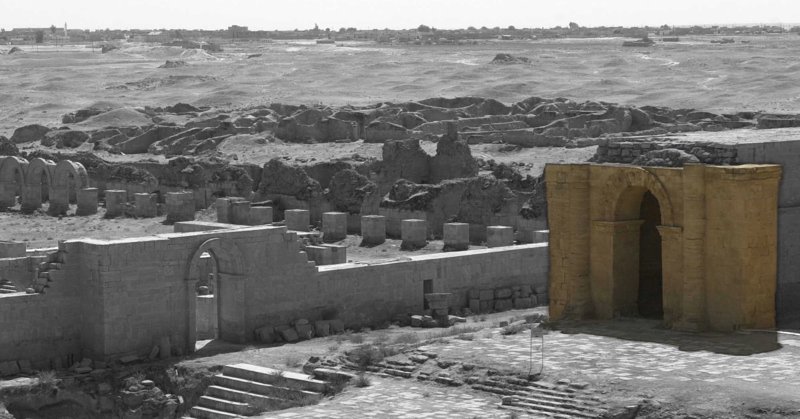
11. Hatra, the capital of the “first Arab Empire” known as the Kingdom of Araba in what is now Iraq, was among the most varied cities in the ancient world. It had temples, or pantheons, for five major religions: Greek, Mesopotamian, Canaanite, Aramean, and Arabian.
12. In Portugal, there is an ancient city called Vilarinho Da Furna that lies underwater, but when dry periods arrive, the water drops enough for it to be seen. This town, which is 2,000 years old, was destroyed in 1967 when an electric company built a dam.
13. At 121 feet, or 37 meters, the Taq-i Kisra is the largest brick arch in the world. It is almost 1,500 years old and the only remaining structure from the ancient city of Ctesiphon.
14. Gobekli Tepe, the ancient site in Turkey built in 10,000 B.C., is twice as old as Stonehenge and completely overturns our understanding of human development and agriculture. Carvings on one of the site’s stones show a comet impact that researchers have suggested led to a global cataclysm, which then triggered a 1,000-year ice age called the Younger Dryas. It comes before the invention of known tools, cities or communities, and written language. The oldest known sphinx was discovered at Gobekli Tepe in Turkey and dated to 9,500 B.C.
15. Tenochtitlán, the Aztec capital, was the biggest city in the Americas, with more than 200,000 residents. It was constructed on an artificial island in the center of a lake and linked to the mainland by three causeways. The city had massive pyramids, floating gardens, aqueducts, and canals. The Spanish destroyed it in 1521.
16. When a valley was inundated to make way for a new hydroelectric power station, two ancient Chinese cities were submerged. He Cheng and Shi Cheng stayed forgotten for 40 years until 2001. Shi Cheng was constructed more than 1300 years ago in 621 AD. It once served as the main center of politics, economics, and culture. He Cheng is even older, having been founded in 208 AD as a commercial center.
17. In ancient Memphis, Egypt, so many people venerated Anubis, the jackal-headed god of death, that the catacombs beside this sacred temple once contained nearly 8 million mummified puppies and adult dogs.
18. In the ancient city of Mohenjo-Daro more than 4000 years ago, nearly every house had a private bathing area fitted with drains that carried dirty water into a larger channel, which then emptied into a sewage drain.
19. The ancient Peruvian city of Caral contains pyramids that were constructed around the same period as Egypt’s Great Pyramids. The city also shows no evidence of warfare, suggesting the site was built as a place for “Commerce and Pleasure.”
20. The Greek city of Helike was destroyed by an earthquake in 373 B.C., and every inhabitant died. In time, it became buried under silt and was considered mythical until it was found again in 2001.
Empty Ruins Still Contested
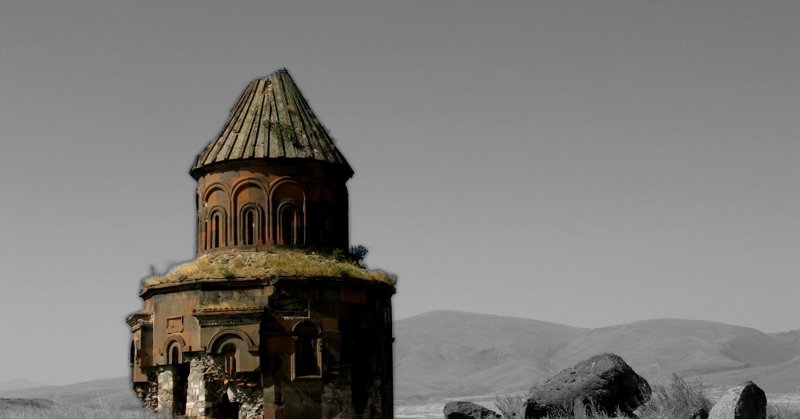
21. Ani, a ruined and uninhabited medieval Armenian city in Turkey, has remained deserted for more than 300 years. Despite being only a ruin, it is still disputed.
22. In the ancient Greek city of Sybaris, inhabitants, mocked by well-known writers of the era for their very lavish way of life, had canals constructed that carried wine straight from the countryside into their private cellars. The cavalry of ancient Sybaris trained its horses to dance to pipe music, and then was defeated by an army that attacked them with music.
23. Jericho, now in Palestine, is the oldest walled city in the world, with evidence of stone defenses dating to nearly 9,000 years ago. Excavations have uncovered signs of settlement that are even older, reaching back as far as 11,000 years ago.
24. The ancient Maya city-states were dominated by two cities, Tikal and Calakmul, which fought a series of conflicts through proxy states. Some experts have likened these conflicts to proxy fighting between the US and the Soviet Union during the Cold War.
25. The ancient Egyptians had a city named Crocodilopolis. It had a sacred lake where crocodiles were worshipped, fed, and decorated with jewelry.






Add Comment