

The ancient world was far more advanced, unusual, and surprising than most people imagine. These fascinating facts from the BCE era reveal remarkable discoveries, inventions, people, and events that continue to challenge our assumptions about early history.
Ancient Joke Gets Crude
1. Fart jokes have been around since at least 1900 BCE. A Sumerian joke about a woman farting in her husband’s lap is the oldest joke ever recorded.
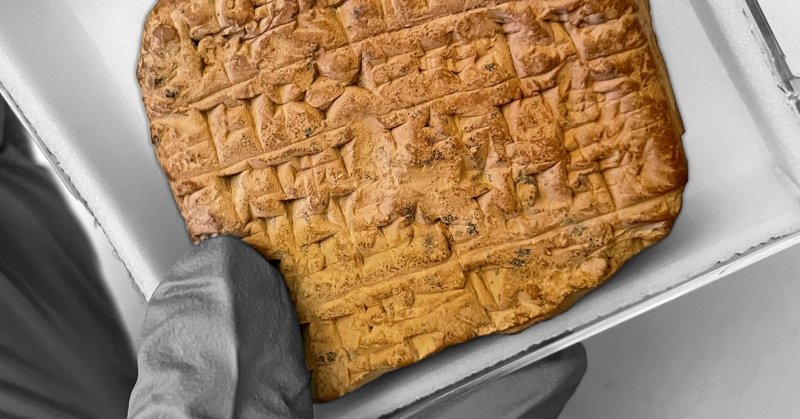
2. This image of an ancient tablet is actually a receipt for beer that is 5,000 years old. The “Alulu beer receipt” documents the purchase of the “best” beer from a brewer around 2050 BCE in the Sumerian city of Umma in ancient Iraq.
3. Archaeologists have discovered slingshot balls in Greece that are inscribed with “Take that!” or “Catch!”, which dates them to the 4th Century BCE.
4. The earliest battle recorded in history was the Battle of Megiddo in 1457 BCE. It made such an impression on the Levantine people there that they thought the last battle of humanity would also happen there. That is where the word Armageddon comes from.
5. Cheese making is very old and comes before recorded history. The earliest evidence of cheese making dates to 5500 BCE in Kujawy, Poland, where fat molecules were discovered on ancient strainers.
6. Beekeeping has existed for thousands of years, and by 1500 BCE it was common across the Levant. Because it mattered so much to local economies, Hittite law treated the theft of a swarm of bees or an empty hive with a penalty about equal to the fine for stealing a sheep.
7. Researchers discovered an ancient Babylonian tablet with a list of Pythagorean Triples and dated it to 1800 BCE.
8. Carmen 16 is a poem by Gaius Valerius Catullus, who lived from 84 BCE to 54 BCE, and it is regarded as so sexually explicit that its English publication did not occur until the late 20th century. It is viewed as one of the filthiest things ever written in Latin, or in any language.
9. Nearly 4,000 years ago, from 1981 to 1802 B.C., ancient Egyptian teachers used red ink to mark spelling errors, just as is done today.
10. Rock Paper Scissors originated in Asia and dates to 207 BCE, when it was first known as hand command.
False Beacons, Fallen Dynasty
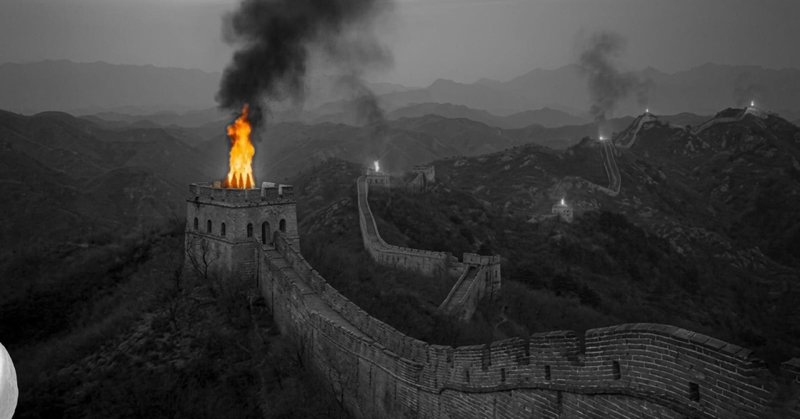
11. It is known that misuse of smoke signals helped bring about the collapse of the Western Zhou Dynasty around the 8th century BCE. King You of Zhou often tricked his warlords with fake alarm beacons to entertain his queen. When a real uprising happened, nobody came to the king’s assistance.
12. In 200 BCE, China’s Han dynasty drilled for natural gas, moved it through pipelines and gas containers, and used it in stoves.
13. The world’s oldest known wooden structures are four timber water wells from the Greater Leipzig area of Germany. They were constructed in the early Neolithic period, between 5469 and 5098 BCE.
14. The oldest known D20 die was found in Egypt and dates to about 30 BCE.
15. The earliest recorded gay couple in history was two Ancient Egyptian manicurists who worked in the Pharaoh’s royal court in 2400 BCE.
16. The “Shulba Sutra” is an ancient text that began around 800 BCE in ancient India. It describes how to build Fire Ritual Altars with the help of Pythagorean triples, square roots, and geometric shapes.
17. Ancient Australian Aboriginal myths describe the creation of geographical features in Australia, dating to 10,000 BCE, with remarkable accuracy. The myths support modern geological evidence, showing they originated as firsthand accounts that were preserved for thousands of years.
18. Asphalt is not a modern substance. Its regular production is known from the 3rd millennium BCE. The Babylonians also used it to attach carved eyes to statues.
19. The Antikythera Mechanism is the world’s first analog computer, and it was used to calculate the positions of stars and planets with accuracy to 1 degree in 500 years. It was made in 100 BCE, about 1500 years before Kepler was even born.
20. The oldest living human-planted tree in the world with a known planting date is the sacred fig tree “Jaya Sri Maha Bodhi”, planted in 288 BCE. It is said to be the southern branch of the historical Sri Maha Bodhi at Buddha Gaya in India, under which Lord Buddha attained Enlightenment.
Sixty Counts Everywhere
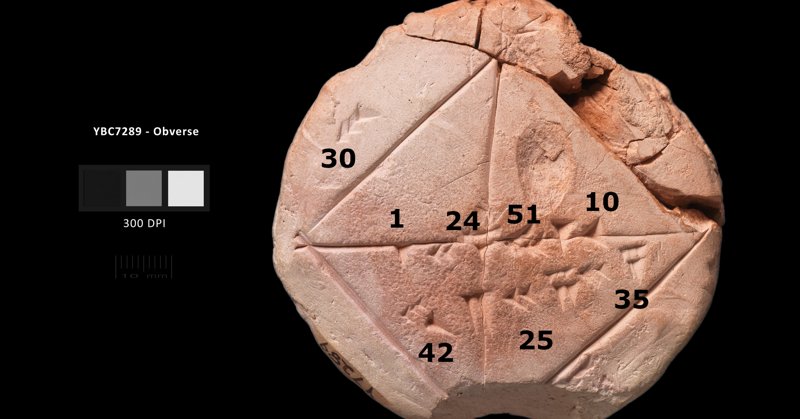
21. Sexagesimal, or base 60, is a number system whose foundation is sixty. It began with the ancient Sumerians in the 3rd millennium BCE and was handed on to the ancient Babylonians. A modified version is still used today for telling time, measuring angles, and giving geographic coordinates.
22. The earliest known author in history was a woman called Enheduanna from the Sumerian city-state of Ur, in what is now Iraq, during the 23rd century BCE. Serving as a high priestess, she composed hymns and poems that remained in circulation for hundreds of years after she died.
23. In 300 BCE, an Egyptian pharaoh had a ship constructed that was capable of carrying as many as 7400 men. One person regards it as the largest human-powered vessel ever made.
24. Lions lived across many parts of Europe until hunting drove them to extinction around 100 BCE.
25. Although it was built in 280 BCE, the Colossus of Rhodes was roughly the same height as the Statue of Liberty.



Add Comment