

Ancient Soil-Saving Cycle
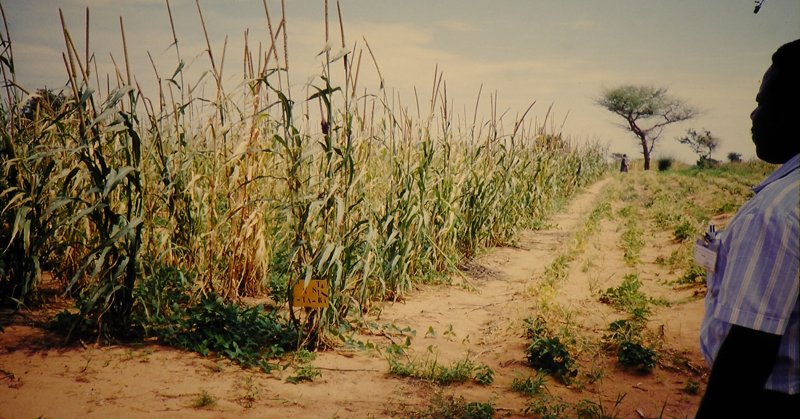
26. People were practicing crop rotation 8,000 years ago. By 6000 BCE, farmers were planting different crops in alternating years. They did not know the chemistry behind it, but they understood it helped preserve soil health for reliable harvests.
27. Archaeologist Leonard Woolley found the world’s earliest museum in Princess Ennigaldi’s palace in 1925. It had been established in 530 BCE, with the newest artifact being nearly 700 years older than the pavement beneath it, and most objects were neatly kept and labeled.
28. Hippocrates recorded scurvy as a disease, and Egyptians had noted its symptoms as early as 1550 BCE. The fact that eating foods with vitamin C cures scurvy was rediscovered and then forgotten many times until the early 20th century.
29. The Great Sphinx of Giza is so ancient that its first restoration took place in 1400 BCE, when it was already 1,000 years old.
30. Electrum is a naturally found alloy made of gold and silver. It was being used in Egypt as early as 3000 BCE as an outer layer on pyramidions above pyramids and obelisks. The first metal coins ever minted were made of electrum, and for a few decades Nobel Prize medals were as well.
31. The final Wooly Mammoth died in 1650 BCE on Wrangel Island in Russia. At about that same time, Egypt’s Middle Kingdom was nearing its end and Greeks, the predecessors of the better known Greek Empire, had only recently begun living in Mycenae.
32. In 36 BCE, the Roman statesman Marcus Varro wrote about germs, calling them “minute creatures which cannot be seen by the eyes, which…enter the body through the mouth and nose and there cause serious diseases.” Broad acceptance of the germ theory of disease would not come for another 1,900 years.
33. Scientists have found a bracelet in Siberia that is 40,000 years old. It was crafted by an extinct human species known as Denisovans. Homo sapiens did not make bracelets of this level of technical sophistication until 10,000 years ago. It is among the oldest pieces of jewelry ever found.
34. The earliest recorded cancer cases were discovered on Egyptian papyrus manuscripts dating to 3000 BCE. These manuscripts mention 8 cases of breast tumors that were removed by cauterization using a tool known as the fire drill. The text says of the disease, “There is no treatment.”
35. By 400 BCE, Persians had worked out methods to gather and keep ice, making it usable throughout the year in the desert. They used a domed structure called a Yakhchāl, which relied on evaporative cooling to preserve ice and food.
Earliest Pillow Evidence
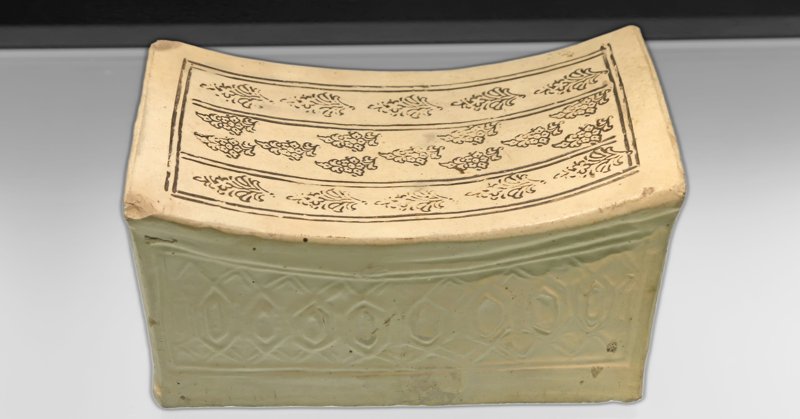
36. The oldest historical evidence of pillow use comes from around 7000 BCE in Mesopotamia, an ancient civilization.
37. Anaxagoras, who lived from 510 to 428 BCE, was the first to give the correct explanation for eclipses. He also proposed that the Sun was a star and that stars were burning rocks, but the other stars are too distant for their heat to be felt.
38. Liu Pengli, a Chinese prince from the mid 100 BCE period, was among the earliest known serial killers. He joined expeditions with others and killed people purely for amusement. He had more than 100 confirmed victims. After he was exposed, his uncle, the emperor, exiled him rather than having him executed.
39. France, Britain, and Ireland contain a total of 15 of the world’s 20 oldest known buildings. The oldest is Barnenez in France, which dates to 4800 BCE. That is more than 2,000 years earlier than the oldest pyramid in Egypt.
40. The Code of Hammurabi, dating to 1754 BCE, contains 282 laws carved into stone. It features the idea of “eye for an eye” and “tooth for a tooth.” This was more than 500 years before the Torah.
41. Although modern child-resistant lids were invented in 1967, archaeologists found a container 20 years later that was opened with a similar twist-off technique. The vessel was uncovered in the Mayan ruins of Río Azul in Guatemala, and it was dated to 500 BCE. It held chocolate.
42. Xenophanes, who lived from 570 BCE to 475 BCE, was the first known person to use fossils as proof for a theory about Earth’s history. After finding marine fossils on a mountain, he suggested that the area had once been underwater.
43. The earliest known reference to altitude sickness came in 37 BCE, when a Chinese official observed that a trade route to Afghanistan crossed a mountain that made travelers ill as they climbed it. In this account, the place was called “Big Headache Mountain.”
44. In 200 BCE, Eratosthenes determined the Earth’s circumference with 98.4% accuracy by comparing the sun’s angle in two separate cities.
45. Zenodotus introduced alphabetical order in the 3rd century BCE, and he was also the first librarian of the Great Library of Alexandria.
Ancient Toilets And Sewers
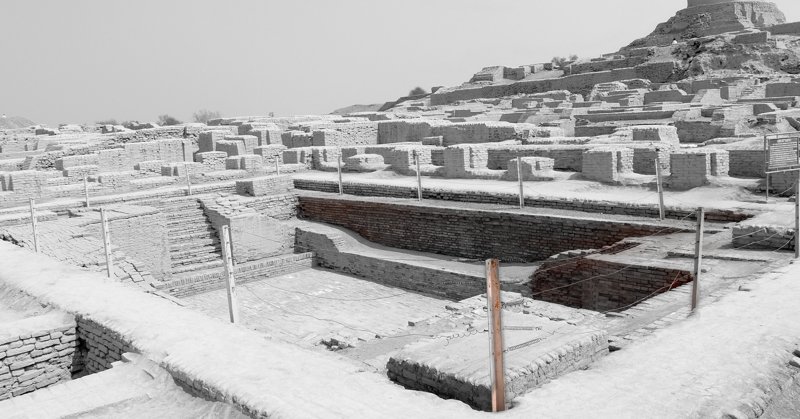
46. The earliest flush toilets were used by the people of the Indus Valley Civilization, which existed from about 3300 BCE to 1700 BCE. Nearly every house in the ancient cities of Mohenjo-daro and Harappa had a flush toilet linked to a shared sewage system.
47. Broccoli is a human creation and a manufactured food, resulting from selective breeding of wild cabbage plants that began around the 6th century BCE.
48. The city of Jericho in Israel has been inhabited without interruption since 9400 BCE, and it is believed to be among the oldest continuously occupied cities in the world.
49. Around 40 papyri dating from 150 to 99 BCE, discovered in Egypt, make up an archive that chronicles three generations of a common soldier’s family. Letters, divorce documents, contracts, and wills describe his move from Crete, his marriages, his career, and his death, along with the life of his daughter, her four siblings, and her children.
50. The first vending machine was created in Ancient Egypt in 215 BCE and dispensed holy water. It operated through levers, so that inserting a coin opened a tap and allowed water to flow out.



Add Comment