

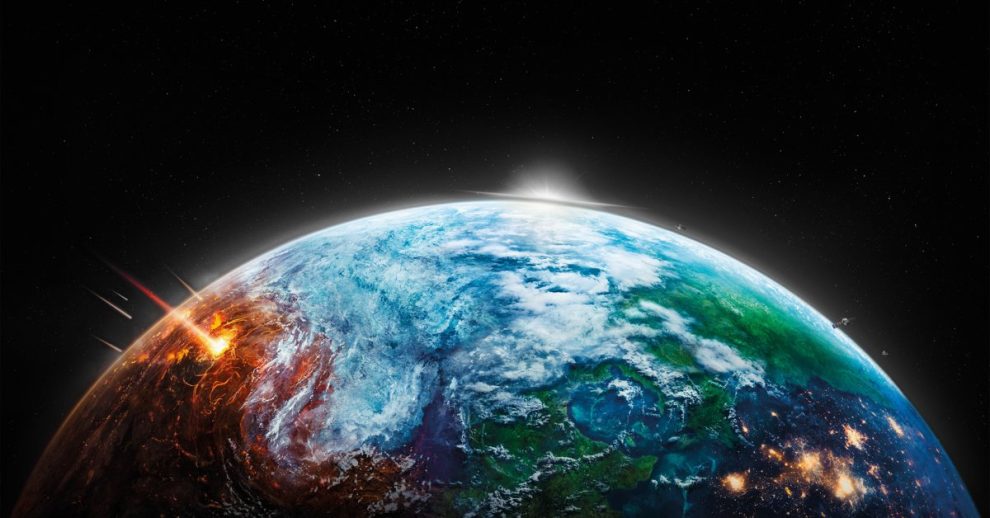
Earth’s story stretches back billions of years, and many of its most extraordinary chapters sound almost impossible today. These fascinating facts explore the ancient events, creatures, climates, and discoveries that shaped our planet long before human civilization began.
Sea Vanishes, Then Returns
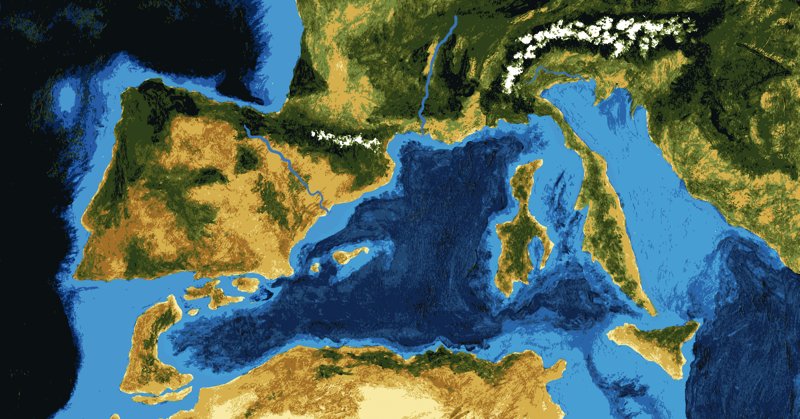
1. More than 5 million years ago, the Messinian salinity crisis took place, during which the whole Mediterranean Sea evaporated and dried up after the Strait of Gibraltar closed. This made the Mediterranean much saltier than the Atlantic Ocean. When the strait reopened, it refilled relatively quickly in what is called the Zanclean Flood.
2. About 234 million years ago, Earth’s climate shifted because CO2 production increased, possibly from greater volcanic activity caused by Pangea splitting apart. This raised global temperatures and humidity, which brought more rainfall to this hot, dry world, and it continued raining for more than 2 million years. The heavy rain caused the total extinction of organisms, which were later replaced by dinosaurs in the Jurassic Period. This wet interval in Earth’s history is known as the Carnian Pluvial Event.
3. Humans were once an endangered species. Roughly 1.2 million years ago, when our ancestors were spreading across Africa, Europe, and Asia, there were likely only about 18,500 breeding individuals. Humans later went through another population bottleneck in which the total human population fell to fewer than 1000 people around 70,000 years ago because of a supervolcano eruption in Indonesia that caused a nuclear winter.
4. Earth’s oceans came into being billions of years ago over extremely long spans of time. The water stayed in gaseous form until Earth cooled below 212 degrees Fahrenheit. At that point, about 4.4 billion years ago, the water condensed into rain and filled the basins that are now the oceans.
5. There is a fern with such a strong ability to sequester atmospheric carbon that it brought about an ice age 49 million years ago. Azolla prospered because it found ideal conditions for growth at the North Pole. Huge quantities of this fern kept growing and sinking to the bottom of a sea without decomposing for 800,000 years. It lowered atmospheric CO2 so much that it became a danger to its own survival.
6. Fossils discovered recently indicate that moths and butterflies have existed on Earth for at least 200 million years, while flowering plants appeared only about 130 million years ago. As a result, butterflies lived for 70 million years without flowers.
7. As much as half of Earth’s water may be older than the Sun. A large share of the water on our planet and throughout the solar system began as tiny ice grains drifting in interstellar space. Ice between stars is rich in deuterium, and it seems that most of it reached Earth on ice laden comets that struck the planet billions of years ago.
8. Before the Great Oxygenation Event, when oxygen levels rose about 2.4 billion years ago, Earth’s atmosphere is believed to have initially been rich in methane. Because of hydrocarbon haze, the sky could have appeared anywhere from purple to orange.
9. A shift in Earth’s axis makes the Sahara alternate between desert and grassland every 23,000 years. The most recent cycle began 7,000 to 10,000 years ago, and the Sahara is expected to return to broad grassland in about 16,000 years. These are called Milankovitch cycles, driven by changes in Earth’s orbit and tilt. They strongly influence Earth’s climate and are a major reason for recurring ice ages.
10. Asteroids that struck Earth and the moon more than 4 billion years ago were turned into a vapor of iron. After any such impact, a cloud of iron vapor would have surrounded the planet and then fallen back to Earth as metal rain. The iron vapor blasted out by those fast-moving impacts escaped the moon’s gravity, but it remained gravitationally bound to the more massive Earth. This may help account for the chemical differences between Earth and the moon.
Oxygen Fueled Ancient Wildfires
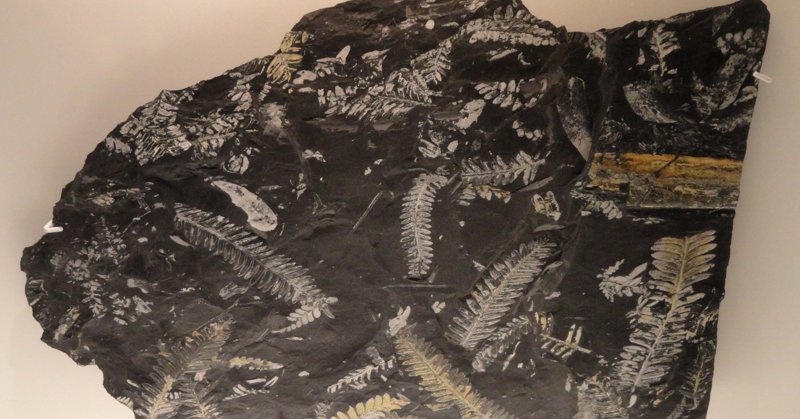
11. About 300 million years ago, near the close of the Carboniferous period, oxygen levels on Earth reached as high as 35%, compared with 21% today. Lightning was much more destructive then. This era is linked to the creation of extensive charcoal deposits, which have been tied to enormous wildfires. Oxygen was not only at a record peak, but there were also vast stores of wood available as fuel. Because organisms that decompose wood were absent, tens of millions of years of forests accumulated during this time and later became the coal used today.
12. Scientists have recently discovered evidence indicating that a supernova explosion 2.6 million years ago, 160 light years from Earth, directly caused the extinction of many marine megafauna species on Earth through exposure to the supernova’s deadly muon radiation. Hominids and land megafauna, however, survived this extinction event.
13. Whales developed from wolf-sized land animals that lived on the planet about 50 million years ago. Today, there are even some wolves on Vancouver Island in Canada that may be beginning a similar transition. They get most of their food by hunting fish, spend most of the day swimming, and have even evolved webbing between their toes.
14. Sharks are older than trees. Fossil evidence shows sharks existed 450 million years ago, while modern trees appeared only about 350 million years ago. The earliest sharks were small and occupied the bottom of the food chain. Sharks did not become apex predators until 100 million years ago, and they did not dominate until only 15 million years ago. Before then, a series of other large marine predators either preyed on them, competed strongly with them, or both.
15. The oldest known life on Earth consists of fossilized microorganisms discovered in hydrothermal vent openings on the ocean floor. They were most likely chemosynthetic bacteria. These bacteria use sulfur compounds, especially hydrogen sulfide, a substance highly poisonous to most known organisms, to create organic material. Scientists have also recently found that hydrothermal vents deep in the ocean are hot enough to emit enough light, mainly in the infrared range, to sustain photosynthetic bacteria.
16. Signs of organisms that lived at the same time as the Hadean formation of Earth were recently found in Western Australia, and they date to nearly 1 billion years before the present fossil record. Scientists identified 4.1 billion year old zircon samples, from a time even before oceans existed on Earth, with pockets of organic carbon. Some scientists even think life may be older than Earth itself, proposing that life first arose about 10 billion years ago, far earlier than Earth’s estimated age of 4.5 billion years.
17. The Cambrian Explosion was a biological big bang that occurred between 500 and 250 million years ago. Life changed from slow movement on the seafloor with no predation to the many different ecologies seen today. Some scientists think the evolution of vision set off this evolutionary event.
18. We are still living in the ice age that began 2.6 million years ago at the start of the Pleistocene epoch, since the Greenland, Arctic, and Antarctic ice sheets still remain. Even less understood are the cycles of relative warmth between ice ages, called interglacials. It is mildly unsettling to consider that all of meaningful history, including farming, the founding of towns, and the rise of mathematics, writing, science, and everything else, has occurred within an unusual stretch of good weather. Although many interglacials appear to have lasted as little as 8000 years, ours has already lasted 10000 years.
19. Insects became very large 358 million years ago. Millipedes and centipedes were bigger than humans, dragonflies were as large as eagles, and beetles were the size of a large dog. The main theory for why ancient insects grew so large is that they were helped by an excess of oxygen in Earth’s atmosphere. Earth grew rich in oxygen because trees were newly appearing and could grow thanks to lignin. But when those trees died, no organisms existed that could break down lignin, so the trees kept adding oxygen to the atmosphere but did not balance the books by releasing carbon dioxide when they died.
20. The Purple Earth hypothesis proposes that early life on Earth may have produced metabolic energy from sunlight with a purple colored molecule called retinal, which may have come before chlorophyll and photosynthesis evolved. As a result, the land on early Earth may have appeared purple.
Life Appeared Almost Immediately
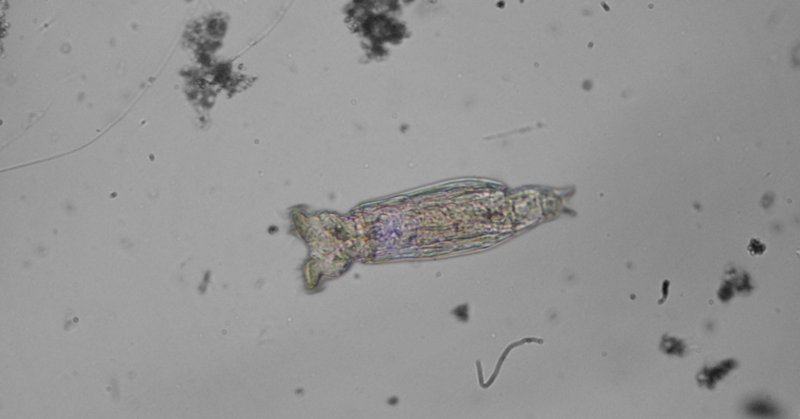
21. Life most likely arose on Earth almost as soon as it became habitable. The first oceans formed 4.4 billion years ago, while existing evidence indicates that the first life formed 4.28 billion years ago. In this context, almost immediately means on a geological timescale.
22. Earth is not currently at its hottest point in history. Scientists recently discovered fossil pieces from 13 trees in Antarctica that are more than 260 million years old, showing that this forest grew at the end of the Permian Period, before the first dinosaurs. At that time, Antarctica was still located at the South Pole. Around 53 million years ago, Antarctica was warm enough for palm trees to grow along its coasts. During these global hothouse periods, there were no polar ice caps. Because of melted glacial ice and the arrangement of the ocean floor, sea level was at times as much as 300 meters higher than it is today, forming huge inland seaways across most continental regions.
23. Up to six supercontinents are believed to have formed and then broken apart before Pangaea. About 400 million years separate each return of the supercontinent cycle, which is now driving the Pacific Ocean to shrink until another supercontinent eventually forms. The oldest supercontinent on Earth is Vaalbara, which formed 2.7 to 3.6 billion years ago.
24. Recent research has indicated that photosynthesis may have started around 3.4 billion years ago. Before photosynthetic organisms evolved, Earth may not have been blue at all. Unoxidized iron in the oceans may have made them dark green or even black. Then, as photosynthesis increased, the oceans would have turned red as the iron oxidized, and Earth became blue when the dissolved iron oxide settled to the seafloor.
25. Earth, together with the Sun, takes 226 million years to make one orbit around the Milky Way Galaxy. This means Earth has completed about 20 orbits around our galaxy since it formed 4.5 billion years ago. That also means Earth will turn 21 sometime in the next 100 million years or so and will die at about 53 in a house fire, swallowed by the Sun.


Add Comment