

Eyelash Signs Of Purity
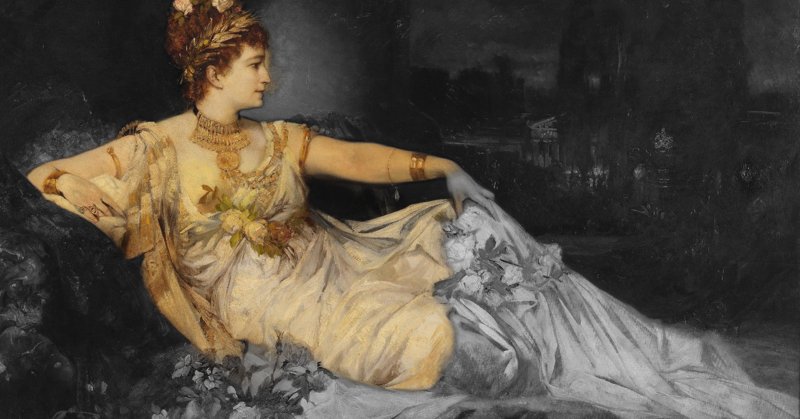
26. Romans thought eyelashes could fall out because of too much sex, so women used makeup to make their eyelashes appear thicker and longer as proof of chastity.
27. In ancient Babylon, every woman was required at least once in her life to go to the temple of Aphrodite and have sex with a stranger.
28. During the 19th century, Victorian men commonly turned clippings of their lover’s pubic hair into jewelry and wore them as hat decorations or keepsakes.
29. In medieval times, red hair was linked to moral corruption and strong sexual desire. Redheads were seen as vampires, werewolves, and witches. The Spanish Inquisition targeted them for persecution, convinced that their hair was proof they had stolen the fires of hell.
30. During medieval times, it was usual to have two sleeps each night. People would sleep for 4 to 5 hours, stay awake for about 2 hours, and then sleep again for another 3 to 4 hours. It has been suggested that this pattern may have evolved so people could tend the fire and stay warm and safe.
31. During the Middle Ages, it was considered an accepted political gesture for two kings to share a bed as a sign of unity between their two nations, much like a modern photo opportunity. It was not sexual in any way.
32. The idea of a rap battle dates back to the 5th century. Poets commonly took part in flyting, a spoken-word contest in which they traded insults in verse. The Norse god Loki is known for having insulted other gods in verse. Flyting is said to resemble both slam poetry and modern rap battles.
33. Producing the purple dye used for royal clothing in ancient Egypt, Greece, and Rome required extracting the pigment from decaying snails. The odor was so foul that Jewish law explicitly allowed women to divorce any husband who became a dyer after marriage.
34. In ancient Rome, a revolt called the secessions of the plebeians involved commoners leaving entire cities, similar to a modern general strike, and leaving the elite in the cities to manage on their own.
35. In 1500s France, women were able to accuse their husbands of impotence. The husband then had to become erect and prove in court that he could ejaculate. If he did not succeed, he could request a trial by Congress and try to have sex with his wife before the experts.
Hell Fears Turn Deadly
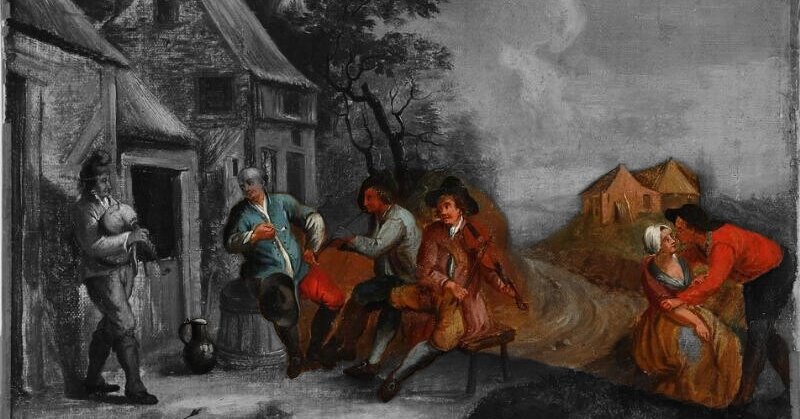
36. In 18th-century Denmark, people feared ending their own lives because they believed it would send them to hell. Instead, they chose to kill other people in order to get the death penalty and repented before execution, believing that would send them to heaven.
37. During the Middle Ages, people would brew a batch of ale, throw a large party to drink it, and gather donations for those in need. They called this “help ale,” and the practice came 1500 years before charity keggers.
38. In medieval times, people accused of crimes could choose a “trial by ordeal” in which they put their hands into boiling water. If they were innocent, God would keep them from being burned. The priests who carried out this test would secretly cool the water first if they believed the defendant was innocent.
39. Whipping boys were an actual role in the English court during the Middle Ages. Because monarchy was believed to be appointed by God, no one could punish the prince for bad behavior. So the prince was given a friend who would be punished if the prince acted badly. The prince usually stayed in line to keep his friend from being hurt.
40. The term decimation originates from the Roman custom of killing every 10th man as a way to preserve discipline.
41. In Ancient Rome, some condemned prisoners were put to death on stage in the theater while serving as “actors” in well-known death scenes.
42. Krypteia was a special covert police unit in ancient Sparta, tasked with controlling the slave population through annual massacres. Even worse, they were required to carry out the killings in secret and were whipped if anyone saw them.
43. From the 4th through the 5th centuries, ancient Athens used ostracism, a check and balance system that let citizens vote to exile and banish anyone considered a threat or tyrant for 10 years. The ostracism counted as valid only if at least 6000 votes were tallied.
44. Viking military tactics worked mainly because they ignored the accepted battlefield tactics, methods, and customs of the period. They did not follow unwritten rules such as avoiding attacks on holy places. Instead, Vikings deliberately struck religious sites because they were vulnerable and wealthy.
45. In ancient Ireland, sucking a king’s nipples was a sign of submission. Kings who failed were brutally mutilated by having their nipples cut off to remove them from power and leave them unable to rule.
Ancient Skull Drilling
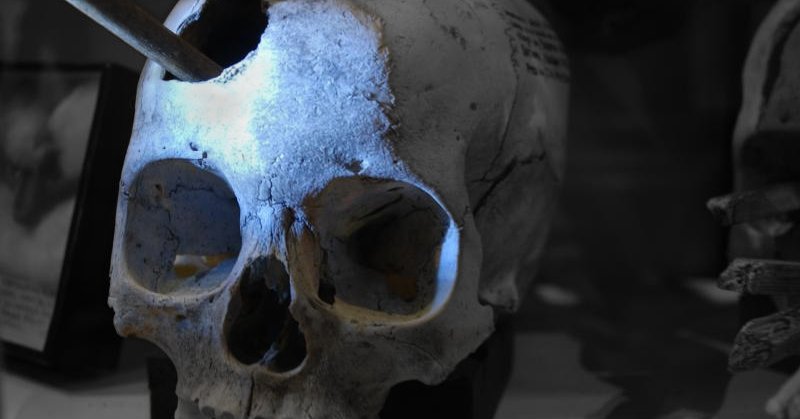
46. About 7,000 years ago, people drilled holes in human skulls so spirits could move into and out of the body. This practice is known as trepanation.
47. The original word for bear has been lost. In the Middle Ages, people were so superstitious and afraid of it that they believed speaking the animal’s real name would bring it forth. They used the word bear, meaning the brown one, to avoid saying its true name. Because the original word was never written down, it is still unknown.
48. Gleaning was the old custom of gathering crops left behind in farmers’ fields after commercial harvesting or when the crops were not worth harvesting. It is mentioned in the Hebrew Bible and later became a legally protected right for poor people in several Christian kingdoms.
49. Before the Middle Ages, written text often had no spaces between words. Writers instead used continuous script. Under Charlemagne, monks found it much easier to copy ancient Roman manuscripts and separate words by adding spaces.
50. During the Middle Ages, men who wanted a boy sometimes removed their left testicle because it was thought the right testicle produced sperm for boys and the left testicle produced sperm for girls.


Add Comment