


History is packed with customs that seem completely bizarre by modern standards. From strange religious rituals and unusual laws to everyday habits that now feel unbelievable, these traditions reveal just how different life once was.
Medieval Christmas Chaos
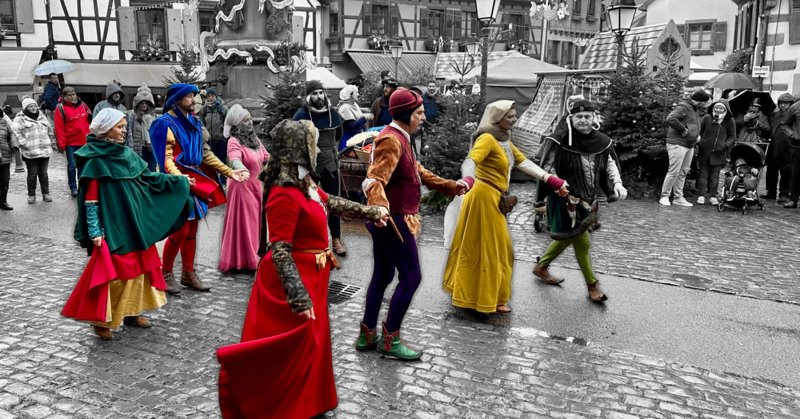
1. Christmas in the Middle Ages was more like Mardi Gras on steroids. It featured wild celebrations that went on for days, animal sacrifices, gambling, and adult trick or treating.
2. January 14th was once kept as the Feast of the Ass. It was a Catholic holy day that was mainly celebrated in the Middle Ages to honor every ass in the Bible, especially the one that carried Mary and the baby Jesus into Egypt after the birth.
3. The Adamites were an early Christian sect that worshipped while naked. They were common from the 2nd through the 4th centuries in northern Africa. Some of their beliefs included sacred nudity, refusal of marriage, and support for lawlessness because their acts were considered “neither good nor evil.” They believed they were living out the innocence of Adam in Genesis.
4. The word scapegoat comes from an ancient Jewish rite in which a community would transfer all the sins of its people onto a goat and then drive that goat out of town to die, carrying the weight of their sins with it.
5. The ancient Egyptians thought the Nile’s rise and fall was caused by the god Atum masturbating until ejaculation. Because of this, pharaohs were sometimes expected to ritually masturbate into the Nile.
6. Before dependable and inexpensive alarm clocks existed, workers in Britain and Ireland were awakened by a person whose job was to ensure they arrived at work on time. The knocker-up used a baton to tap clients’ doors or a long, light stick to reach windows on upper floors.
7. The toilets of ancient Rome were unpleasant enough to inspire prayers to the gods of fortune written on the walls. Among the issues were flames suddenly bursting out because of methane buildup and biting creatures coming up from below.
8. Ancient Romans did not divide time into 60-minute hours. In winter, an hour was about 45 minutes, while in summer it was about 75 minutes.
9. During the Middle Ages, some kings wore garments made from “Salamander fur” that were fully fireproof and bright white. The term probably came from the widespread idea that salamanders were “born from fire.” In reality, the clothing was made of asbestos.
10. During the Victorian era, tuberculosis was romanticized so much that fashion trends appeared to emphasize and imitate the disease’s symptoms. This style movement was known as “Consumptive Chic.”
Hunger Trained Spartan Boys
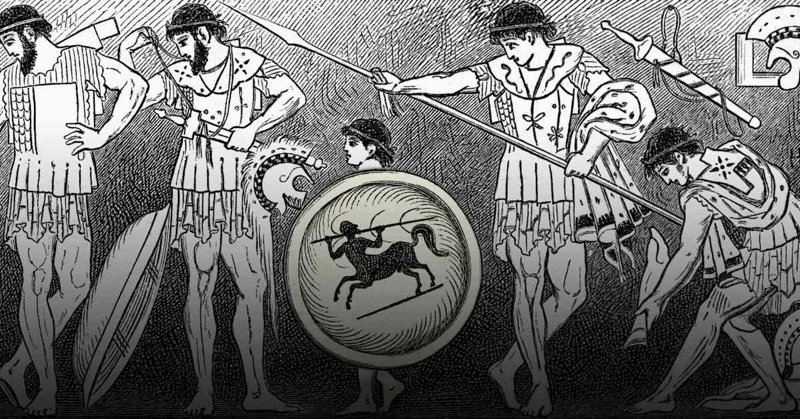
11. Ancient Spartan schools intentionally gave boys too little food so they would be pushed to steal it, yet anyone who was caught was punished harshly. This was meant to harden them, especially by making them used to hunger, which was common in battle.
12. In medieval warfare, warriors wearing especially strong armor were commonly left alive instead of being killed. They were taken prisoner, and then a ransom was requested because only warriors who were ‘well off’ could afford armor that good.
13. Monks in northern Japan once practiced self-mummification. They would train intensely to remove all body fat, start drinking a poisonous tea, and stay in a very small tomb in the lotus position until they were confirmed dead. The process lasted more than 3000 days.
14. Ancient Roman politicians kept slaves called “nomenclators” whose only duty was to help their masters remember the names and relevant details of everyone they met.
15. During the Victorian era, people would anonymously send “Vinegar” or Hate valentines to others they disliked. These notes were often extremely cruel, and some even told the recipient to kill themselves.
16. The “Alexandra Limp” was a short-lived fashion trend in Victorian London. Young fashionable women copied the limp associated with Princess Alexandra. Savvy shopkeepers even began selling uneven shoes, with one tall heel and one short heel. The trend was mocked widely, including by people at the time.
17. Ornatrices were enslaved hairdressers. In ancient Rome, their job was to produce the extreme styles that were fashionable then. This person had to work with many unpleasant substances, including hair dyes made from pigeon poop, rotten leeches, squid ink, and urine.
18. In medieval times, “cat-burning” was considered a valid practice believed to attract good fortune. The custom was to set fire to a barrel filled with live cats over a bonfire while people screamed with laughter as the cats were burned and roasted. French kings often watched it and even officially lit the fire.
19. The word “Freelancer” once referred to a knight in the Middle Ages who had no feudal obligations and offered his service to whoever paid the most. Because a knight’s main weapon was a lance, he was a “free” “lancer.”
20. In ancient Egypt, by order of Ptolemy II, every ship that came to the city had to give its books to the Library of Alexandria to be copied. The original was kept in the library and the copy was returned to the owner.
Brotherhood Under One Roof
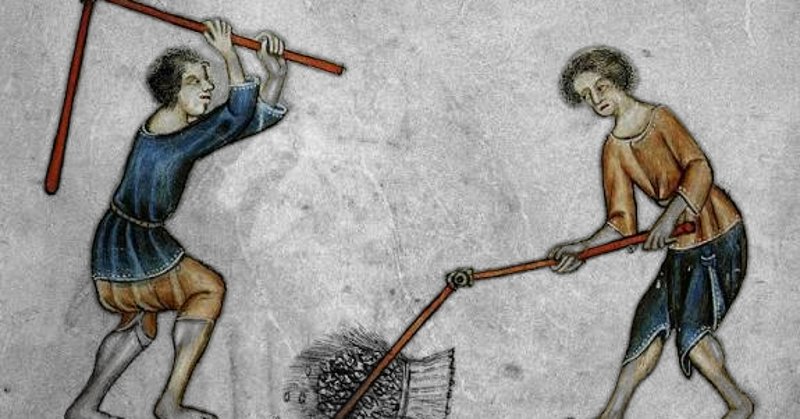
21. In the Middle Ages, there was a legal status known as “enbrotherment” that let two men share housing, combine their property, and live together much like a married pair. They were said to share “one bread, one wine, one purse.”
22. During the Middle Ages, Catholic women were not allowed to have sex on Sundays, Wednesdays, or Fridays, on feast days, while observing Lent or Advent fasting, or while considered “impure” because of menstruation, pregnancy, the 40 days after childbirth, or nursing. Anything except missionary position was treated as sodomy.
23. The term “orient” derives from the Latin “oriens,” which means East, because in the Middle Ages many maps were made with East at the top for religious reasons, since the Garden of Eden was believed to be located there.
24. In Ancient Rome, vestal virgins were six women chosen at age six to keep the flame of the goddess Vesta. They were expected to serve for 30 years, and if their virginity was ever doubted, they were punished by being buried alive. They were the only female priests in Ancient Rome.
25. After using the lavatory, ancient Romans cleaned themselves with a “tersorium,” a sponge fixed to the end of a long stick that everyone in the community shared. When it was not being used, the stick was kept in a bucket of vinegar or seawater in the communal bathroom.


Add Comment