

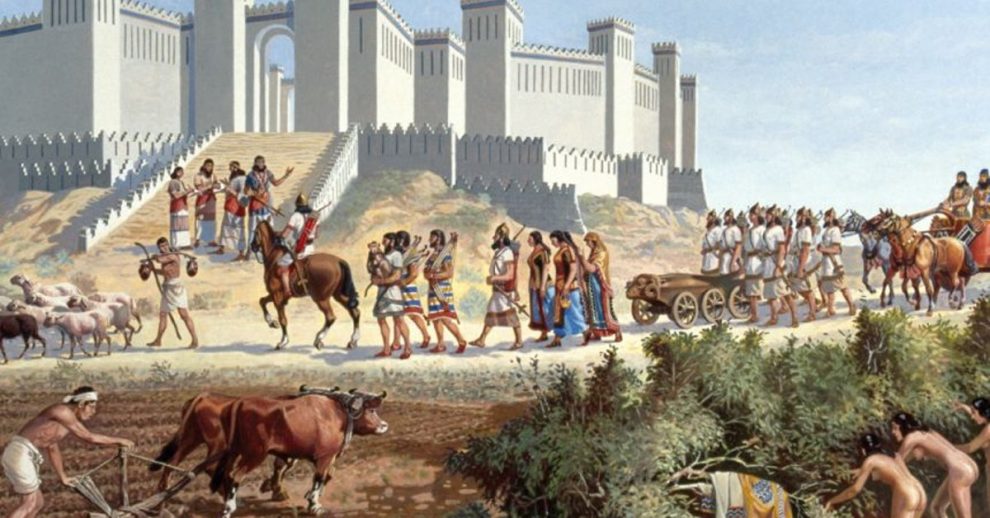
The BCE world was filled with scientific breakthroughs, brutal conflicts, unusual customs, and ideas that still shape how we understand civilization today. These 50 events show just how advanced, strange, and unforgettable the ancient world could be
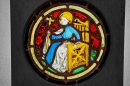
Sushruta’s Surgical Legacy
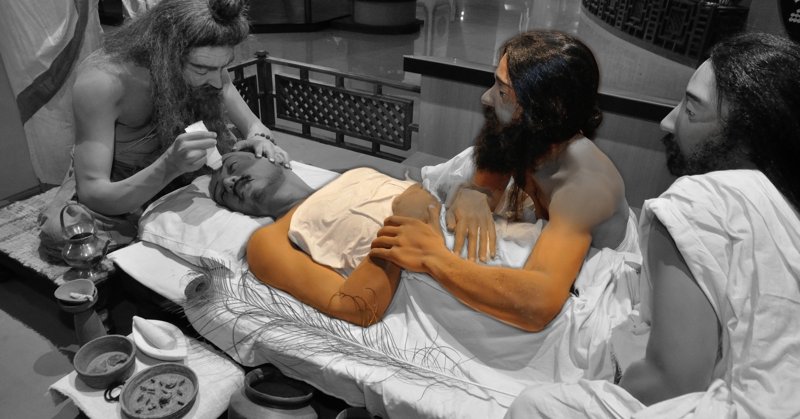
1. In 6 century B.C., the Indian physician Sushruta Samhita authored a book that described modern surgical techniques including incisions, cauterization, urethral stricture dilatation, hernia, caesarian, fistulae, and many others.
2. In the year 1300 B.C., the Egyptian king Menephta defeated the Libyans. As evidence of his victory, he returned with 6000 penises of the soldiers cut off from his opponents.
3. Around 450 B.C. in Persia, drunk debates were once an essential part of any major decision-making process. The Persians made sure that especially important arguments were discussed both sober and drunk, because they believed only ideas that still made sense in both states were truly worthwhile.
4. Tea is said to have been discovered in 2737 B.C. by a Chinese emperor named Shen Nong when some tea leaves accidentally blew into a pot of boiling water.
5. One of the earliest known serial killers was Liu Pengli, a Chinese prince from mid-100 B.C. He went on expeditions with others, murdering people for sheer sport. He had over 100 confirmed victims. When he was uncovered, his uncle the emperor banished him instead of executing him.
6. The world’s oldest recorded joke, traced back to 1900 B.C., was “Something which has never occurred since time immemorial; a young woman did not fart in her husband’s lap.”
7. Up to 150,000 Roman/Italian citizens were murdered in one day in 88 B.C. The carefully planned slaughter, now called the “Asiatic Vespers”, happened at the same time in many cities across Asia Minor (western Turkey) because of hatred of Roman rule and taxes.
8. In 620 B.C., the Athenian law-maker Draco was smothered to death by gifts of cloaks and hats showered on him by appreciative citizens.
9. In the 14th century B.C., Egyptian Pharaoh Akhenaten’s name was erased so completely from history for installing a new state religion that researchers did not rediscover his name until they found his tomb in 1907, over 3200 years later.
10. The earliest flush toilets were used by the people of the Indus Valley Civilization (present day Northwest India), which existed from approximately 3300 B.C. – 1700 B.C. Almost every home in the ancient cities of Mohenjo-Daro and Harappa had a flush toilet linked to a common sewage system.
Anaxagoras Explains Eclipses
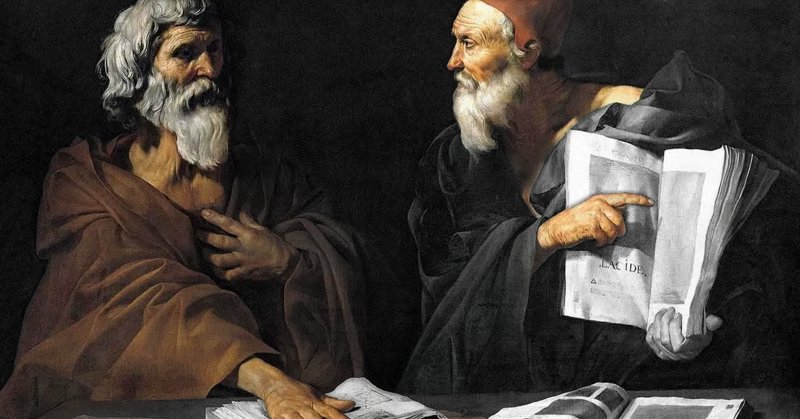
11. Anaxagoras (510 – 428 B.C.) was a Greek Philosopher who was the first person to correctly explain eclipses. He also theorized that Sun was a star and that stars were burning rocks but that the other stars were too far away for us to feel their heat.
12. Cambyses II of Persia used cats to fight a battle. Against the Egyptians, in the battle of Pelusium in 525 B.C., he ordered his men to paint cats on their shields and brought 100’s of cats to his front lines. The Egyptian archers refused to fire on the cats as injuring one was punishable by death.
13. The year 46 B.C. had 445 days in it because of the shift from the 10-month calendar to the 12-month calendar by Julius Caesar. It became known as “The Year of Confusion.”
14. Carmen 16 is a poem written by Gaius Valerius Catullus (84 B.C. – 54 B.C.) and is considered so sexually explicit it was not published in English until the late 20th century. It is considered to be one of the filthiest expressions ever written in Latin, or any language, for that matter.
15. In 570 B.C., during a rebellion against Pharaoh Apries, one of his generals, Amasis, joined the rebels. Apries sent a messenger to try and convince Amasis to return. After listening to the messenger, Amasis raised his leg, farted, and told him to take that back to the Pharaoh.
16. Scurvy was recorded as a disease by the Greek physician Hippocrates, and the Egyptians documented its symptoms as early as 1550 B.C. The understanding that eating foods with vitamin C cures scurvy has been rediscovered and then forgotten repeatedly by humanity throughout our history, continuing into the early 20th century.
17. In 89 B.C., Roman soldiers were said to have captured a satyr while fighting in Greece. When they took it to their general Sulla for questioning, it reportedly spoke only in something like a mix between a horse’s neigh and a goat’s bleat.
18. Sisamnes was a corrupt judge in the Persian Empire around 525 B.C. After it was discovered that he had taken a bribe, the king ordered him arrested and skinned alive. His skin was then used to cover the seat from which judgments were delivered. His own son ‘Otanes’ then took his place as a judge.
19. The earliest recorded epidemic dates to the Peloponnesian War of 430 B.C. The ancient Greek historian Thucydides described the symptoms of a disease believed to be typhoid fever. It was called the Great Athenian Plague, and it killed about 100,000 people, or two-thirds of the population there.
20. The Sacred Band of Thebes was a unit of chosen soldiers, made up of 150 pairs of male couples that formed the elite force of the Theban army in the 4th century B.C. They were responsible for the Spartans’ defeat at the decisive Battle of Leuctra in 371 B.C.
Tutankhamun’s Meteorite Dagger
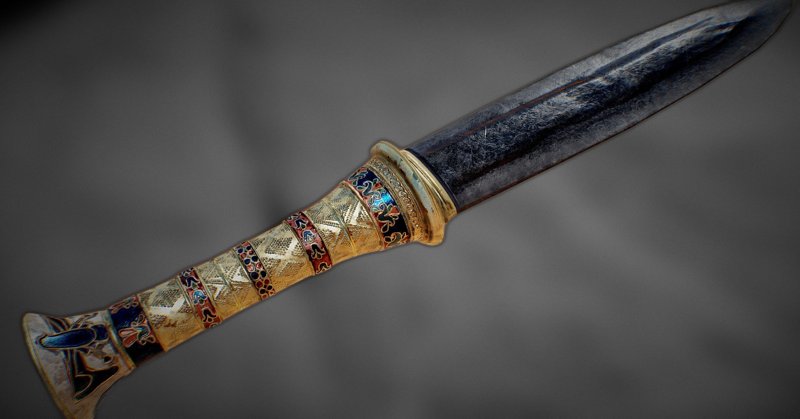
21. King Tutankhamun, who died in 1325 B.C., was buried with a dagger of “extraterrestrial origin.” Advanced spectrometry tests strongly suggest that the iron, nickel, and cobalt in the blade came from a meteorite that struck near the Kharga Oasis about 200 km west of the Nile.
22. Herostratus was a 4th century B.C. Greek arsonist who destroyed the Temple of Artemis, regarded as one of the 7 wonders of the ancient world. He claimed he did it to immortalize his name. He was executed, and a law was enacted that banned anyone from uttering his name, on penalty of death.
23. The first strike ever recorded in history began in 1152 B.C. During the reign of Ramses III in Ancient Egypt, while constructing a royal necropolis, the workers believed they were being underpaid, so they staged a huge strike. Their wages were actually raised, and the workers went back to work.
24. In a battle in 603 B.C., a Chinese warrior named Xiong Yi Liao walked out between the armies and began juggling 9 balls. The enemy soldiers were so stunned that all 500 of them turned around and fled.
25. The idea of an infinite universe was first put forward by a Greek philosopher named Archytas of Tarentum approximately around 400 B.C., on the reasoning that even if he reached the edge of the universe, he would still be able to extend his staff beyond the boundary.





Add Comment