

Early Cataract Surgery Milestones
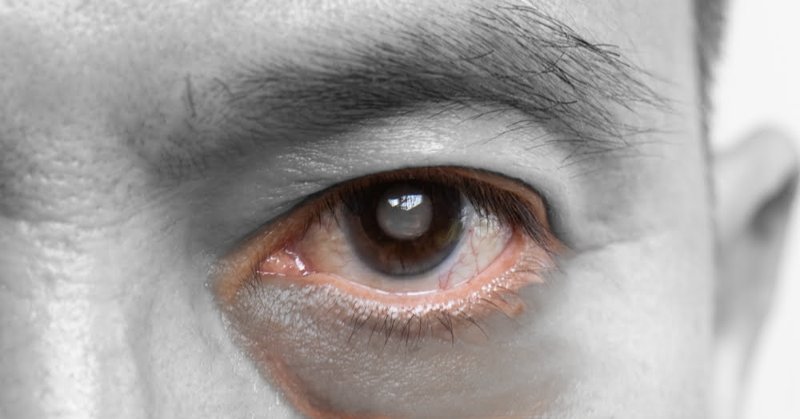
26. Jacques Daviel became the first modern European physician to successfully remove cataracts from the eye in 1748. One of the earliest recorded forms of cataract surgery is now called couching, which began in ancient India and was later brought to other countries by the Indian physician Sushruta in the 3rd century A.D., who described the procedure in his work the “Compendium of Sushruta”. Even before him, the Greek surgeon Aelius Galenus carried out an operation similar to modern cataract surgery in the 2nd century A.D.
27. The earliest confirmed 3D film shown to an audience was “The Power of Love,” which premiered in Los Angeles in 1922. Before that, in 1915, audiences saw clips of random scenes filmed in 3D at the Astor Theater in New York City.
28. Video games rose in popularity with the start of the golden age of arcade video games in 1978 and the release of the Atari 2600 in 1977. However, video games had existed much earlier. The earliest known video game example comes from a patent filed in 1947 called a “Cathode ray tube Amusement Device.” It was based on radar display technology. It used an analog device that let a user move a vector-drawn dot on the screen to imitate firing a missile at targets, which were drawings fixed to the screen.
29. As calls for a smokeless world have grown, a new practice known as “vaping” has recently moved into the spotlight, but vaporizers and e-cigarettes were invented in the 1960s. The earliest e-cigarette can be traced to Herbert A. Gilbert, who in 1963 patented “a smokeless non-tobacco cigarette” that meant “replacing burning tobacco and paper with heated, moist, flavored air”. This device created flavored steam without nicotine. The patent was granted in 1965. The idea never caught on because smoking was still stylish at the time.
30. Humans created animated art tens of thousands of years ago. The 21,000-year-old cave paintings in Lascaux, France were made so that flickering oil light would give the cave-painted animals the appearance of motion. When the cave was found in 1940, more than 100 small stone lamps that had once burned grease from rendered animal fat were discovered throughout its chambers. A flickering flame in the cave may have produced impressions of movement like a strobe light in a dark club.
31. Although neurosurgery is regarded as a very specialized modern field, the Incas seem to have carried out trepanation since the late Stone Age. Trepanation is an operation in which a small opening is drilled into the skull to address health issues tied to intracranial disease or to relieve pressure from blood collecting after an injury. In Arabia during the Middle Ages, from 936 to 1013 AD, Al-Zahrawi carried out surgical care for head trauma, skull fractures, spinal injuries, hydrocephalus, subdural effusions, and headache.
32. In 1508, Leonardo da Vinci proposed the concept of contact lenses when he described a way to change corneal power directly by placing a glass hemisphere filled with water over the eye. In 1888, the German ophthalmologist Adolf Gaston Eugen Fick made and fitted the first contact lens that worked successfully. These were large scleral lenses that rested on the less sensitive edge of tissue around the cornea and were made of heavy blown glass.
33. In 1843, Scottish inventor Alexander Bain was granted a British patent for his Electric Printing Telegraph. The earliest device similar to the present-day fax machine was the pantelegraph, invented by an Italian physicist. In 1865, he launched the first commercial telefax service between Paris and Lyon, about 11 years before the telephone was invented.
34. Long before electrotherapy became a modern treatment, the Ancient Romans used electric fish to successfully treat headaches and mental disorders with electroconvulsive therapy.
35. An English doctor named Joseph Granville created vibrators in the 1880s, and he is now called the father of the modern electromechanical vibrator. Medical professionals quickly adopted these early vibrators to treat a condition known as female hysteria, which is now discredited. Doctors used to manage this condition by masturbating patients to orgasm. Vibrators were useful because they spared doctors’ hands from cramping from the many orgasms they gave women.
Ancient Flute Before History
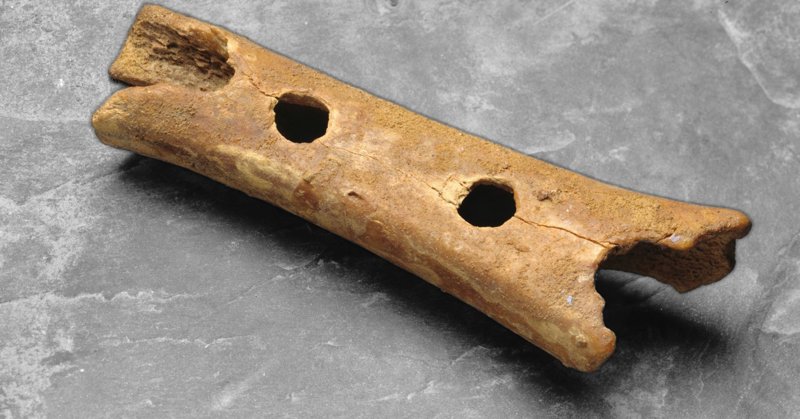
36. The earliest known musical instrument is a flute 43,000 years old that was carved from a bear femur. It predates the extinction of Neanderthals, the domestication of animals, the disappearance of Ice Age mammals, and the invention of the wheel.
37. The sewing needle is more than 40,000 years old. Humans may have started wearing clothing as long ago as 190,000 years ago. People already had pants and jackets 20,000 to 12,500 years ago. Dyed flax fibers from 36,000 years ago discovered in a prehistoric cave in the Republic of Georgia suggest that clothing was being worn then.
38. 3D printing has risen into the mainstream media in recent years, but it actually dates back to the 1980s. A patent for the stereolithography process was filed in 1984, and fused deposition modeling, the technology used by most 3D printers to date, was developed in 1988. It has been attracting mainstream attention because most of the patents used in making them have expired, making them cheaper.
39. Monks or craftsmen in Italy made the first eyeglasses between 1285 and 1289. In 1306, a monk in Pisa, Italy named Giordano da Rivalto said in a sermon that he knew the man who invented glasses, but he did not mention the person’s name. The inventor tried to keep the idea secret to prevent economic competition, but a monk called Friar Alessandro Spina knew the design and chose to make pairs of glasses himself and then give them out to everyone. Even earlier, Roman Emperor Nero, who lived in the 1st century A.D., used a polished emerald to improve his vision.
40. Medicines made from willow and other plants rich in salicylates can be traced back to at least 2000 B.C. in ancient Sumer and 1500 B.C. in ancient Egypt. Around 400 B.C., Hippocrates described using salicylic tea to lower fevers. By the mid-18th century, willow bark extract was known for its specific effects on fever, pain, and inflammation. In the 19th century, pharmacists were testing and prescribing many chemicals related to salicylic acid, the active ingredient in willow extract. One of those preparations was later sold as aspirin.
41. Color was already being used in motion pictures during the earliest silent film era. In early color films such as “Vie et Passion du Christ” (“Life and Passion of the Christ”) (1903) and “A Trip to the Moon” (1902), the method used was stenciling, where every frame of the film was hand-colored. Hand-coloring each frame of a film, even for films much shorter than modern ones, was painstaking, costly, and time-consuming. The first feature film with sound was The Jazz Singer, released in 1927.
42. Beer is among the oldest alcoholic beverages in the world. Some evidence suggests that beer was made as early as 6000 B.C., which is 2000 years before the wheel was invented and used in 4000 B.C. Confirmed records of beer made from barley date to around 3500 to 3100 B.C. in the Zagros Mountains of western Iran, while unconfirmed estimates place it even earlier, around 10,000 B.C., when cereal farming began. Archaeologists believe beer may have played a role in the rise of civilizations.
43. Lighters came before matches. Lighters were created in 1823. The first true match was not invented until 1826 by an Englishman named John Walker. It was a friction-based type that needed rubbing to ignite. Five years later, a Frenchman named Charles Sauria developed a match that used white phosphorus.
44. Dr. Pepper came out in 1885, a year ahead of Coca-Cola. Long before that, carbonated lemonade was commonly sold in British refreshment stalls in 1833. The first company to sell carbonated water was founded in Geneva in 1783. Even earlier than carbonated drinks, during the medieval period in the Middle East, many fruit-flavored soft drinks were widely consumed, including sharbat, and they were often sweetened with sugar, syrup, and honey.
45. Catheters were in use as early as 3,000 B.C. to ease painful urinary retention. At that time, hollow catheters were made from many different materials, including straw, rolled palm leaves, hollow onion tops, gold, silver, copper, brass, and lead. Flexible catheters were introduced in the 11th century. Later, silver became the main material for catheters because it could be shaped into any desired form and was believed to have an antiseptic effect.
Battle Verse Old Traditions

46. The idea of a rap battle has been around since the 5th century, when poets took part in flyting, a spoken-word contest in which they traded insults in verse. Loki, the Norse god, is also recorded as insulting other gods in verse. In Anglo-Saxon England, flyting was held in a feasting hall. The audience’s reactions determined the winner. The victor would drink a large cup of beer or mead, then invite the defeated opponent to drink as well.
47. While the Pythagorean philosopher Archytas of Tarentum, from the 5th century B.C., is said to have invented the screw, the precise date when it first emerged as a practical mechanical device is uncertain. The water screw is generally credited to Archimedes in the 3rd century B.C., yet there is evidence of an earlier similar device used for irrigation in Egypt. The screw press, likely created in Greece in the 1st or 2nd century B.C., has been used since Roman times to press clothes. Wooden screws were used in wine and olive oil presses in the 1st century A.D.
48. Fidget spinners have existed since 1993, but they did not become a craze until 2017, partly because non-autistic children learned the practice from autistic classmates. They are marketed by stores that serve people with special sensory needs as calming devices. More generally, executive pacifiers such as the fidget spinner have been around since the 1920s or earlier, including Newton’s cradle and the drinking bird.
49. Roller skates were invented in the 1700s. The first known use of roller skates was on a London stage in 1743, while the first patented roller skate appeared in 1760 from Belgian inventor John Joseph Merlin. He made them for a masquerade party. Since he did not practice, he crashed into a wall-length mirror as soon as he entered.
50. Death growl, which is commonly used by death metal singers and in other heavy metal styles, is centuries old. Growled vocals may have been part of Viking music. In the 10th century, the Arab-Spanish Sefardi Jewish merchant Ibrahim ibn Yaqub visited Denmark and said the local music was this: “Never before I have heard uglier songs than those of the Vikings in Slesvig. The growling sound coming from their throats reminds me of dogs howling, only more untamed.


Add Comment