

Nature is filled with creatures that seem almost too strange to be real. From popcorn-scented mammals and two-nosed dogs to gliding “lemurs” and panda-like wasps, these unusual animals showcase just how diverse and surprising life on Earth can be.
Valais Sheep With Black Faces
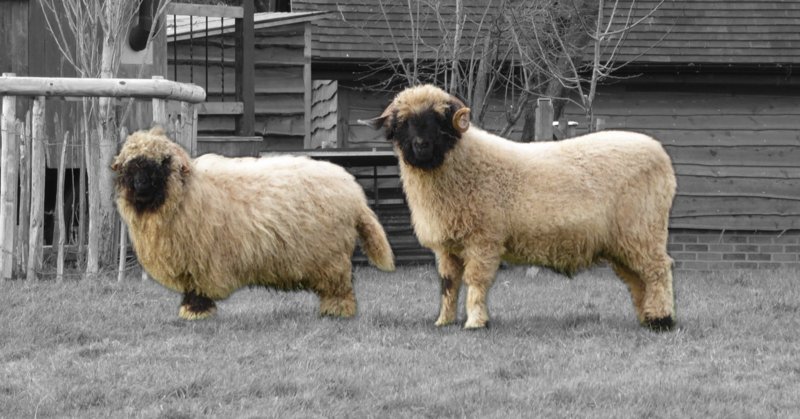
1. The Valais Blacknose is a breed of domestic sheep from the Valais region of Switzerland. It is a dual-purpose breed, kept for both meat and wool. Both rams and ewes bear horns. They are called the “world’s cutest sheep.” They are notable for their shaggy coats and spiral horns, but much of the attention focuses on their extremely dark “black hole” faces, which look as if someone had photoshopped away all facial features.
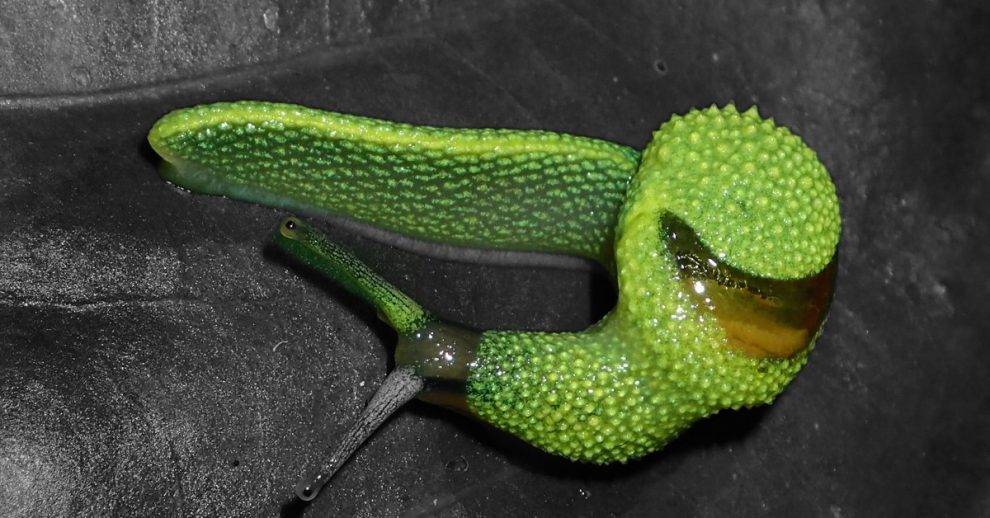
2. The Borneo “ninja” slug fires chalky “love darts” at prospective mates that pierce them and inject the hormones that make them hot and horny. The “ninja” slug was discovered in 2010 in the mountains of Malaysia. The sheet-like mechanism these slugs use is not 100 percent effective but does increase the chances of reproduction. The slug wraps its tail, which is three times the length of its head, around its body when it is inactive.
3. Chromodoris willani is a sea slug that resembles a creature from the world of Pokemon. This sea slug inhabits the Western Pacific Ocean, from Indonesia to the Philippines, and shows a range of colors. The Chromodoris willani shown in this picture is in the middle of that color spectrum: individuals can range from a dark blue to a nearly transparent white. Regardless of color, they all have discontinuous stripes across their bodies and those odd feeler-like outcroppings that seem to sparkle in the water.
4. The cinereous mourner is one of many birds found in the subtropical lowland forests of South America, a region where birds often suffer very high losses to nest predators. The cinereous mourner, however, performs a rollicking, actually rolling, imitation of a toxic, spiny caterpillar (Megalopyge) that also inhabits the area. The cinereous mourner employs a specific form of Batesian mimicry in which a harmless organism adopts the traits of a harmful or threatening organism, thereby making itself unattractive to potential predators.
5. The False zokor (Myospalax aspalax) is a rodent species found in China and Russia. It leads a very secretive life, spending all of its time underground where it zips through intricate, maze-like burrows, which is why very little is known about its behavior. It measures about 19 to 26 cm in length and has a gray to dirty cream velvety coat. It is not blind but relies more on a well-developed sense of smell and hearing to navigate its dark habitat. The zokor is built for digging, with large claws up to 3 cm long that it uses like shovels to clear a path in the dirt.
6. The Lake Titicaca water frog is the world’s largest truly aquatic frog. It has a broad, flattened head with a rounded snout and large eyes. Its most distinctive feature is the extremely loose skin that hangs from its neck, legs, and stomach, giving it a rather ugly appearance.
7. With spiky bristles between their fur and distinct black and yellowish stripes, the lowland streaked tenrec mostly resembles a cross between a hedgehog and an oversized bee. Spiky yellow bristles around the head make its appearance even more unusual but provide great camouflage while foraging on the forest floor. When a predator goes for the tenrec it will get a mouthful of spiky spines that detach from the tenrec’s body. Interestingly, these small mammals have such a low body temperature that they do not require a scrotum to cool their sperm, as is very common in mammals.
8. Miniature Melo is a species of bubble snail that looks as if it fell from the heavens into the ocean. Its oval, bubble-shaped shell is thin and fragile and is actually too small to contain the snail’s soft body. For that reason the colorful snail must rely on swimming and camouflage to avoid being eaten. It also eats very small toxic worms and incorporates their poison into its tissues as a defense. It grows to only about half an inch in length.
9. The Panda Ant is an unusual insect named for its obvious resemblance to a panda in its markings. This remarkable creature is not an ant at all but a type of wingless wasp. First discovered in 1938, very little is known about this seldom-seen insect. They are only known to exist in coastal regions of Chile. Their sting is exceptionally powerful for their size, and a few dozen stings have been seen to bring down animals as large as cows.
10. Patagonian maras may look more like giant rabbits or small deer, but they are rodents. They are endemic to the open grasslands and shrubland steppes of Argentina. They have small, compressed feet that can resemble hooves from a distance, and longer ears that resemble those of a rabbit.
Patterned Shield Backed Bug
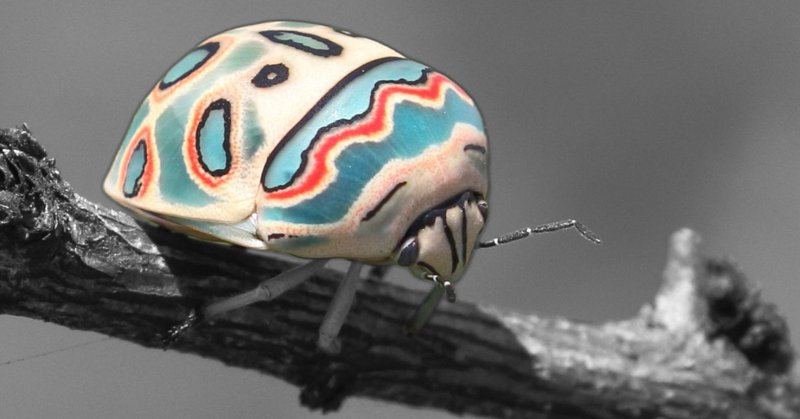
11. The Picasso Bug is one of roughly 450 known shield-backed bug species. It is a medium-sized insect that is generally oval in shape. Although sometimes mistaken for a beetle, the Picasso Bug is a true bug. It is set apart from beetles by an extended thorax that effectively forms a shield over the abdomen and wings. They feed on the nectar and other fluids of a wide variety of plants within their endemic range.
12. Red gurnards are distinctive-looking fish with large heads and broad side fins that resemble wings. Their firm white flesh holds together well in cooking, making them well suited to soups and stews. Often caught as bycatch in British waters and discarded, they are becoming increasingly popular as a sustainable choice of fish.
13. The Sunda flying lemur (Galeopterus variegatus), also called the Malayan flying lemur or Malayan colugo, is a species of colugo. It was once thought to be one of only two flying lemur species, the other being the Philippine flying lemur which occurs only in the Philippines. The Sunda flying lemur is found throughout Southeast Asia. It is not a true lemur and it does not fly; instead it glides as it leaps between trees. It is strictly arboreal, active at night, and feeds on soft plant parts such as young leaves, shoots, flowers, and fruits.
14. Thysanostoma jellyfish has a dome-shaped bell with a fine purple lining and purple fringes around the bottom of the bell. Its tentacles are purple and can be withdrawn or extended, reaching up to half a meter in length. Sightings have been reported from the Red Sea and the eastern coast of Africa through Indonesia, Malaysia, and Fiji. Aside from being observed several times on shallow reefs, there is no information on its habitat or depth range. It has been measured up to 60 cm in length with extruded tentacles. Although reported from East Africa to Fiji, it is not a common species of jellyfish.
15. Wilson’s bird of paradise is a small, exotic bird found only on the Indonesian islands of Waigeo and Batanta. It lives in lowland rainforests but can also survive in mountain forests at higher altitudes. Habitat destruction from logging and forest fires is a major factor reducing the number of Wilson’s bird of paradise in the wild. Fortunately, the wild population is still not seriously affected by habitat loss. The species is elusive and scientists lack much information about its life cycle and habits.
16. The Cubicus Boxfish is also called the Yellow Boxfish, the Polka Dot Boxfish, or the Cube Boxfish. Juveniles are easy to identify by a yellow, box-shaped body covered in brown spots. As they mature, the yellow fades and their coloration becomes brown.
17. The Yoda bat’s most noticeable characteristic is its striking resemblance to the Star Wars character it was named after. Beyond its odd appearance, the species has many other interesting traits and behaviors. It is native to Papua New Guinea, specifically a rainforest area so biodiverse that in 2010 scientists discovered an average of three new species per week there. Little is known about the Yoda bat’s diet, but scientists do know it eats certain fruits because it disperses seeds.
18. A binturong has a catlike face and a bearlike body, long shaggy black fur, stiff white whiskers, and a prehensile tail as long as its body. They are also called bearcats, but that name is misleading since they are not related to bears or cats. Instead, they are related to civets and fossas, and they resemble gigantic dust mops and smell like a freshly made batch of popcorn.
19. The Angora rabbit is a domestic rabbit breed raised for its long, soft wool. The Angora is one of the oldest domestic rabbit varieties.
20. The long-eared jerboa is extremely adaptable, living in very harsh conditions; in the Gobi Desert temperatures can fall to around -40°C in winter and climb to about +40°C in summer.
Sea Mammal Mermaid Mistakes
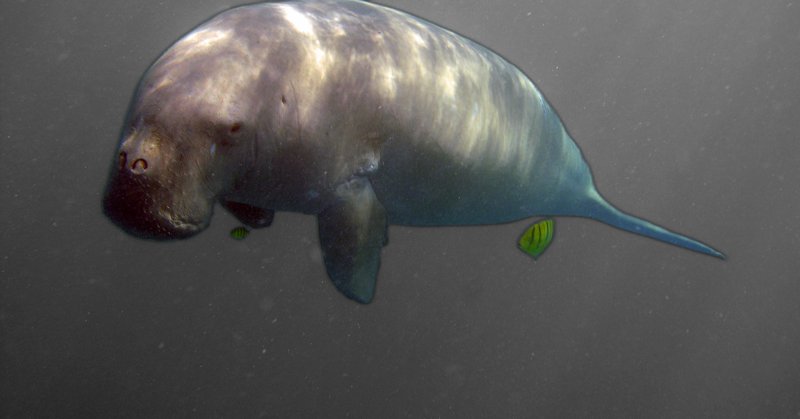
21. This odd marine mammal, the dugong, together with its relative the manatee, is thought to be the animal sailors once mistook for mermaids.
22. The gerenuk, also called Waller’s gazelle, is a long-necked antelope living in the dry thorn bush scrub and deserts of eastern Africa. The name gerenuk comes from Somali and means “giraffe-necked.” Gerenuks have relatively small heads for their bodies while their eyes and ears are proportionately large. They seldom graze and instead browse on prickly shrubs and trees such as acacias. By standing upright on their hind legs and stretching their long necks, they can reach higher branches and twigs than other gazelles and antelopes.
23. The southern right whale dolphin is a small, slender marine mammal found in the cool waters of the southern hemisphere. They are fast, active swimmers with no visible teeth and no dorsal fin. Very graceful, they often move by repeatedly leaping out of the water.
24. The southern red muntjac, found in South Asia, has soft, short fur that is brownish or greyish and is omnivorous, eating grass, fruits, shoots, seeds, birds’ eggs, and small animals. It sometimes scavenges carrion. It gives barking-like calls, usually when it senses a predator. Males are highly territorial and, despite their small size, can be quite fierce. They fight one another for territory using their antlers or their tusk-like upper canine teeth, and can even defend themselves against some predators such as dogs.
25. The zebra duiker is a small antelope found in the Ivory Coast and other parts of Africa. They have golden or red-brown coats with distinctive zebra-like stripes, which give them their name. Male prong-like horns measure about 4.5 cm, while females have horns roughly half that length. They live in lowland rainforests and mainly eat leaves and fruit.





Add Comment