

The 1400s were filled with unusual laws, strange experiments, dramatic power struggles, and ideas that helped reshape the world. These 25 facts reveal just how surprising the 15th century could be.
Aragon-Ethiopia Union Proposal
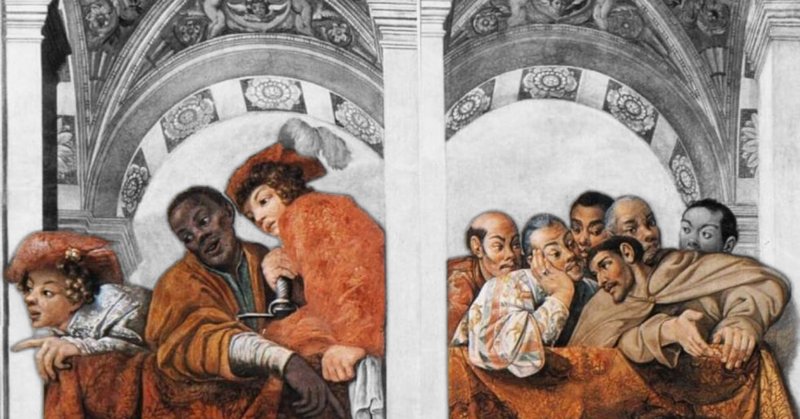
1. In 1428, Ethiopia suggested a union with Aragon by arranging for the King’s grandson to marry the Ethiopian Emperor’s daughter, and by sending a group of artisans to spread Aragon influence. The King of Aragon first sent 13 artisans to start the process, but all of them died on the journey.
2. In the 15th century, King James IV of Scotland carried out an experiment by placing a mute woman and two infants on an empty island to find out what the “natural human language” would be.
3. In 1485, a disease called English sweating sickness spread, causing people to sweat to death within a matter of hours. It killed tens of thousands before it vanished mysteriously.
4. In 1434, Sweden and Spain argued over which was more Gothic and more deserving of higher honors. The Swedes said they were direct descendants of the Goths. The Spanish said that only lazy Goths had remained in Scandinavia while the heroic ones conquered Spain.
5. In 1440, a land sale treaty between the Pope and Florence accidentally omitted a small strip of land around Cospaia. The people there immediately declared independence and stayed sovereign for nearly 400 years.
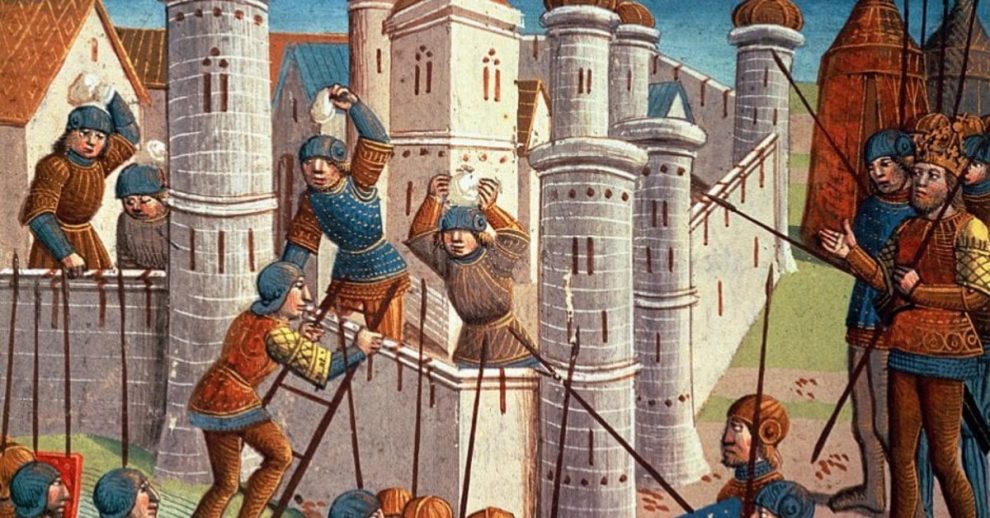
6. In 1452, a Hungarian engineer known as Orban tried to sell an extremely powerful cannon to the Roman Emperor. When he refused, Orban sold the cannon to the Ottoman emperor instead, who used it to breach the walls of Constantinople in 1453, which brought the end to the Roman Empire.
7. The Korean alphabet, known as Hangul, was introduced by King Sejong in the 1440s to improve literacy. Because Chinese characters were difficult, they favored privileged aristocrats, while Sejong’s phonetic alphabet enabled Koreans of all classes to learn how to read and write.
8. In 1498, Charles VIII of France, eager to attend a tennis match, banged his head on a door frame. He died a few hours later from the injury.
9. In 1474, a chicken, mistaken for a rooster, laid an egg in Basel, Switzerland. The town then prosecuted it in court and later burned it alive as punishment for being found guilty of an unnatural crime.
10. In March or April of 1490, tens of thousands of people were likely killed by a meteor shower over China.
Partridge Ban Sparks Ban

11. In 1474, in the Sundernagar district in the state of Gujarat in India, the Rajput Parmar community sacrificed more than 200 men to save an injured but escaped partridge bird from hunters. Since then, killing of partridge is banned in that area.
12. Owain Glyndŵr, the last native Prince of Wales, disappeared at the end of his rebellion in 1412 and managed to stay concealed despite a large bounty and an eventual pardon. His fate and location have remained a closely guarded family secret for over 600 years.
13. Eberhard I, the Duke of Wuerttemberg (1445-1495), was once praised as the richest prince among the German princes, because he was said to be able to rest his head on the lap of every one of his subjects without fearing for his life or property.
14. Since 1405, without interruption, until the present day, the city of Lausanne, Switzerland, has kept a lookout in the Cathedral bell tower. The lookout announces the time by shouting the hour from 10 pm to 2 am, 365 days a year. The lookout calls the hour to each cardinal direction.
15. On January 9, 1493, Christopher Columbus saw 3 mermaids and said, “Not half as beautiful as they are painted.” They were Manatees.
16. In 1470, the Duke of Ferrara Borso d’Este directed his subjects to build a mountain from scratch to reassert his power after a group of traitors insulted him.
17. In 1457, King James II of Scotland prohibited golf because he believed that young men were playing too much golf instead of practicing their archery. The ban was not lifted until 1502 by King James IV who was a golfer.
18. The 15th-century Islamic mosaics in Spain’s Alhambra palace reveal a near-perfect grasp of mathematical logic and 16 of 17 types of symmetry identified by modern mathematicians.
19. There is a book written around 1420 that was discovered to have cat piss on one of its pages. The author of the manuscript even wrote on the page “Cursed be the pesty cat that urinated over this book during the night in Deventer… and beware well not to leave open books at night where cats can come.”
20. The Voynich manuscript, which is dated to the 15th century, contains 240 pages of text in an unidentified language, along with obscure illustrations seemingly connected to topics such as astronomy and biology. Despite the considerable scientific effort, it remains mostly undeciphered to this day.
Prague Hill Holds Firm
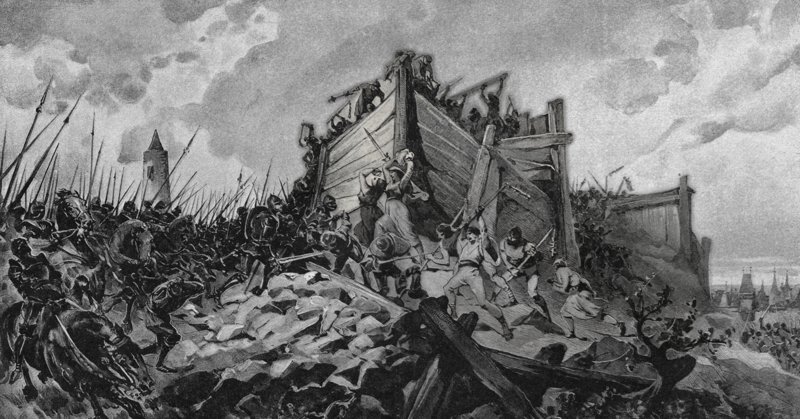
21. In 1420, the Siege of Prague ended after a counter-attack, when 26 men and 3 women held a strategic hill against 8000 Austrian knights.
22. In May 1430, Joan d’Arc was tried, condemned, and burnt at the stake by the Roman Catholic Church. In 1456, the very same church debunked her charges and denoted her as a martyr. Finally, in 1920 she was canonized and made a patron saint of France.
23. In 1475, when Queen Isabella was crowned, the queen chess piece became female and could only move one square at a time, like the King. In 1495, when Isabella was the most powerful woman in Europe, the present rules of chess were established, in which the Queen moves in all directions on the board.
24. In 1462, it is said that Mehmed II, who conquered Constantinople and was noted for his own psychological warfare tactics, was so sickened by the sight of 20,000 impaled corpses outside Vlad the Impaler’s capital that he turned around and went home.
25. In 1475, Turkish law stated that it was legal for a woman to divorce her husband if he does not provide her with the daily quota of coffee.






Add Comment