

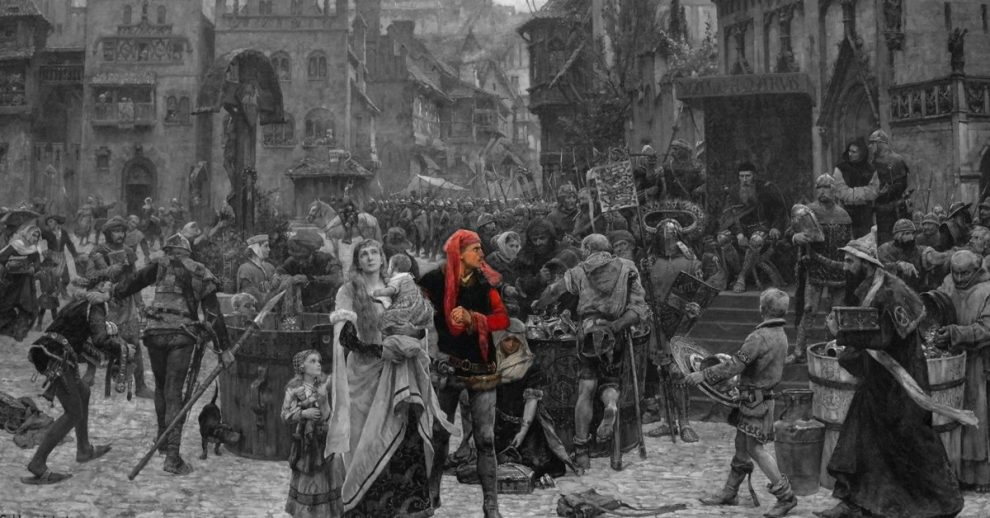
The Middle Ages were far more complex and surprising than the myths suggest. From unusual laws and forgotten scientific ideas to bizarre customs, deadly pandemics, legendary rulers, and everyday life, these 50 facts reveal a medieval world that was often stranger than fiction. :contentReference[oaicite:0]{index=0}
Sleep In Two Shifts
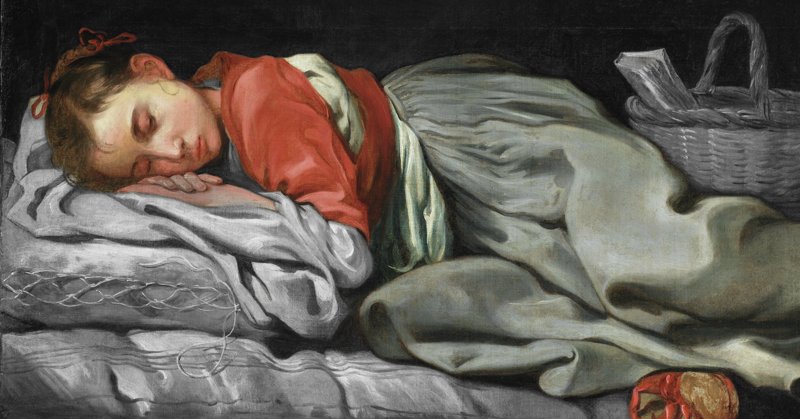
1. In medieval times, sleeping twice each night was normal. People would sleep for 4 to 5 hours, stay awake for about 2 hours, then return to sleep for another 3 to 4 hours. It has been proposed that this sleep pattern may have evolved so people could tend the fire to stay warm and safe.
2. A Germanic ninth century work called the Heliand depicts Jesus as a warrior king.
3. Jews are often linked with calculating merchants who value money because, in the Middle Ages, Christians were not allowed to lend money at interest while Jews were.
4. The Scottish army attempted to exploit the Black Plague in England by invading, but they caught it too and returned it to Scotland, where it killed half of the native population.
5. During the Middle Ages, men who hoped for a son sometimes had to cut off their left testicle because people believed the right testicle produced “boy” sperm and the left produced “girl” sperm.
6. In the 10th century, a Syrian poet named Al-Maʿarri lived while openly challenging and rejecting Islamic claims, as well as those of any other religion. He was able to state his views freely in Arabic lands without fearing for his life. In 2013, nearly a millennium after his death, a jihadist group beheaded his statue.
7. In medieval Ireland, murderers who did not pay a large fine to purchase their freedom were handed over to the dead person’s family as slaves. The family was then legally allowed to kill the murderer themselves.
8. Under Genghis Khan, the Mongols used catapults to hurl the bodies of soldiers infected with bubonic plague over city walls during sieges. This is considered one of the earliest known examples of biological warfare.
9. One Pope in the Vatican was chosen completely by accident. In the Middle Ages, cardinals often cast votes for a random candidate on the first papal ballot to gauge how the other cardinals were leaning. In 1334, that strategy failed when they all chose the same man. The very surprised Pope Benedict XII was elected.
10. During the Black Plague, Jews had a lower chance of infection than other groups. One theory suggested that Jewish religious customs may have improved health because many of their rituals involved hygiene. As a result, Jews were accused of causing the Black Death.
Plague Reshapes European Society
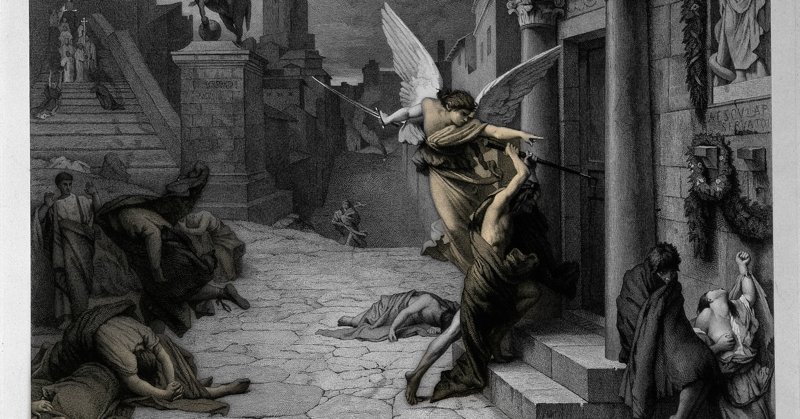
11. The Plague eased overcrowding in 14th century Europe. Afterward, wages rose, rent fell, wealth was spread more evenly, diets improved, and life expectancy went up.
12. In 2014, archaeologists in Bulgaria found the grave of a 13th century staked “vampire.” At the time of the man’s death, vampires were seen as a genuine danger in many Eastern European communities.
13. Nasir al-Din al-Tusi was a medieval Persian scholar who proposed the basic theory of evolution 600 years before Darwin was born.
14. A major Islamic philosophical movement, the Brethren of Purity, in 8th century Iraq said the perfect human was “of Persian derivation, Arabic faith, Hebrew in astuteness, a disciple of Christ in conduct, as pious as a Syrian monk, a Greek in natural sciences, an Indian in the interpretation of mysteries.”
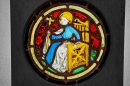
15. In medieval Europe, the urine of ginger boys was valued for making stained glass.
16. Mansa Musa, the 14th century ruler of the Mali Empire, is considered one of the richest people ever to have lived, after adjusting for inflation. During his pilgrimage to Mecca, he distributed so much gold that he fully devalued the metal in every city he traveled through, unsettling economies and triggering inflation in Cairo, Medina, and Mecca.
17. A 7th century commander named Khalid bin al-Waleed drank poison before his enemies to show how tough he was. He immediately brushed it off because he had developed resistance since childhood. After witnessing this, his opponent surrendered at once.
18. In the 15th century, King James IV ran an experiment by placing a mute woman and two infants on a deserted island to find out what the “natural human language” would be.
19. Medieval scholar Al-Biruni, after measuring Earth’s radius with accuracy and reasoning from the sizes of Asia and Africa, forecast the existence of a landmass in the ocean between Asia and Europe, roughly as large as the known continents and with similar geological characteristics, and probably inhabited by humans.
20. The piggy bank originated in the Middle Ages. The clay used to make coin storage jars was an orange material called “pygg.” As language changed and cultures overlapped, English potters were asked to make pygge banks, and they began producing them in the form of pigs.
Dead Warrior Terrifies Foes
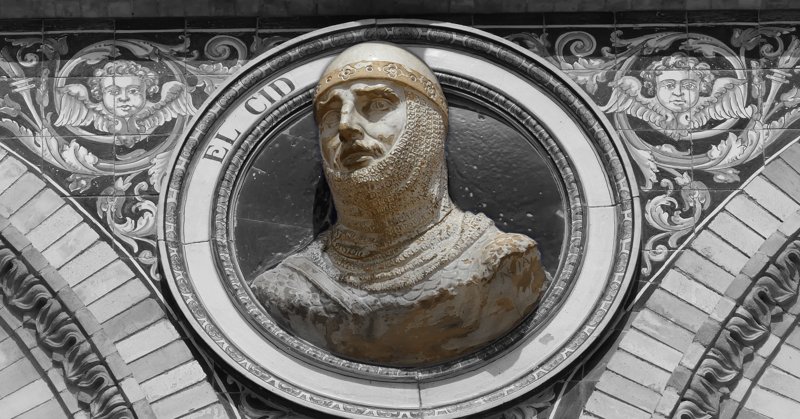
21. El Cid was a medieval military commander who inspired such fear that, after he died, his embalmed body was mounted on a horse and sent into combat, making the opposing side run away.
22. In medieval Germany, peasants believed in a magical realm known as Cockaigne, or schlaraffenland, where pork sausage could be picked from trees or cooked fish could swim out of a beer river and onto your plate. The story endured and inspired the working class. It is still told today.
23. The largest medieval codex ever found is a set of manuscripts widely known as the Devil’s Bible. The Codex Gigas weighs around 165 pounds, or about 75 kilograms, and is said to have come from a desperate monk’s bargain with Lucifer himself.
24. During medieval times, red hair was linked with moral decline and strong sexual longing. Redheads were seen as vampires, werewolves, and witches. The Spanish Inquisition targeted them for persecution, believing their hair was definite proof that they had stolen the fires of hell.
25. The Cagots were a minority group in medieval Europe. They were rejected, loathed, and kept out of taverns or from touching food in markets. They were not an ethnic or religious group and looked no different from other people, and no one knows why they were so hated.





Add Comment