

Shared Life, Shared Bread
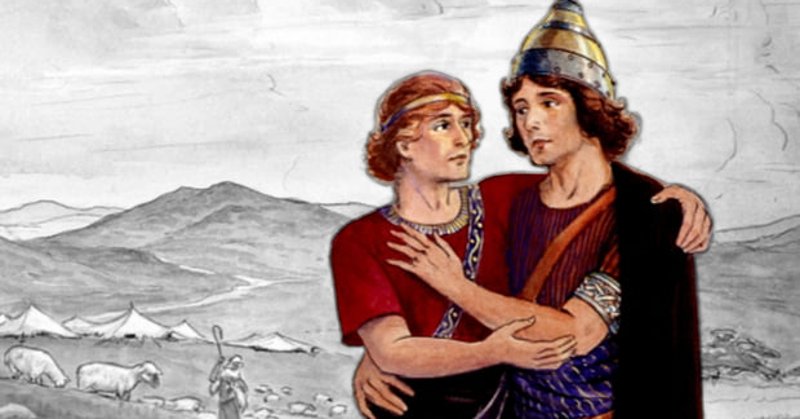
26. In the Middle Ages, there was a legal status known as “enbrotherment” that let two men share a home, combine their resources, and essentially live as if they were a married pair. They were said to share “one bread, one wine, one purse.”
27. Greek Fire was extremely difficult to extinguish and was usually employed against ships. It was developed in the 7th century, but its formula has been lost over time and we still do not know exactly what it contained.
28. The medieval Arab philosopher and skeptic Al-Ma’arri wrote that religion was made up of old fables used to take advantage of the common masses.
29. Because their diets contained little sugar, the average person in the Middle Ages had teeth that were in very good condition.
30. In medieval times, animals could be put on trial. In 1457, a sow and six piglets were accused of killing a 5-year-old boy. The mother was found guilty, but the piglets’ involvement was unclear. Although they were covered in blood, they were never seen directly attacking the boy.
31. One suggested “cure” for the Bubonic Plague in the Middle Ages was to fart into a jar and then smell it.
32. Theophrastus Phillipus Auroleus Bombastus von Hohenheim was a 15th century physician who said, “All things are poisonous and nothing is without poison; only the dose makes a thing not poisonous”. He is considered the father of toxicology.
33. In medieval England, children were beaten on December 28th, Holy Innocents Day or Childermass Day, to remind them of King Herod’s cruelty.
34. Saladin, the Egyptian Sultan and legendary hero of the Islamic world who drove back European invaders during the Crusades and left a major mark on Middle Eastern history, was actually a Kurd.
35. The phrase “giving the key to the city” comes from a medieval custom in which cities were locked at night, but a person given the key could enter and leave freely as an honor for a great service done for the city.
Cats And Plague Surge
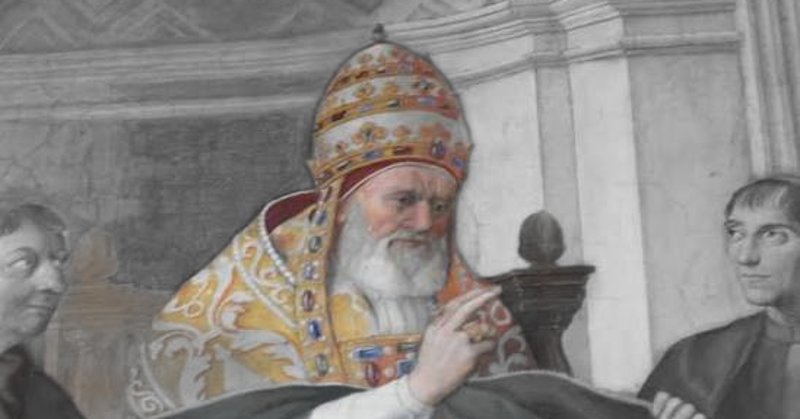
36. Medieval Pope Gregory IX viewed cats as the “incarnation of Satan,” which caused cats to be killed in large numbers, allowed the rat population to grow, and in turn sped up the spread of the Black Death.
37. Medieval English longbows were able to launch an arrow over 300 yards and demanded so much strength that medieval archers can be recognized by their enlarged left arms.
38. The “L” in “could” was deliberately inserted in the 15th or 16th century only to align its spelling with “would” and “should.”
39. In the Black Death period, a number of French cities had no remaining burial space for the dead, so Pope Clement VI needed to consecrate the entire Rhone River so it would count as holy ground and bodies could be placed into it.
40. In the 9th century A.D., two Vikings etched their names in runes on Hagia Sophia. These markings have remained from the Byzantium era and can still be seen in present-day Istanbul.
41. The Black Death caused so many deaths in the 14th century that the world’s population did not return to pre-plague levels until the 17th century.
42. In medieval times, maps showed dragons, sea serpents, and other mythical beings to indicate areas that had not yet been charted.
43. While attempting to find the precise direction of the Qibla, the Muslim prayer direction, medieval Islamic scholar Al-Biruni realized that a huge stretch of Earth’s land was missing from the maps of his era. This later proved to be the American continent.
44. A Catholic saint of beer, Saint Arnold of Soissons, is said to have saved many lives by telling people to drink beer instead of water, which he thought was spreading the plague. The brewing process boiled it, killing the pathogens.
45. Legend says that Pope Joan, a female pope, ruled for several years in the Middle Ages while posing as a man. Once her deception was discovered, future popes had to sit on a chair with a hole in the seat, and a cardinal would reach through it to confirm that the new pope had testicles.
Earth Beliefs In Middle Ages
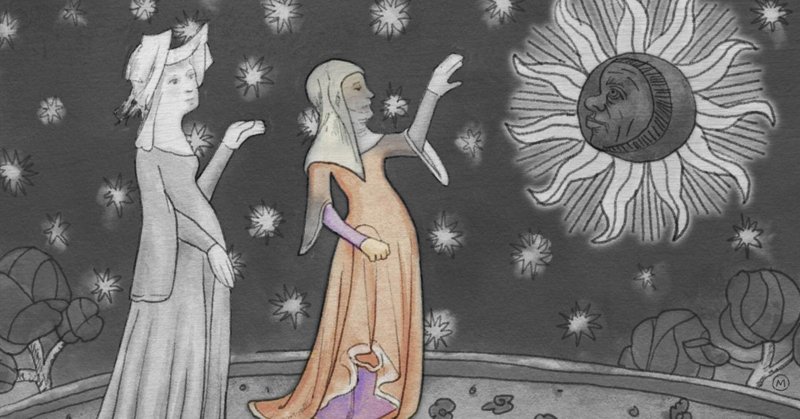
46. People in the Middle Ages generally believed the Earth was round. The idea that they thought the world was flat is actually a misunderstanding.
47. As the story goes, Cnut, the 11th century Viking king of England, Denmark, and Norway, once ordered the tide to stop. He meant to show his privy council that no human is all-powerful, and that everyone must yield to forces beyond our control, such as the tides.
48. The original word for “bear” the animal has been lost. In medieval times, superstitious people believed that saying the fierce animal’s name would make it appear, so they used a euphemism meaning “the brown one” instead. Because the original word was never written down, it remains unknown.
49. In medieval Europe, “barber-butchers” were barbers who also performed surgery, with work that ranged from amputations to haircuts. The red and white “barber swirl” seen outside most barber shops today represents blood and bandages, which were common in their work.
50. During the Middle Ages, people would brew a batch of ale, hold a large party to drink it, and gather donations for the needy. They called this a “help ale,” and it came 1500 years before charity keggers.





Add Comment