

Dinosaurs continue to surprise researchers with discoveries that challenge old assumptions and reveal unexpected connections to the modern world. From remarkable fossil finds to strange behaviors and scientific debates, these facts offer a fascinating look at life during the age of giants.
Flying Relatives, Not Dinosaurs
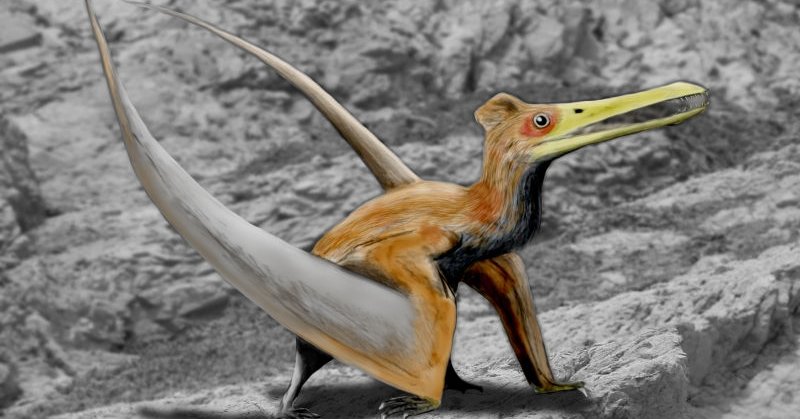
1. Although pterodactyls lived during the age of dinosaurs, they were not dinosaurs. They belonged to Pterosauria, a distinct group of flying reptiles that shared a common archosaur ancestry with dinosaurs. That makes the label flying dinosaur catchy but incorrect. They were reptile cousins of dinosaurs, not members of the dinosaur family itself.
2. When crews excavated the site for Coors Field in Denver in 1993, they uncovered small dinosaur bone fragments during construction. Scientists identified one of the pieces as part of a rib from a horned dinosaur, likely something like Triceratops. The discovery became such a local story that the Colorado Rockies leaned into it when creating their mascot. That is why the team ended up with Dinger, a purple triceratops, instead of a more ordinary baseball character.
3. Although people often say dinosaurs evolved into birds, paleontologists more commonly put it this way: birds are dinosaurs that survived. They fall within the theropod branch of the broader dinosaur lineage that also produced predators such as Tyrannosaurus rex. More specifically, bird ancestry lies within Maniraptora, a subgroup inside Coelurosauria. So dinosaurs did not disappear entirely at the end of the Cretaceous, because one branch of them continues to fly around today.
4. In 2006, fossil hunters in Montana uncovered an extraordinary pair of dinosaurs preserved together as if locked in a deadly struggle. The specimen then spent years in private hands while a legal battle over ownership dragged on, leaving one of the most famous dinosaur finds in the world largely unavailable for full scientific study. The turning point came in 2020 when the Montana Supreme Court ruled that fossils are not minerals, helping clear the way for the fossil to reach a public museum. Once researchers finally gained access, the story changed again: by 2025 the carnivore once described as a young T. rex was reidentified as Nanotyrannus lancensis.
5. After his NASA career and the success of October Sky, American author and former engineer Homer Hickam took up dinosaur hunting in the American West. That hobby became serious enough that he discovered, or helped discover, five Tyrannosaurus rex skeletons, an unusually high number for any fossil hunter.
6. Stegosaurus appeared to present a mating dilemma. Massive plates ran along its back and a spiked tail increased the risk, and paleontologists still do not know precisely how two adults mated without injuring one another.
7. In the late 1800s American paleontologists Edward Drinker Cope and Othniel Charles Marsh became fierce rivals in the episode later called the Bone Wars. Racing to uncover dinosaurs in the American West, they bribed workers, stole information, attempted to ruin each other’s careers, and at times destroyed fossils to keep the other man from getting them. The feud burned through their money and left both of them financially ruined by the end. Yet despite the chaos, their rivalry helped uncover more than 140 dinosaur species and pushed dinosaur hunting into the public spotlight.
8. Chinese paleontologist Xu Xing became one of the most prolific dinosaur researchers in the world by describing new species at a staggering pace. The Natural History Museum says he has named more dinosaurs than any other living paleontologist, and Xu himself has estimated the total is around 80 species. His discoveries span major dinosaur groups and helped reshape how scientists think about the evolution of birds and feathered dinosaurs in China. He named so many new species, in fact, that he eventually stopped keeping an exact count.
9. American paleontologist Jack Horner built much of his reputation on dinosaur discoveries in Montana, including the work he did with Robert Makela on a new genus they named Maiasaura. That dinosaur became famous because its nesting sites provided some of the clearest early evidence that certain dinosaurs cared for their young. Horner later brought that expertise into popular culture by serving as a technical adviser for the Jurassic Park films. Afterwards he promoted the famous DinoChicken idea, a research project that explored whether chicken embryos could be altered to express more dinosaur-like traits.
10. The Borealopelta dinosaur was discovered in Alberta, Canada, after a miner struck the fossil at an oil sands mine in 2011. When paleontologists recovered it, they found far more than bones: its armor remained in life position, parts of its skin survived, and even stomach contents from its last meal were preserved inside the body. The fossil looked so complete and lifelike that researchers described it more like a mummy than an ordinary dinosaur fossil.
The T. rex Posture Shift
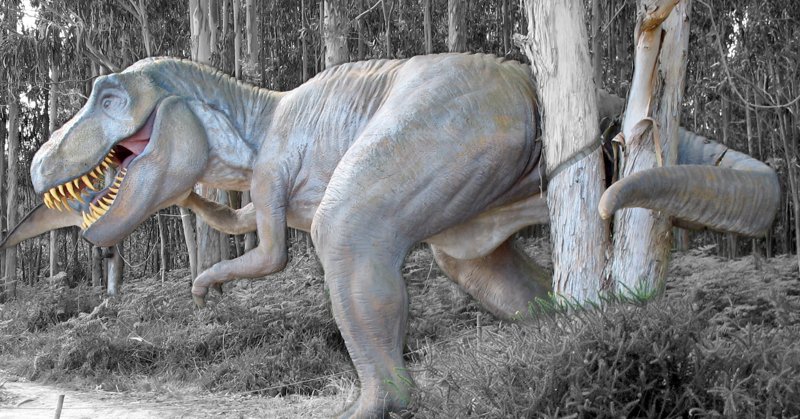
11. Throughout much of the 20th century, reconstructions often showed Tyrannosaurus rex standing upright with its tail trailing on the ground, resembling a giant kangaroo. Museums, books, and films presented that posture because early researchers had not yet determined how the animal balanced its body. Later discoveries from dinosaur trackways and anatomical study demonstrated that T. rex held its body more horizontally, using an outstretched tail as a counterweight. By 1993, when Jurassic Park appeared, the revised, more accurate posture was already accepted by scientists, and the film helped popularize that updated image.
12. With the discovery of additional fossils, paleontologists recognized that certain dinosaurs underwent such dramatic changes during growth that young and mature individuals could appear to be entirely different creatures. That prompted scientists to reexamine earlier names and contend that several named species were actually just different growth stages of a single dinosaur. The concept became particularly well known in discussions about animals such as Torosaurus and Triceratops, where developmental changes and bone remodeling may have led to misclassification.
13. In Padlya village, Madhya Pradesh, generations of families revered small stone spheres as Kakar Bhairav, a clan deity thought to safeguard their fields and animals. When paleontologists studied the items, they identified them as 70-million-year-old fossil dinosaur eggs from the Late Cretaceous, belonging to the Narmada Valley’s abundant nesting grounds.
14. In 1995, three-year-old David Shiffler was playing in New Mexico with a toy backhoe when he noticed what he believed was dinosaur eggshell. His father initially dismissed the claim with a shrug, yet the family kept the unusual fragment. Scientists later verified that the piece was from an actual dinosaur egg dating to the Jurassic Period, discovered in the Rio Puerco Valley west of Albuquerque.
15. For years in Henan province, villagers excavated fossils and used them as traditional remedies rather than recognizing them as scientific specimens. They referred to the remains as ‘dragon bones,’ boiling them into soup or grinding them to powder because they believed the material could relieve ailments such as dizziness and leg cramps in children. Researchers later determined that the bones being sold and consumed in the region were, in fact, dinosaur fossils.
16. Dinosaurs existed for such a vast span that the earliest ones died and became part of the fossil record long before the last ones appeared. Non-bird dinosaurs lived from about 245 million years ago until roughly 66 million years ago, giving plenty of time for older remains to be buried, preserved, and later exposed while other dinosaurs still roamed the planet.
17. A 2009 study reported that some tyrannosaur jawbones bore unusual holes resembling the damage trichomonosis causes in living birds. When researchers examined tyrannosaurid specimens, they found these lesions in nearly 15 percent of the individuals studied. The infection probably attacked the mouth and throat and, in severe cases, may have left animals unable to eat and thus slowly starved them. Because modern birds of prey, such as falcons and hawks, can suffer comparable trichomonosis infections, scientists believe the disease has deep roots in the dinosaur-to-bird lineage.
18. In Early Cretaceous China, a stout mammal called Repenomamus robustus consumed part of a young Psittacosaurus, and the evidence was preserved in the mammal’s fossilized stomach. Paleontologists discovered dinosaur bones among the stomach contents, showing that at least some Mesozoic mammals did more than hide in the undergrowth while dinosaurs lived nearby. That finding overturned the old view of early mammals as tiny, helpless creatures existing entirely in the shadow of giant reptiles.
19. In 1897 paleontologist Walter Granger, exploring in Wyoming, came across a cabin built from dinosaur bones gathered from the surrounding ground. He traced the material back to a hillside littered with fossils and realized the site was an extraordinary bone bed, later named Bone Cabin Quarry. That discovery opened one of the richest dinosaur dig sites in the American West, producing large numbers of Jurassic fossils in the years that followed.
20. Despite its title, the Jurassic Park film used many dinosaurs that actually lived later, in the Cretaceous Period, rather than the Jurassic. Well-known examples like Tyrannosaurus rex, Velociraptor, Triceratops, Gallimimus, and Parasaurolophus all come from that later age. Only some of the movie’s best-known dinosaurs, such as Brachiosaurus, are representative of the Jurassic.
Four Winged Early Cretaceous Flyer
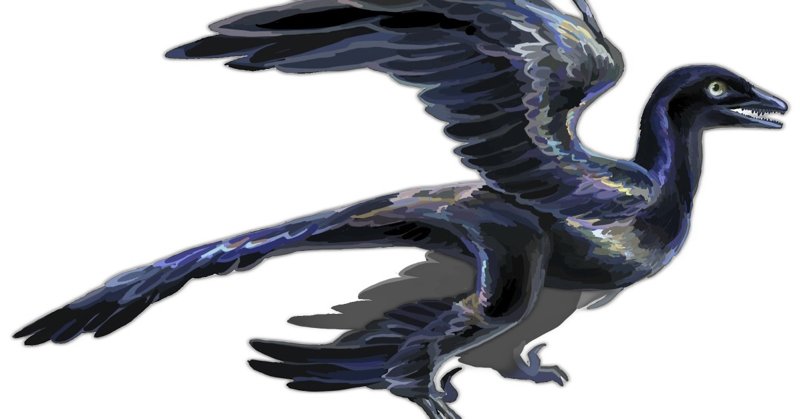
21. About 120 million years ago in the Early Cretaceous, a small dinosaur called Microraptor lived in what is now Liaoning, China. It had long feathers on both its arms and its legs, producing an unusual four-winged arrangement not seen in the same way among modern animals. Those feathers likely aided gliding, and some later studies have even suggested it may have been capable of powered flight.
22. Earlier dinosaur books occasionally proposed that giant dinosaurs might live up to 300 years because researchers pictured them as slow-metabolism reptiles, more like very large crocodiles or turtles. Subsequent studies of dinosaur bone growth revised that view by showing that many dinosaurs grew relatively quickly and did not follow such prolonged reptile timelines. Modern estimates indicate that even the biggest dinosaurs probably lived for decades rather than centuries, with large sauropods often estimated nearer to about 70 or 80 years.
23. When paleontologists described Dreadnoughtus schrani in 2014, they introduced one of the largest dinosaurs known from a relatively complete skeleton, discovered in Patagonia, Argentina. The principal individual measured about 85 feet long, and the original study reported that its bones indicated it had not yet reached full adult size when it died.
24. In 2002, a crew taking part in a simulated Mars mission in the Utah desert carried out a mock spacewalk near the Mars Desert Research Station. During that exercise they encountered a real dinosaur fossil while exploring terrain meant to represent the surface of Mars.
25. In 1997 researchers proposed that the long, tapering tail of Apatosaurus could act like a giant bullwhip. Their model suggested the tail tip might move fast enough to create a crack louder than 200 decibels, inspiring dramatic ideas about tail displays, defense, and sexual selection. But later work in 2022 pushed back on that claim, arguing that the tail’s actual tissues and structure would probably break down before it ever reached those speeds.






Add Comment