

Snakes are among the most misunderstood animals on Earth, and the truth is often stranger than fiction. From venomous species with bizarre defenses to giant pythons capable of swallowing enormous prey, these facts reveal just how remarkable, unsettling, and surprising the world of snakes can be.
Mamba’s Misleading Dark Color
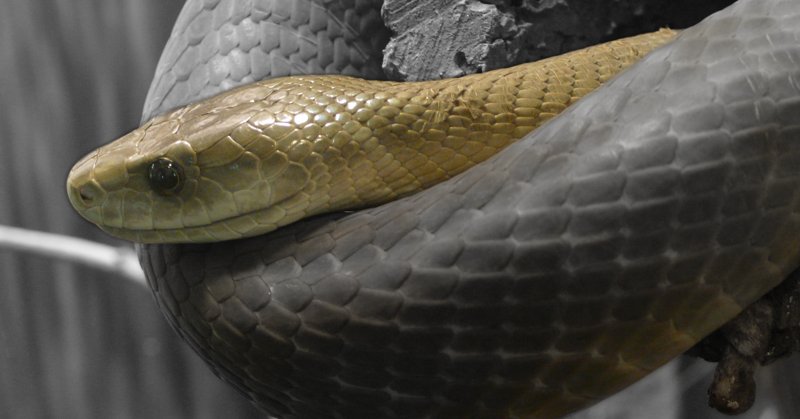
1. The black mamba’s skin color ranges from olive-brown to grey.
2. After mating, female anacondas will sometimes consume the smaller male; this sexual cannibalism provides them with substantial nutrients, which is useful because pregnant females fast for seven months.
3. If stepped on or agitated, copperhead snakes often deliver a “warning bite” that involves little to no venom.
4. The rhinoceros viper inhabits forests in West and Central Africa. This colorful, nocturnal viper is regarded as one of Africa’s most venomous snakes, producing both neurotoxic and hemotoxic venom, although very few human envenomation cases have been reported.
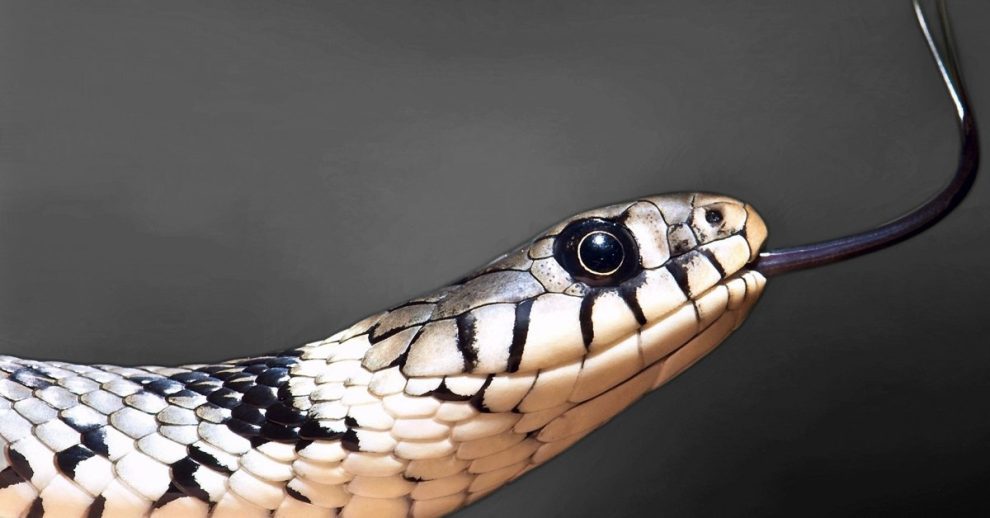
5. Snakes have forked tongues that allow them to detect smells in three dimensions; by sampling odors from slightly different locations they can determine the direction and source of a scent.
6. Pit vipers get their name from the pits beside their eyes, which provide them with a form of thermal vision.
7. In 2017, the body of an Indonesian man was found inside the stomach of a reticulated python. While attacks had been reported before, this was the first case fully confirmed with video documentation of a python eating a fully grown, adult human.
8. The Arizona coral snake tends to respond to threats by aggressively releasing flatulence rather than using its potent neurotoxic venom.
9. Based on past hunting experiences, vipers can manipulate their ambush site by removing grass that would be in their strike path. They anticipate the subsequent chain of events and strategize their hunt.
10. Puff adders are a snake species capable of hiding their scent from both predators and prey.
Venom Resistant Snake Eater
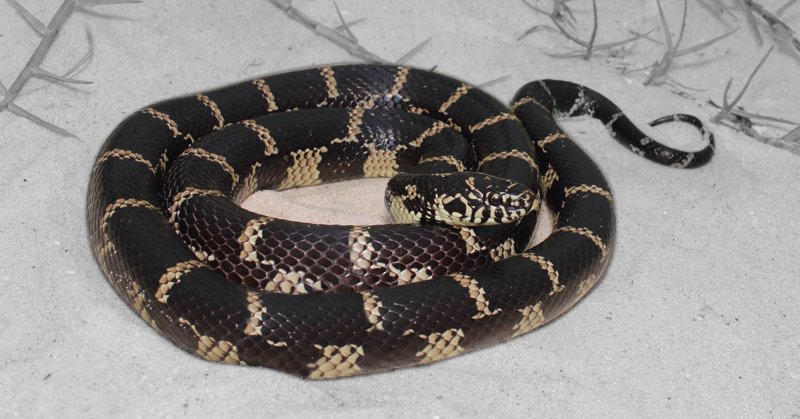
11. Common kingsnakes (Lampropeltis getula) are renowned snake-eaters and will consume rattlesnakes as willingly as they will garter snakes. They are immune to the venom of native pit vipers and can eat a snake almost as long as themselves; they also consume frogs, lizards, turtles, and rodents.
12. Members of certain Christian sects in the southern United States are regularly bitten by venomous snakes while taking part in ‘snake handling’ rituals. Those rituals are motivated by a literal interpretation of the Bible verses Mark 16:17-18.
13. The western hooknose snake expels gas as a defensive behavior, and on some occasions that gas is strong enough to lift the snake off the ground.
14. If a pit viper bite is left untreated, it can cause tissue necrosis and may develop into gangrene, which often necessitates amputation.
15. Even after being severed from the body, a rattlesnake head can still see, flick its tongue, and deliver venomous bites for up to an hour.
16. In 2010, a boa constrictor was documented reproducing asexually via parthenogenesis. It is only the third genetically confirmed instance of a single female producing consecutive virgin births yielding viable offspring in any vertebrate lineage.
17. Rattlesnakes can abruptly raise their rattle frequency from 40 Hz up to 100 Hz to trick people into thinking the snake is nearer than it actually is.
18. Habushu is an Okinawan liqueur made by submerging a living pit viper in a sealed jar of alcohol. In some versions the viper is chilled on ice to render it unconscious, gutted and sewn closed, and then placed in the alcohol, after which it can wake up, become highly aggressive, and then die.
19. Although cottonmouths have heavy bodies, they are buoyant and swim with their entire bodies above the water.
20. The Lake Taal snake is a marine snake species that evolved to live in freshwater. It occurs in a single Philippine lake that was cut off from the sea less than 500 years ago, which means the snake evolved into a distinct species in only a few centuries.
Python With Enormous Appetite
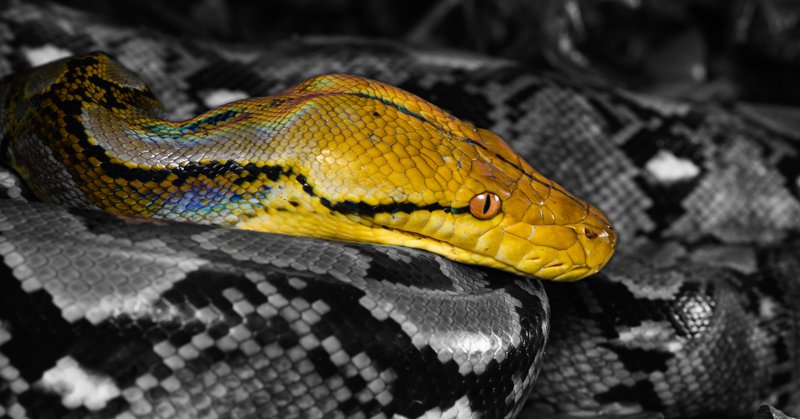
21. Reticulated pythons can grow as wide as a human and reach lengths up to 10 meters. They are capable of catching and swallowing a crocodile or deer whole.
22. A snake’s eyes become milky blue when it is about to shed (molt) its old skin.
23. The Namaqua Dwarf Adder (Bitis schneideri) is thought to be the world’s smallest venomous snake, with a maximum reported length of 28 cm (11 inches).
24. Anacondas give birth to live young rather than laying eggs.
25. All species of snake in the genus chrysopelea can perform gliding flight, with ranges as great as 100 meters. The snakes in this genus achieve this by leaping from branches, then sucking in their abdomen and flaring out their ribs, turning their body into a “pseudo concave wing.”






Add Comment