

Nature is full of animals that are not only fascinating but surprisingly endearing once you learn more about them. From devoted parents and clever survival strategies to unusual friendships and heartwarming behaviors, these facts highlight some of the most charming creatures sharing our planet.
Grounded Parrot’s Odd Defence
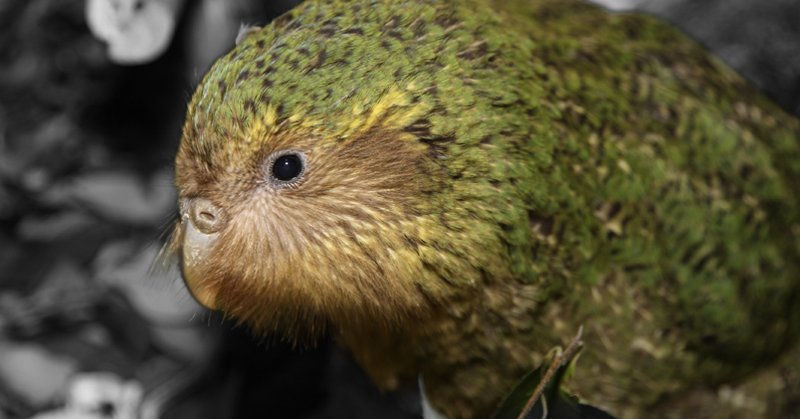
1. The kakapo, native to New Zealand, is a parrot that evolved in a threat-free environment and therefore did not develop any defensive strategies. If attacked it tends to remain motionless or climb onto a high branch and throw itself even though it cannot fly.
2. Silky or pygmy anteaters usually live in silk cotton trees (genus Ceiba). Their appearance resembles the seed pod fibers of these trees, so they can use the trees as camouflage.
3. Pigs have episodic memory. It is likely that they can replay and feel past experiences in their heads.
4. An Amazonian moth of the family Urodidae weaves one of the insect world’s strangest and most beautiful cocoons. Urodidae cocoons have a coarse open mesh design with an exit at the bottom and hang like a pendulum on a long thread of silk.
5. Pallid bats are resistant to scorpion venom and actively hunt Arizona bark scorpions, which are the most venomous scorpions in North America. They can eat thousands of bugs, especially midges and disease-carrying mosquitos, since they are not affected by things like malaria or dengue fever.
6. The Great Pyrenees Dog was bred to live alongside and protect livestock. They show endless patience toward their charges.
7. Hyraxes are rotund herbivorous mammals found in parts of Africa and the Middle East. Despite their rodent-like appearance, they are elephants’ closest living relative. Hyraxes are colonial, living in colonies of about 50 within the natural crevices of rocks or boulders. They do not create burrows.
8. The Purina or Tasmanian Devil is an endangered marsupial known for its shrill screams. They are endangered due to contagious cancer and hit and runs. To help save them in certain mainland ecosystems, experts have suggested reintroducing them back to mainland Australia.
9. The pink robin (Petroica rodinogaster) is a small passerine native to southeastern Australia. It is sexually dimorphic: the male has a distinctive white crown and pink breast, grey-black upperparts, wings, and tail. The belly is white. The female has grey-brown plumage.
10. Squirrels play an important part in the ecosystem by spreading a fungus that trees need to survive. They also lose about 25% of the nuts they bury.
Muscle Protein Gives Venom Defense
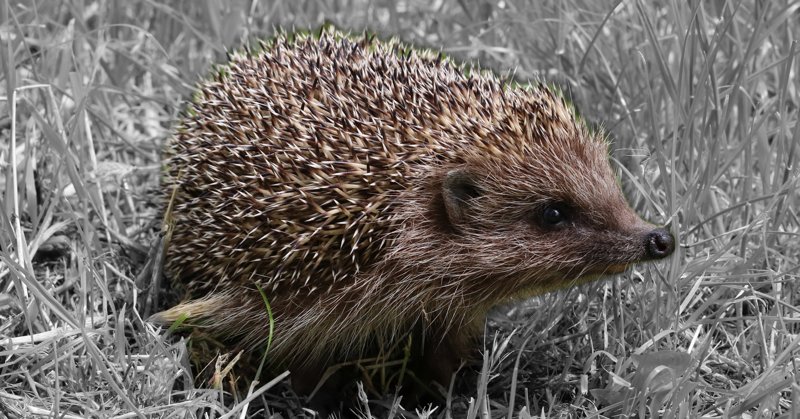
11. European hedgehogs resist viper venom thanks to a distinctive muscle protein named erinacin.
12. Golden moles possess eyes that are covered by skin, rendering them largely nonfunctional.
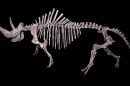
13. Saiga antelopes almost always give birth to twins, which allows the herd to repopulate quickly while the grass is abundant; they were present during the time of Sabertooth Tigers and Wooly Mammoths but are now facing extinction.
14. Northern ghost bats eat insects and sing while they feed. They lack pigment in their wings so the veins are visible. The skin of some bat wings is thin enough that gases can diffuse through it, allowing bats to “breathe” through their wings.
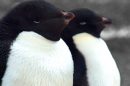
15. Penguins have no teeth; instead their mouth and tongue are lined with sharp, backward-pointing spines that help hold food, which they swallow whole.
16. One hypothesis proposes that baby cheetahs evolved to resemble adult honey badgers because honey badgers are so aggressive that almost no other animal will attack them, thereby providing protection for the young cheetahs.
17. Warthogs in Uganda have learned to remove bothersome ticks by seeking grooming from nearby mongooses that are looking for snacks.
18. An Arctic hare tucks itself into an almost perfectly spherical shape and remains very still as part of its winter strategy to retain heat; after feeding, hares adopt this posture, drawing in their extremities tightly and folding their tails down between their hind legs to conserve warmth.
19. The aardwolf (alphabetically the second creature) is a monogamous species of hyena that mostly eats termites with its long sticky tongue; they will raise their cubs for up to a year as a pair, with the male watching the cub for up to six hours a night while the mother finds food.
20. A male cheetah can induce a female to ovulate by barking at her.
Only Species Orange Tortoise
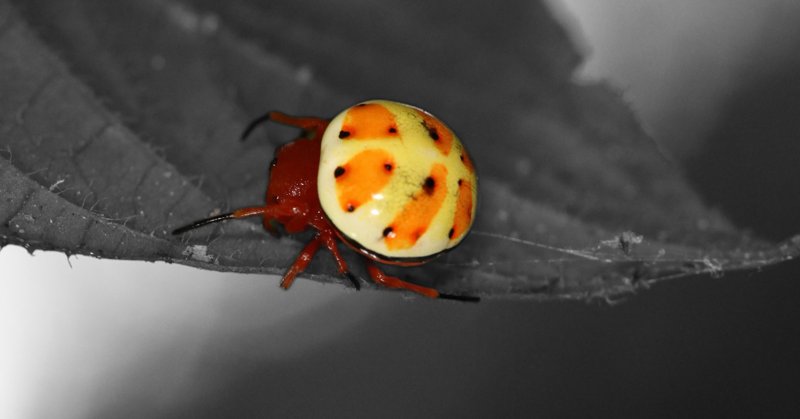
21. Encyosaccus sexmaculatus is the only described species in the genus Encyosaccus. It occurs in Colombia, Ecuador, Peru, and Brazil and is commonly called the orange tortoise spider. Its vivid orange coloration suggests it might be poisonous.
22. Jacanas are brightly colored water birds with long legs and exceptionally long toes and claws. Their very long toes spread the bird’s weight over a large area. This adaptation allows them to walk across floating vegetation, especially lily pads.
23. Egyptian fruit bats (Rousettus aegyptiacus) trade food for sex.
24. Fearing being eaten by the female during mating, the male Argonaut Octopus will often rip off its own penis and throw it at the female to inseminate on her own.
25. Syrian hamsters (Mesocricetus auratus) experience both good moods and bad moods, and a hamster’s emotional state can influence their outlook on life.


Add Comment