

Nature has no shortage of creatures with names that sound completely made up. From birds and fish with hilariously odd names to insects, mammals, and reptiles that seem like punchlines, these facts explore some of the funniest and most unforgettable wildlife names found anywhere on Earth.
Dik-dik
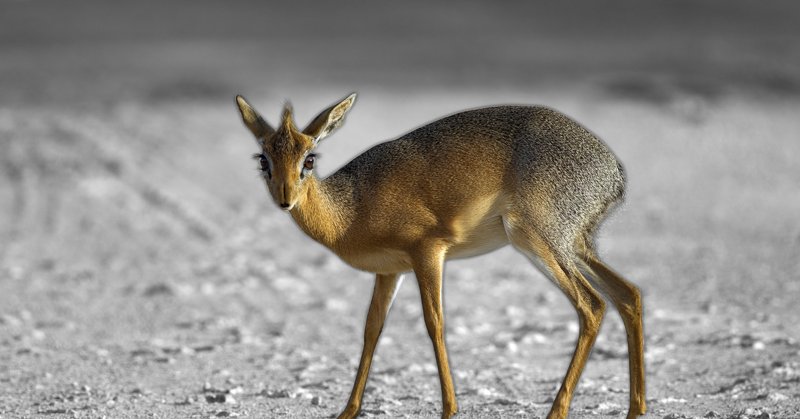
1. Dik-Dik is a small antelope that inhabits the bushlands of eastern and southern Africa. They are called that because the females make alarm calls that sound similar.
2. Mountain Chicken is not a chicken. It is a frog. It is commonly known as the giant ditch frog and is found in Caribbean Islands, but locally it is known as the mountain chicken for its large size and the fact that it is hunted for food.
3. Agra cadabra is a type of ground beetle.
4. Aploparaksis turdi is a type of tapeworm found, where else, in feces.
5. Spiny lumpsucker is a type of marine fish most commonly found in the North Pacific Ocean. The “sucker” part refers to the fish’s modified pelvic fins, which have evolved into adhesive discs that the fish uses to adhere to the substrate. There are many species of spiny lumpsucker fishes. One of them, in particular, is spicular-spiny pimpled lumpsucker.
6. Although the name of Tasseled wobbegong might resemble a British insult, it is a species of carpet shark that lives in the shallow coral reefs off northern Australia.
7. Slippery dick is a species of wrasse, a marine fish native to the Atlantic Ocean. Most wrasses have silly names.
8. The sarcastic fringehead is a small yet ferocious fish with a large mouth and aggressive territorial behavior, which is how it got its name. When two fringeheads dispute territory, they wrestle by pressing their distended mouths against one another in a way that looks like kissing. This lets them determine which fish is larger, establishing dominance.
9. In 2015, two beautiful new species of peacock spiders were discovered in Australia and nicknamed “Skeletorus” and “Sparklemuffin.” Sparklemuffin was given that nickname because of bluish and reddish stripes on its abdomen.
10. Although the name of Yellow-bellied sapsucker may sound like a Shakespearean insult, it is a medium-sized woodpecker found in North America, Central America, and the Caribbean. Like other sapsuckers, these birds drill holes in trees to consume sap and the insects attracted to it. They may also pick insects from tree trunks or catch them in flight, and they also eat fruit and berries.
White-bellied go-away-bird
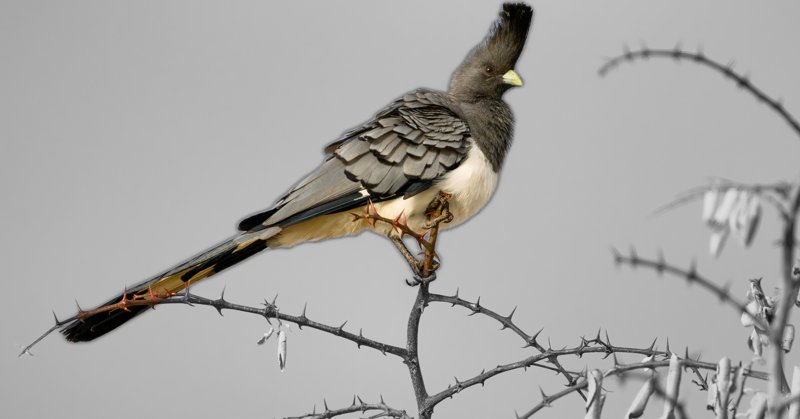
11. White-bellied go-away-bird is a good-looking bird found in Africa. Typical calls are a nasal haa-haa-haa, like the bleating of a sheep, and a single or repeated gwa (or g’away). It flies from tree to tree in loose straggling groups, calling loudly.
12. Ytu brutus is a beetle species that belongs to the genus Ytu. It was discovered by in 1980 in Brazil.
13. Cockchafer is a species of beetle from Europe.
14. The fried egg jellyfish is called that because, when seen from above, it resembles a fried egg.
15. Although Tufted titmouse is tufted, it is certainly not a mouse. It is a bird that belongs to the tit family of birds.
16. Colon rectum is a species of beetle in the family Leiodidae. This inconspicuous round fungus beetle was first described in 1933 by Melville H. Hatch, an entomologist at the University of Washington. Hatch also named other similarly amusing coleopterans, including Colon forceps, Colon monstrosum, Colon grossum, and Colon horni.
17. Boops boops is a seabream species native to the eastern Atlantic. In every language its common name refers to the fish’s large, “bug” eyes.
18. Pleasing fungus beetles are a family of beetles comprising more than 100 genera. They feed on plant and fungal matter; some are important pollinators, while a few are notable pests. Sometimes a single genus contains both useful and harmful species. However, most pleasing fungus beetles are harmless animals of little consequence to humans.
19. Maned wolf is the largest canid in South America. Its markings resemble those of foxes, but it is neither a fox nor a wolf since it is not closely related to other canids. Notably, the maned wolf’s urine has a very distinctive odor similar to cannabis.
20. Rather than truly being “hairy,” Screaming hairy armadillo appears as if it had trundled through a haystack. If you squint at the animal, which is rather cute, it begins to look like it is wearing a particularly old and badly treated wig. The adjective “screaming” comes from its habit of squealing when handled or threatened, so that sound is more a defensive call than a reflection of its usual vocalizations.
Aye-aye
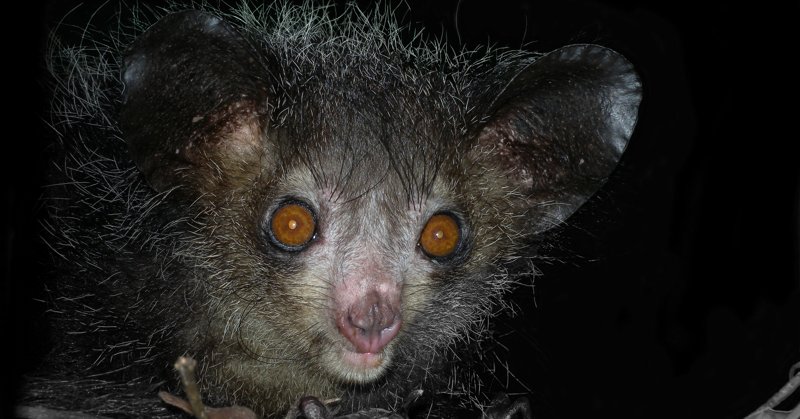
21. Aye-aye was likely named by a sailor. This lemur species is endemic to Madagascar. It is the world’s largest nocturnal primate.
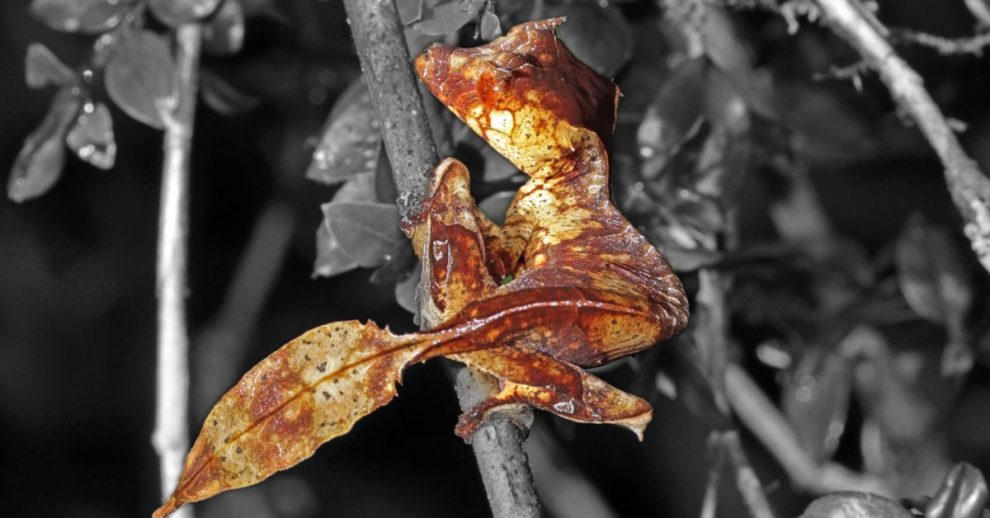
22. Satanic leaf gecko is a gecko species that is native to the island of Madagascar. It may also be known as the eyelash leaf-tailed gecko or the fantastic leaf-tailed gecko.
23. Pink fairy armadillo is pink though it does not resemble a fairy. Pink fairy armadillos have small eyes and silky yellowish-white fur. The pink fairy armadillo is nicknamed the “sand-swimmer” because it is said that it can “burrow through the ground as fast as a fish can swim in the sea.”
24. This species is aptly named blobfish because when it is out of the water it appears as a blob-like mass. They live at depths between 600 and 1,200 meters where the pressure is 60 to 120 times as great as at sea level. The flesh of the blobfish is primarily a gelatinous mass with a density slightly less than water; this allows the fish to float above the sea floor without expending energy on swimming. Its relative lack of muscle is not a disadvantage as it primarily swallows edible matter that floats in front of it such as deep-ocean crustaceans.
25. If Latin names are considered, it must be the Western Lowland Gorilla, because its trinomial taxonomic name is literally Gorilla gorilla gorilla. They are found in lowland swamps in central Africa. It is the gorilla most often found in zoos.





Add Comment