

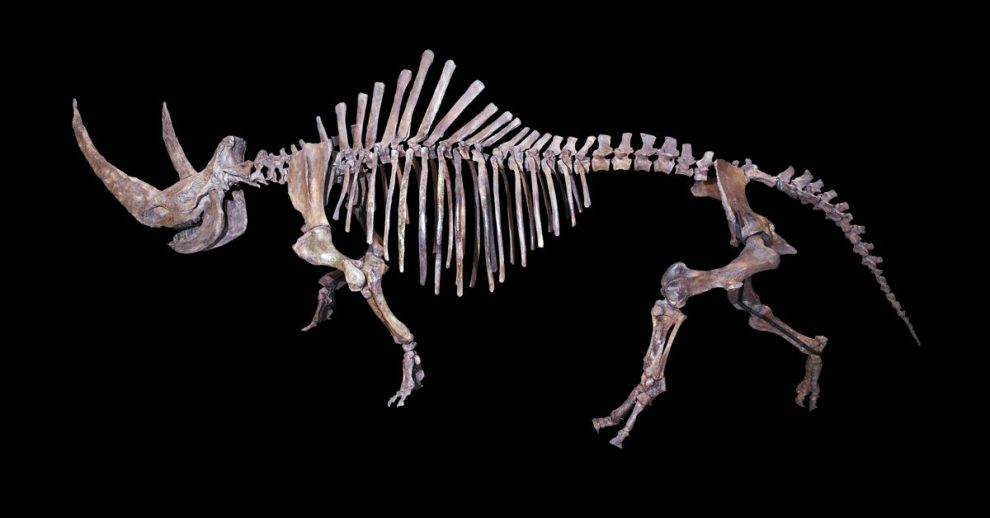
Extinction has erased countless fascinating creatures from Earth, but their stories continue to surprise scientists and historians alike. These little-known facts about extinct animals and birds reveal strange adaptations, unexpected connections to modern species, and the remarkable ways some of these lost creatures once lived.
Origin From Eighty Aurochs
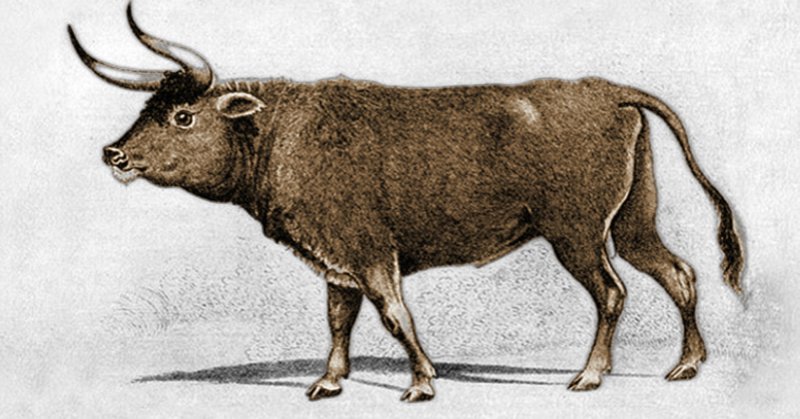
1. All modern domestic cattle trace their ancestry to a single herd of 80 aurochs, a cattle species driven to extinction by early humans.
2. Myotragus bakearicus, a cave goat that disappeared about 5,000 years ago, is the earliest known mammal to have become cold-blooded; its bone growth pattern differs from other mammals and more closely resembles crocodiles by exhibiting slow, environmentally responsive rates.
3. The Cyclops myth most likely began when Mediterranean island inhabitants discovered the remains of extinct dwarf elephants; their skulls, about twice the size of a human skull, have a central nasal cavity that could be mistaken for a single eye socket.
4. Trilobites, distant extinct relatives of spiders and shrimps, were the first animals known to have evolved vision.
5. The extinct American cheetah may explain why pronghorns run so fast today.
6. The Alpine Spaniel, now extinct, was a dog bred by Augustinian monks to rescue travelers trapped in the snow of the Great St. Bernard Pass. Dogs were sent in pairs so that one could alert the monks when it found someone. They are said to be ancestors of modern-day St. Bernards.
7. The lions known as the Atlas or Barbary lion, which were used in the Colosseum, became extinct in 1952. They were the largest lions to date and the only species of lions not to live in prides.
8. There were two species of gastric-brooding frogs that swallowed their eggs, converted their stomachs into a womb, and gave birth through their mouths. They went extinct in the mid-1980s. Scientists are trying to resurrect them.
9. Pubic lice, small crab-shaped insects that feed on the blood of their hosts and most often live in pubic hair, have been with humans for thousands of years. However, they are going extinct because their natural habitats have been destroyed over the past decade as the grooming style known as the Brazilian wax has gained popularity.
10. Castoroides, also known as giant beavers, roamed North America during the last Ice Age. They were about eight feet tall and weighed between 130 and 220 pounds, roughly the size of a modern black bear.
Top Marsupial Meat Eaters
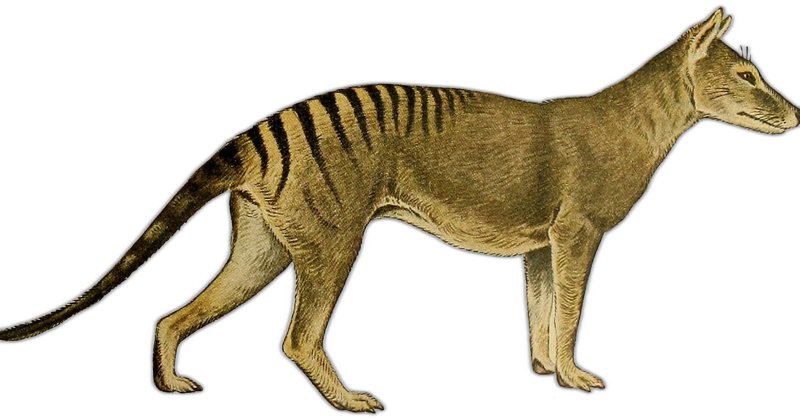
11. After the Tasmanian tiger went extinct in 1936, Tasmanian devils became the largest carnivorous marsupials on earth.
12. Africa once had a native bear called the Atlas Bear; its population declined sharply because the Roman Empire demanded animals for gladiatorial events. The species was hunted to extinction by the 1870s.
13. The last Kauaʻi ʻōʻō, now extinct, was male; its song was recorded in 1987, capturing a mating call directed at a female that would never come, and it died in 1987 as well.
14. The extinct Tasmanian tiger could open its mouth wider than any other mammal.
15. Ancient humans hunted Glyptodon, an extinct massive armadillo, so they could live inside its shell.
16. An extinct carnivorous relative of koalas and wombats is known as the Marsupial lion.
17. Steller’s Sea Cows were 30-feet-long manatees and weighed perhaps 10 metric tons. They were discovered by a German naturalist in 1741. They were hunted to supply Russian seal hunters with prized meat on long sea journeys. Within 27 years of being found, they were extinct.
18. By the time the last mammoth became extinct, the Great Pyramid of Giza was over 1000 years old. A tiny population of mammoths survived on isolated Wrangel Island in far eastern Siberia until 1650 BCE. It is still unclear what caused their extinction on the island.
19. The dire wolf actually existed but went extinct 10,000 years ago. Their extinction has been linked to their inability to compete with faster wolves for prey, which made them scavengers.
20. The now extinct Salish Wool Dog was shorn like sheep and prized for producing the famous and rare “Salish” blankets, because the Salish peoples of the Pacific Northwest did not have sheep and wild mountain goat wool was difficult to gather.
Largest Known Deer Antlers
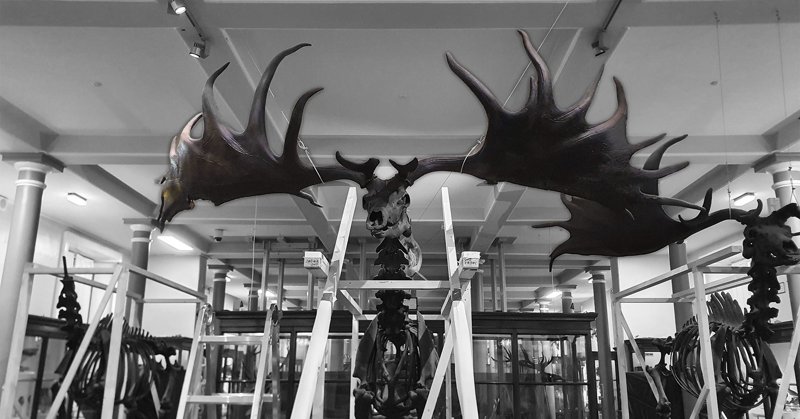
21. The Irish Elk was an extinct deer species that possessed the largest antlers of any known deer, reaching a maximum of 3.65 m (12 foot) from tip to tip and weighing up to 40 kg (88 lb).
22. Gigantopithecus blacki was an extinct genus of ape that could stand up to 3 meters tall, weigh as much as 540 kg, and may have existed from perhaps nine million years to as recently as one hundred thousand years ago; they were contemporary with modern humans for tens of thousands of years.
23. The extinct American lion ranged across much of the United States and into South America and was about 25% larger than today’s African lion.
24. The Pyrenean ibex is the only species ever to have been briefly ‘un-extinct’ after being cloned in 2009; unfortunately the clone lived for only seven minutes and the species was once again extinct.
25. The once widespread West African black rhino was declared extinct in 2011, and the cause of extinction was poaching by humans.




Add Comment