

Sniper Agent’s Deadly Aim
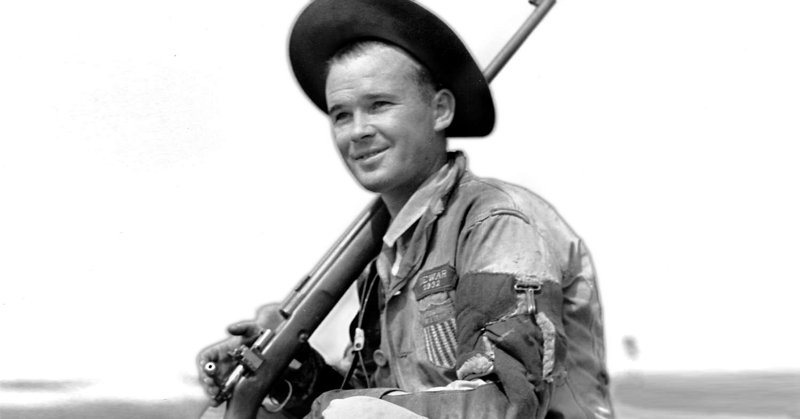
26. Walter R. Walsh was a former FBI agent, Olympian, and Marine Corps sniper. In his ten years with the Bureau, Mr. Walsh shot and killed 11 known criminals. Although he was naturally left-handed, in 1937 he fired at moving targets with a pistol in each hand to apprehend three criminals. At one point in World War II, with his unit pinned down, he killed an enemy sniper 80 yards away with one pistol shot.
27. Desmond Doss was the first conscientious objector to receive the Medal of Honor for his many acts of valor as a medic in the Pacific theater of World War 2. He refused to take a weapon into battle, not a rifle, not a knife, nothing. One time a grenade badly injured his legs and Doss treated the wounds himself while being taken to the hospital, gave up his stretcher, and told his bearers to carry another wounded man. He received the Medal of Honor without killing anyone.
28. Abraham Lincoln is honored in the wrestling hall of fame. He was defeated only once in about 300 matches, and Lincoln reportedly talked some trash in the ring. According to Carl Sandburg’s biography of Lincoln, Honest Abe once challenged an entire crowd of spectators after beating an opponent: “I’m the big buck of this lick. If any of you want to try it, come on and whet your horns.” No one accepted.
29. Saburo Sakai was a Japanese air ace who was shot in the face during a dogfight in World War 2. Blind in one eye and partly paralyzed, he flew upside down so blood would not blind his other eye. He flew for five hours to return to base, filed his report, and then underwent surgery without anesthesia.
30. U.S. Marine John Kelly was the last person to receive two Medals of Honor. During the battle of Blanc Mont Ridge in World War 1, he ran 100 yards ahead of the front line and attacked an enemy machine gun nest, killed the gunner with a grenade, shot another man with his pistol, and came back with 8 prisoners. He was only 19 years old during the battle.
31. Liviu Librescu was a professor of aerospace engineering at Virginia Tech who was born in Romania and was known around the world. He survived the Holocaust as a child. When he was 76, he kept his classroom door closed while the gunman tried to get in. Most of his students escaped through the windows. He was shot five times through the door and succeeded in saving 22 of the 23 students in his class. A gunshot to his head was fatal.
32. Joseph D. Pistone, also known as Donnie Brasco, was an FBI agent who spent six years undercover infiltrating a mafia family until he was about to be made, meaning fully accepted into the family. He was removed because his superiors judged the operation to be getting too dangerous.
33. The famous astronomer Tycho Brahe once lost most of his nose to a broadsword in a duel with a rival mathematician. He lived on a private island in a huge castle that had trap doors, an army of astronomer henchmen, and a dungeon where he could imprison anyone who angered him without legal process whenever he wanted. He kept a pet moose that got drunk at parties, to the point that one night it was so intoxicated it fell down stairs and died. He was close friends with a psychic dwarf who lived beneath his dining room table. Brahe precisely predicted the paths of more than 700 stars even though he made his observations with the naked eye, since he worked before the telescope had been invented.
34. While serving as a California highway patrol officer, Sgt. Kevin Briggs has prevented more than 200 people from killing themselves on the Golden Gate Bridge.
35. In 1907, a Mexican railroad brakeman named Jesus Garcia saved the whole town of Nacozari in Sonora by alone driving a damaged train that was on fire and carrying dynamite. He took the train 6 kilometers away from the town before it ultimately exploded, killing him.
Umbrella Charge at Arnhem
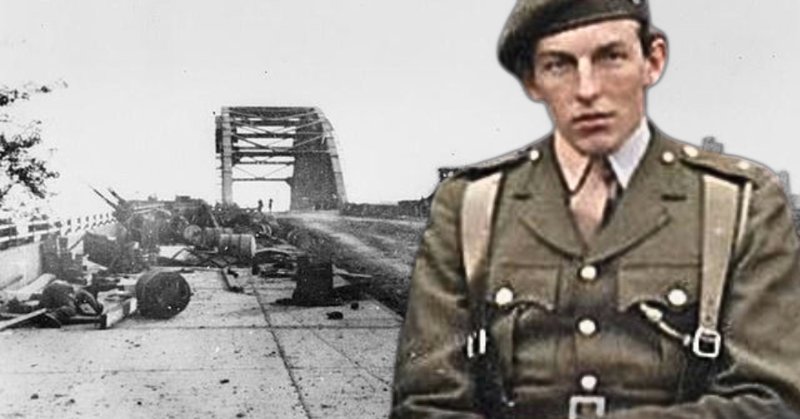
36. At the Battle of Arnhem, after the Germans began driving tanks across the bridge, Major Digby Tatham-Warter led a bayonet attack against them while wearing a bowler hat. He stopped an armored car by thrusting his umbrella through its observation slit and disabling the driver. He then saw a padre trapped by enemy gunfire. After reaching him, he said, “don’t worry about the bullets, I’ve got an umbrella!” He then took the padre across the street beneath his umbrella.
37. Even though he was facing financial hardship, one of the most highly decorated war veterans in the USA repeatedly declined offers to appear in alcohol and tobacco advertisements because he understood it would set a poor example for young people. That soldier, Audie Murphy, had earned every U.S. Army award for combat in World War II.
38. Lieutenant Benjamin E Wilson, a World War II veteran, joined the Korean War as a private and rapidly advanced to sergeant. He was assigned to defend “Hell Hill” while already wounded in the leg. When Chinese forces attacked, he killed seven enemy soldiers and wounded two by himself. After he was wounded and placed on a stretcher, he regained consciousness, got up in fury, and charged the enemy line with his rifle, killing three more. Once his rifle was taken from him, he killed four additional men with his shovel. The next day, after medics treated him, he carried out another lone attack and killed 33 more enemy soldiers.
39. Tibor Rubin, a Holocaust survivor, fought for the United States in the Korean War. He lived through several suicide missions that his anti-Semitic sergeant ordered him to carry out. At one point, he held off an enemy attack by himself for 24 hours. He was later captured and sent to a Chinese POW camp. For almost two years, he repeatedly stole food from his captors at night despite the risk of being killed. He also provided medical help to fellow prisoners and saved more than 40 lives from starvation and poor medical care. Although he was recommended for several military honors, his sergeant overlooked him. He finally received the Medal of Honor in 2005.
40. Joseph Medicine Crow became the last Plains Indian war chief ever after he completed all four required deeds while fighting in Europe during World War II. Those deeds were touching an enemy soldier, taking his weapon, leading a successful war party, and stealing an enemy horse.
41. During World War II, Winston Churchill created the Special Operations Executive. This covert military unit was based on Baker Street and included Christopher Lee, James Bond creator Ian Fleming, and people who later inspired M, Q, Miss Moneypenny, and Vesper Lynd. Whether a bridge needed blowing up or an Axis officer needed seducing, they handled it. They also stopped the Nazis from constructing an atomic bomb.
42. At age 9, John Fairfax settled a disagreement with a pistol. He was expelled from the Boy Scouts for shooting at another group with a gun. At 13, he ran away to live like Tarzan in the Amazon jungle. At 20, he chose to kill himself by Jaguar. He did take a pistol in case he changed his mind, which he did, and he later shot and skinned the animal. After trying to bicycle and hitchhike across South America, he spent three years as a pirate. In the end, he rowed alone across the Atlantic Ocean, and later crossed the Pacific in a tandem rowboat with another person.
43. Eugene Francois Vidocq deserted the French army twice, posed as an officer, a nobleman, and a nun, escaped from prison multiple times, once with help from another prisoner, and received a death sentence, all before becoming the father of modern criminology.
44. Chandragupta Maurya was an orphan born in the slums of eastern India in the 4th century BC, and he later built one of India’s largest empires. He commanded 9,000 war elephants, 50 million people, and an army of 36,000. His personal guard included more than 500 Greek and Indian warrior women. To bring down the Nanda Empire, he simply seized a bronze sword and attacked the palace by himself. He was captured and imprisoned but escaped. In the end, he overthrew the ruling dynasty and established the long-lasting Maurya dynasty.
45. In 1942, Russian fighter pilot Alexey Maresyev’s plane was shot down by the Germans and he crash-landed in enemy territory. Both of his legs were badly damaged, but he was able to crawl for 18 days through the snow to reach friendly ground. His legs had to be amputated below the knee. Using crutches and prosthetic legs, he danced in front of a judge within a year to demonstrate that he was fit for combat. He then flew 86 combat missions and destroyed 11 enemy aircraft.
Tank Bought For Revenge
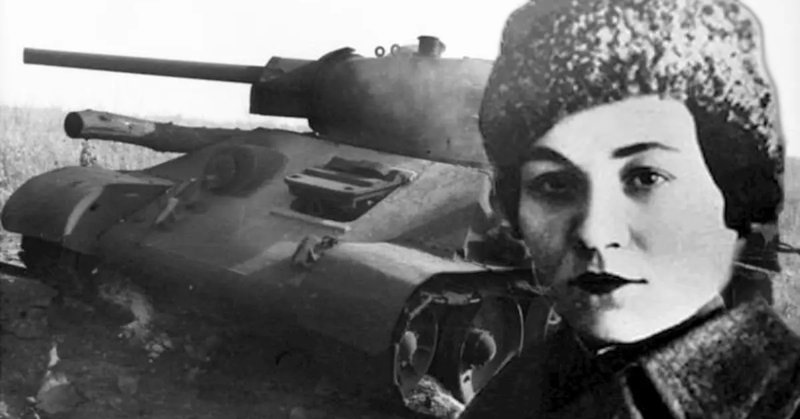
46. After learning that her husband had been killed while fighting in World War II, Mariya Oktyabrskaya sold everything she owned to donate a tank to the Red Army, with the sole condition that she be permitted to drive it. When her tank was struck by gunfire, she often ignored orders and jumped out under heavy fire to fix it. She ultimately became the first female tanker to receive the title “Hero of the Soviet Union.”
47. Jason Lewis was the first person to circle the Earth without motors or sails. He walked, cycled, and inline skated across five continents, and he also kayaked, swam, rowed, and pedaled a boat over rivers, seas, and oceans. The trip covered 46,505 miles and took him 13 years to finish.
48. Tommy Prince was a Native American who served in World War II. Because of his moccasins, he was so quiet that at times, instead of killing Germans, he would steal things like a pair of shoes right from their feet. At other times, he would cut their throats without making a sound. Germans would panic when they woke and found a dead person among them. They believed he was a ghost or a devil.
49. Larry Thorne was a captain in the Finnish Army who commanded an infantry company in the Finnish Winter War and Continuation War. During World War II, he joined a German unit to fight Russians near Schwerin, Germany, and later surrendered to British troops. He then served in the U.S. Army Special Forces during the Vietnam War. His honors included two Purple Hearts, a Bronze Star, a 2nd Class Iron Cross, and a Mannerheim Cross, one of 197.
50. In 1968, Eddie Aikau, a big wave surfer, was chosen as the first lifeguard at Waimea Beach in Oahu. During his time as a lifeguard, no one died, and he saved more than 500 people, often facing waves that were 30 feet, or 9.1 meters, high or even larger.


Add Comment