

Preserving Film Through Eruption
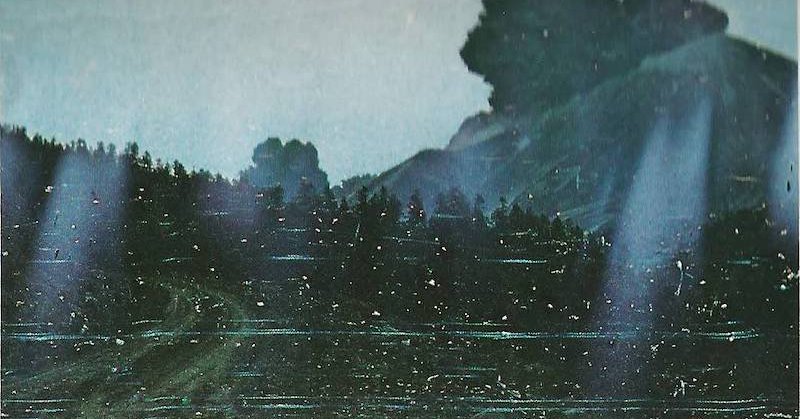
26. While filming the 1980 Mount St. Helens eruption, Robert Landsburg realized he would not survive, so he rewound the film into its canister, placed his camera in his backpack, and lay on top of it to protect the film for future researchers.
27. Galvarino, a Mapuche warrior, had knives attached to his wrists after conquistadors cut off his hands, and he fought in the war against Spain.
28. Philip II of Macedon once warned Sparta, “You are advised to submit without further delay, for if I bring my army into your land, I will destroy your farms, slay your people, and raze your city.” The Spartans answered, “If”. Afterward, both Philip and Alexander avoided Sparta altogether.
29. During the first major raid on the Germans in 1941, Canadian chaplain John Weir Foote was told to stay behind. He challenged his officer to arrest him if he wanted to keep him out, so he was made a stretcher-bearer. During the raid, he helped carry 30 wounded soldiers to safety under fire and gave them morphine. While leaving the beach, he got off and surrendered because he believed a POW camp needed religious guidance more than a hunch of soldiers returning to base. After three years in prison and one serious escape attempt, Foote was freed. He was awarded the Victoria Cross.
30. During World War 2, the Japanese were known to execute POWs on a whim if there was even a hint of rescue. So to rescue allied POWs from Cabanatuan City in the Philippines, the allies came up with an absurd plan. Capt. Kenneth Schrieber and Lt. Bonnie Rucks flew their P-61 low and spent 20 minutes over the POW camp performing aerobatic maneuvers and backfiring their aircraft several times. Every Japanese guard watched, expecting them to crash. While they were distracted, several hundred allied soldiers slipped into the camp unnoticed, and when the orders came, they killed every Japanese soldier within 15 seconds and liberated the camp.
31. In 634, during the confrontation between the Eastern Roman Empire and the Rashidun Caliphate, Zarrar Ibn al-Azwar was among them. He was a tax collector, but whenever war began, he rushed into battle without armor, which earned him the nickname “the half-naked warrior.” In that war, as the caliphate stood on the brink of defeat, they challenged the Byzantine officers through a series of duels against Azwar. He killed two governors and every other Roman champion, leaving the Roman army without any officers to command it. The Caliphate took Syria and Palestine and ruled there for over 1000 years.
32. In 1986, during the Namibian War of Independence, two Namibian guerrillas noticed they were being tracked and separated. One of them succeeded in escaping. The trail of the second was taken up by Special Forces trackers who followed him in armored carriers. Even so, he actually managed to widen the gap between himself and the trackers. When helicopters were deployed, they also could not keep pace with him. Over five days, they tracked him for 230 miles without any sign that he had stopped to sleep. The only items they ever discovered were used syringes. They found places where he had collapsed from exhaustion, injected himself with methamphetamines, gotten up again, and continued running. They never captured him.
33. In 1941, the largest seed bank in the world, created by botanist Nikolai Vavilov, was located in Leningrad. As the Germans encircled the city and caused widespread starvation, the scientists inside the vault refused to eat from the collection, slowly dying of hunger while they preserved 16 rooms of edible plants.
34. In World War 2, after his submarine went down, John Capes swam 170 feet to the surface and then swam 5 miles to the shore. He then remained hidden from Italians for 18 months before making his escape to Turkey.
35. In 1922, a fur trapper called Ben Cochrum was assaulted by a wolf pack in Manitoba. After he shot 7, beat four more to death, and broke his rifle stock, he gave up and was ripped apart. His body was discovered with the remains of the 11 wolves he had killed while fighting for his life.
Stinger Cleared The Bunkers
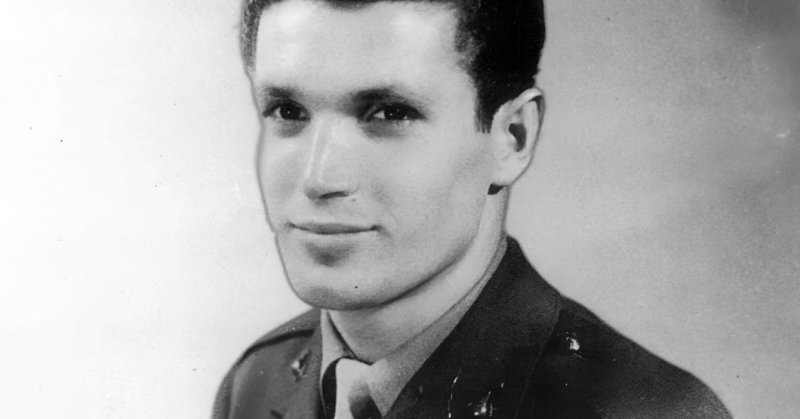
36. On the opening day of the Iwo Jima assault, Corporal Tony Stein used his custom M1919 machine gun, which he called “Stinger,” to clear several enemy pillboxes. Throughout the assault, he made 8 separate trips back to the beach for ammunition reloads and carried a wounded soldier on his back on each trip. He was killed in action 10 days later and was awarded the Medal of Honor posthumously.
37. El Cid was a medieval military commander who was so dreaded that after he died, his embalmed body was put on a horse and sent into combat, which made the enemy run away.
38. Gotz von Berlichingen was a 16th century Imperial Knight who lost his right hand in one of the battles. He later made a replacement hand from metal with movable fingers that could grip both small and large items, from a playing card to a sword. He became a mercenary and fought for the highest payers, ransomed people, and even robbed merchants. Using the wealth he gained illegally, he eventually purchased Hornberg castle and kept fighting into his 60s.
39. Allstate’s “Mr. Mayhem” Dean Winters has undergone 17 surgeries and 9 amputations, including the loss of his nose and thumb. He also once spent 2.5 minutes dead on the way to the hospital after developing a bacterial infection.
40. Donnie Yen, who is recognized for portraying Wing Chun grandmaster Yip Man in the 2008 film Ip Man, once fought off a gang of 8 men who were bothering him and his girlfriend at a nightclub in Hong Kong. The men ended up being hospitalized.
41. Dian Wei served as King Cao Cao’s personal bodyguard in imperial China during the first century. His final stand occurred at the Battle of Wancheng. A local governor had begun a surprise night attack on the King. When the assassins reached the gates, they found Dian Wei at the entrance holding a pair of 40-pound axes. He killed at least 20 enemies before another group attacked him from behind and brought him down, but the King had already escaped.
42. In 2015, when Montana resident Chase DelIwo was confronted by a 400-pound grizzly bear, he relied on advice from his grandmother, who had told him that large animals have poor gag reflexes, to save his life. He pushed his right arm down the bear’s throat, and the bear let him go. He survived with a few hundred stitches in his head and a punctured leg.
43. During one of their many battles in the early 1700s, an unnamed Catawba warrior from South Carolina was ambushed by a Seneca war party from New York. He ran off and shot and killed seven Senecas before he was captured. They stripped him naked, bound him, and marched him back to New York, letting people whip him as he went by. After they untied him at the end of a 500-mile journey, he leaped into a nearby river, swam across it without coming up even once, and disappeared into the woods. That night, he killed the Seneca search party sent after him. The Senecas concluded that he was a wizard and gave up. He returned to South Carolina, dug up the bodies of the seven Senecas he had killed when he was captured, and scalped them.
44. In November 2015, an unnamed SAS sniper saved hundreds of lives by firing three carefully placed shots that killed five terrorists from 800 meters away in Mosul, Iraq. He hit the first jihadi in the chest, causing the explosive device to detonate and killing him instantly, along with two nearby ISIS guards. The second terrorist was killed with a headshot, and the third jihadi also died when a chest shot triggered his explosive vest.
45. In 1984, Robert Patrick, who played the T-1000 in Terminator 2: Judgment Day, spent 3 hours swimming to help rescue people after a boating accident on Lake Erie, and nearly drowned while doing it.
Submerged Nuclear Dismantling
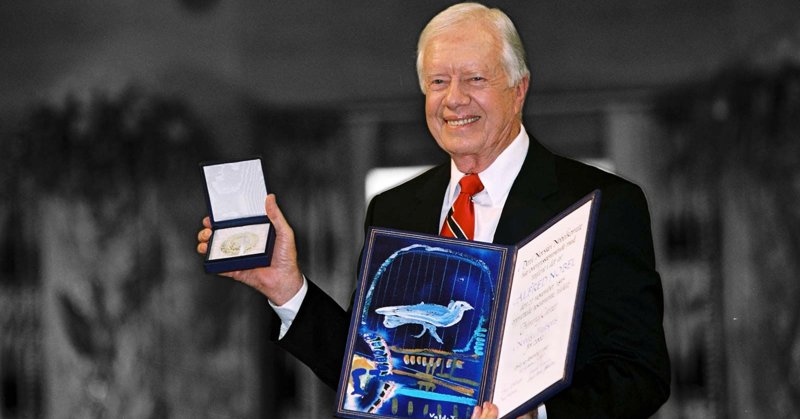
46. As a young nuclear officer in the US Navy, Jimmy Carter was sent to assist with a partial meltdown at a Canadian nuclear reactor. An exact replica of the reactor was built for training, and then he was lowered into the still highly radioactive reactor to dismantle it one piece at a time.
47. In World War 2, a Spaniard named Joan Pujol Garcia worked as a double agent, spying on Germany for the British. He was meant to recruit spies in Britain for the Germans. In time, the Germans were paying a network of 27 invented agents and decided they already had enough agents spying for them in Britain and did not want any more. He played a major part in the deception operation designed to mislead the Germans about the D-day invasions. He received the medal of service from both the Allies and the Axis.
48. When James Robinson’s Charlie battalion was attacked by a Vietcong battalion of 400 men, he moved across the battlefield killing snipers with a grenade launcher, rescuing wounded medics and soldiers while suffering multiple gunshot wounds, and handing out water and ammunition. When an enemy machine gun began firing on them, Robinson rushed the gunner with a grenade in each hand. He was hit in the leg by a tracer round, which set his pants on fire. He ripped off his pants and kept charging the gunner. He was shot twice more in the chest, making five bullet wounds total, but still managed to throw a grenade at the gunner’s nest. He received the Medal of Honor posthumously.
49. Sue Aikens, a grandmother, lives in complete isolation as the manager of a river camp north of the Arctic Circle in Alaska. She was once attacked by a bear and got away. Since bears were known carriers of bacteria, she cleaned the wounds, stitched her scalp, reset her dislocated legs, went back out, and shot it dead. Later, her hips failed and she could only drag herself forward. She lay there for 10 days until a pilot discovered her.
50. John Clem served as a drummer boy in the Union Army during the Civil War, and at age 11 he shot a Confederate colonel who had ordered him to surrender. After being promoted to sergeant, he became the youngest noncommissioned officer in Army history. He retired in 1915 as a general and the last veteran of the Civil War still on active duty.



Add Comment