

Deadlier Than Algeria
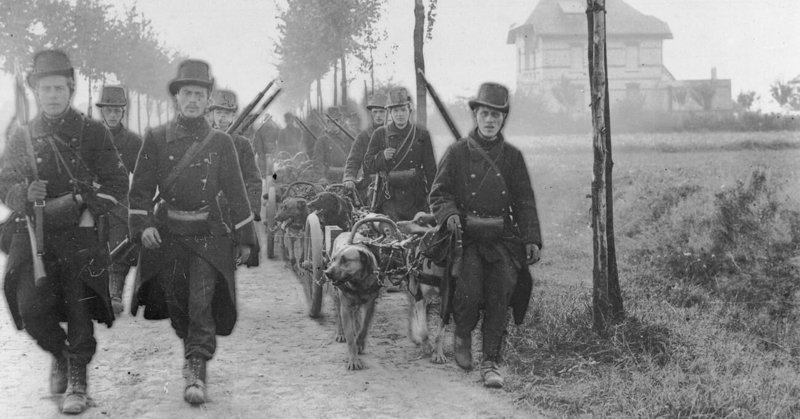
51. In the Battle of the Frontiers, the first major clash between French and German forces in World War I, more than 27,000 French soldiers were killed in one day, on August 22, 1914. That day saw more French soldiers die than in the entire eight-year Algerian War from 1954 to 1962.
52. Before aircraft had mounted guns, World War I pilots used pistols and carbines while fighting in the air.
53. German forces attacked the Russian defenders of Osowiec Fortress in World War I with poison gas. The Russians who survived then counterattacked, covered in blood, startling the Germans and driving them to flee. This event was later called “The attack of the dead men”.
54. The number of casualties in the Taiping Rebellion is nearly equal to the number of casualties in World War I.
55. During World War I, an English prisoner of war named Robert Campbell was allowed to visit his dying mother and then chose to go back to his German prison camp a week later.
56. Since metal was needed in large amounts during WWI, corsets started to disappear and bras grew popular.
57. During WWI, more than 600 German soldiers burned to death at Fort Douaumont after someone attempted to warm coffee with flamethrower fuel, which caused a fire that spread to the ammunition.
58. The first and last British soldiers killed in WWI are, by coincidence, buried just 15 feet apart. Over the 4 year span between their deaths, almost a million other British and Commonwealth troops died.
59. The name ‘Aspirin’ was first a trademark owned by the German pharmaceutical company ‘Bayer’, but after Germany’s defeat in WWI, the company had to give up the trademark as part of the 1919 Treaty of Versailles.
60. Karl von Müller, the captain of the German WWI ship the SMS Emden, gave passengers on enemy merchant ships enough time to collect their belongings and leave the ship before sinking it.
Soldier Who Endured Everything
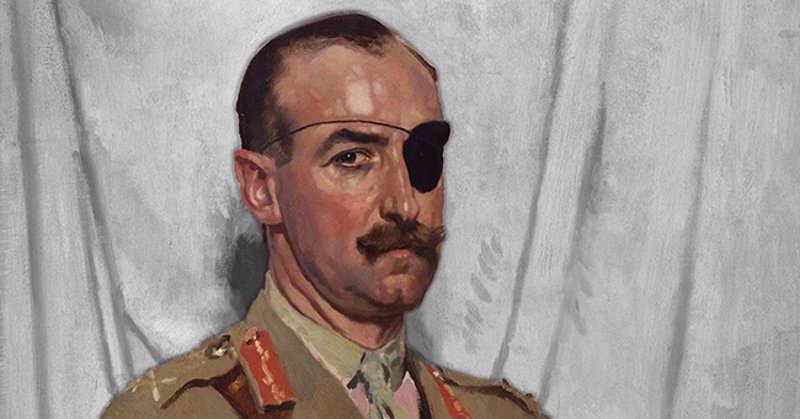
61. A British serviceman who fought in both world wars was shot in the face, head, stomach, ankle, leg, hip, and ear, survived two airplane crashes, dug his way out of a POW camp, bit off his own fingers when a doctor would not amputate them, and said about WWI, “Frankly, I had enjoyed the War.”
62. The prohibition on condoms in America under anti-contraception laws, which remained in effect until 1972, caused higher STD rates among American soldiers during WWI.
63. During WWI, the British intelligence agency MI6 used semen as invisible ink.
64. In WWI, a Hungarian soldier named Paul Kern was shot in the frontal lobe, leaving him unable to sleep. He lived for years afterward, and no one truly knows how.
65. The WWI German submarine U-28 was destroyed after being hit by an automobile that was thrown from a cargo ship it had just torpedoed.
66. More than 90,000 Chinese workers were employed by the British Army to dig trenches on the Western Front during World War I.
67. France lost 1.7 million people in World War I, which was more than the combined losses of the U.S. armed forces in every conflict since 1776, including the Civil War.
68. In World War I, Canadian soldiers used clothes soaked in urine as makeshift respirators to defend against chemical attacks. The ammonia in the urine reacted with chlorine to neutralize it, and the water dissolved the chlorine, letting the soldiers breathe through the gas.
69. During World War I, the word “f*ck” was used so frequently that it was considered remarkable when someone did not say it. For example, “Get your f*cking rifles,” was seen as ordinary, while “Get your rifles,” suggested urgency and danger.
70. Harry D. Andrews (1890-1981) was a young man when he was pronounced dead from spinal meningitis. He was brought back with experimental adrenaline, recovered, and served in France in World War I. He later learned that his fiancé had left him. After that, he went on to carry 56,000 pails of stone from a river to construct his own three-story castle.
White House Sheep Fundraiser
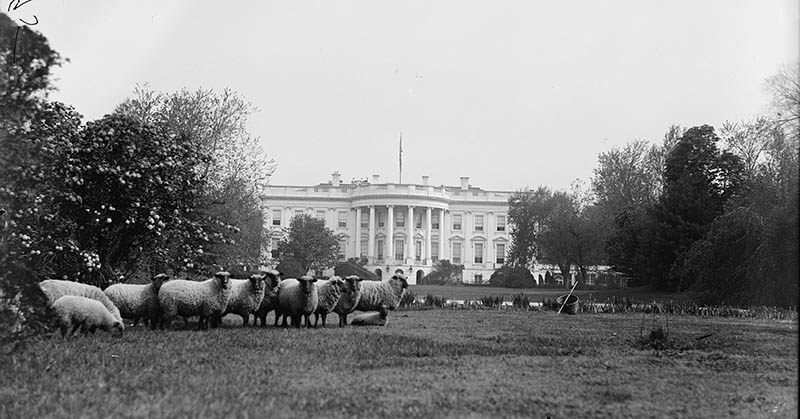
71. During World War I, Woodrow Wilson kept 48 sheep on the White House lawn to cut costs on groundskeepers. The sheep also brought in $52,823 for the Red Cross when their wool was auctioned.
72. After Minnie Schönberg, the Marx Brothers’ mother, learned that farmers were exempt from the draft, she purchased a farm and made the brothers work there so they would not be called up to fight in World War I.
73. Anti-aircraft fire was first used not in World War I, but in the American Civil War. Confederates employed artillery and small arms against the Union Balloon Corps. The earliest specialized anti-aircraft weapon was used by the Germans in the Franco-Prussian War.
74. Two years after the Titanic sank, the Empress of Ireland went down in the Gulf of St. Lawrence and lost 68.5% of all passengers, which was 0.5% more than the Titanic. The news was largely overlooked in the papers because of World War I.
75. Passports were not required until World War I.


Add Comment