

Darius Seeks Peace, Fails
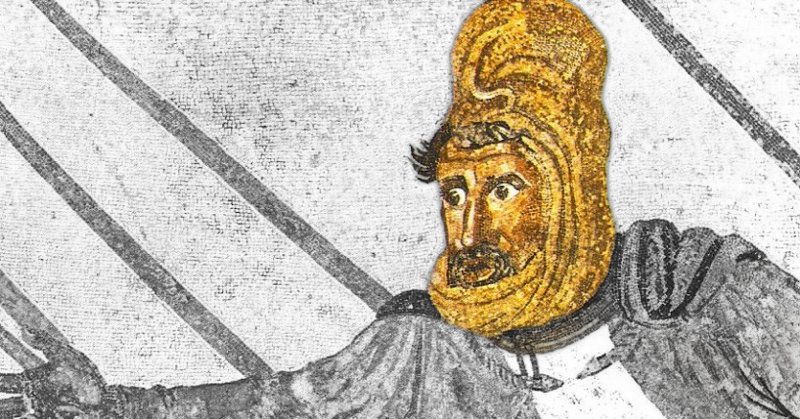
51. After suffering a second loss to Alexander the Great, King Darius III of Persia offered Alexander 30,000 talents, 780 tons of silver worth about £500,000,000 today, as part of an unconditional surrender. Alexander turned it down and went on to conquer Persia and govern territory as far as the Himalayas.
52. Pedro, the son of King Afonso IV of Portugal, was not allowed by the king to marry the woman he loved. King Afonso had her killed to separate them. After Pedro became king, he tracked down her murderers and ordered their hearts ripped out, a symbol of what they had done to him.
53. Constantine II, the final king of Greece, won Greece’s first Olympic gold medal since 1912 at the 1960 Summer Olympics. He also spent 40 years living in exile.
54. The first name of Thailand’s current king is Vajiralongkorn Barommachakkrayadisonsantatiwongse Deveshrathamrongsubariban Abhikhunuprakarnmahittaladuladej Bhumibholnaresvarangkura Kittisirisomburana Savangavadhana Barommakhattiyarajakumara.
55. George Washington had enough public backing to become king of America, but he surrendered that power to congress, and King George III called him the greatest man in the world for it.
56. King Louis XIV was offered biological weapons by an Italian chemist. He declined to purchase them and instead paid the chemist a yearly salary so he would never sell his weapon to anyone else.
57. When the current King of Thailand, Vajiralongkorn, sued his first wife for divorce, she could not defend herself in court because of a law banning criticism of the King.
58. A completely random man known as Stephen the Little persuaded much of Western Europe that he was Tsar Peter III of Russia, who was actually dead, and then as Montenegro’s leader brought about unprecedented peace there.
59. In 1904, a Swedish sailor was shipwrecked on an island in Papua New Guinea that was inhabited by cannibalistic tribesmen. He was taken to their king, whose daughter fell in love with him. He married the king’s daughter and, after the king’s death, became king of the island.
60. After being told he could not drink or smoke in front of the King of Saudia Arabia for religious reasons, Winston Churchill replied, “My religion prescribed an absolutely sacred rite smoking cigars and drinking alcohol before, after, and if need be during all meals and the intervals between them.”
Writing Made Widely Easy
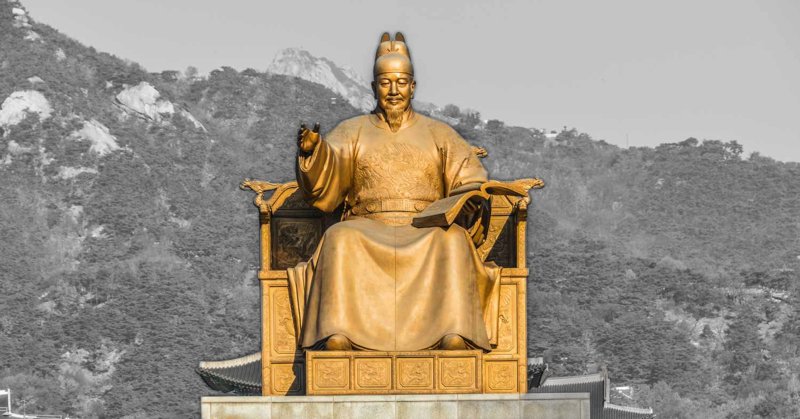
61. King Sejong introduced the Korean script called Hangul in the 1440s to raise literacy rates. Because Chinese characters were difficult and mainly favored the aristocracy, Sejong’s phonetic alphabet enabled Koreans from every social class to learn reading and writing.
62. In 1120, people aboard the White Ship urged its captain to attempt to outpace another ship carrying King Henry I. In the darkness, the vessel struck a submerged rock and overturned, causing the death of Henry’s only heir and triggering a 20-year civil war.
63. After a decisive battle, Byzantine Emperor Basil II gave the order to blind 15,000 Bulgarian prisoners, while sparing 150 with only partial blindness so they could lead the rest back to Tsar Samuil. When the Tsar saw this, he died from a stroke.
64. Alexander the Great had heterochromia iridum. One of his eyes was blue, and the other was brown.
65. In their private letters, the Russian Tsar Nicholas II and the German Kaiser William called themselves “Nicky” and “Willy,” respectively.
66. Alexander the Great was at the same time the King of Macedonia, Pharaoh of Egypt, King of Persia, and King of Asia.
67. In 1944, 18-year-old King Michael I of Romania’s decision to stage a coup against the Nazi ally and Prime Minister Ion Antonescu is believed to have brought World War 2 to an end up to 6 months earlier.
68. In 1669, King Louis XIV outlawed pointed, sharp knives in an effort to lessen violence, and that is why table knives are dull and rounded today.
69. Museum workers broke off King Tutankhamun’s beard and glued it back on. The error was not noticed until months afterward.
70. After King Kamehameha of Hawaii died in 1819, his body was removed and secretly buried according to Hawaiian tradition so his mana would be preserved. His body has still not been found, and its location is only guessed at.
King Among the Commuters
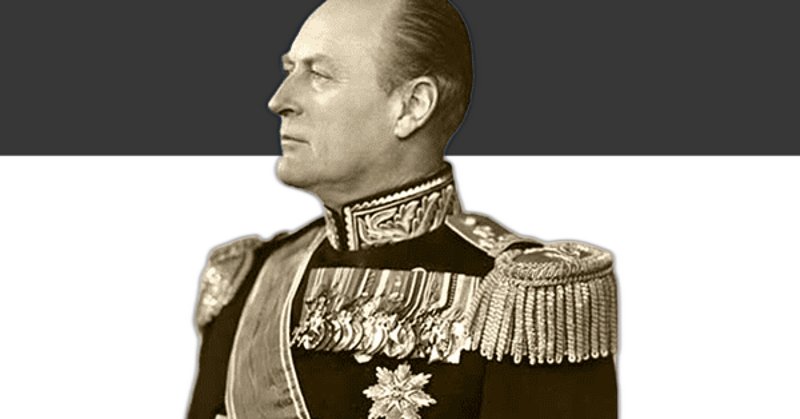
71. Norway’s late King Olav V traveled by public transportation. He was known as Folkekonge, meaning “The People’s King.”
72. Alexander the Great once arranged an Olympic Games event to honor a deceased religious leader in India. But because the Indians were not acquainted with Greek sports, he chose a wine-drinking competition instead. Forty-one entrants died, and the winner survived only four days after winning.
73. During World War 2, Queen Elizabeth, who was an experienced Army driver, once drove King Abdullah in her Land Rover. While she sped along narrow Scottish roads and kept talking, the King became so anxious that he begged her to slow down and pay attention to the road ahead.
74. In 1835, a man tried to kill the king of France with a homemade 25-barrel rifle. The shot killed 18 people and injured 22. The king was only slightly hit by a bullet.
75. French revolutionary soldier Jean Bernadotte had the words “Death to Kings!” tattooed on his chest. He later became King of Sweden and Norway.






Add Comment