

History is filled with people who ignored impossible odds and did things that still seem unbelievable today. From fearless soldiers and daring rescuers to explorers, inventors, and everyday heroes, these incredible true stories prove that real life often outshines fiction.
College Senior Gives Life
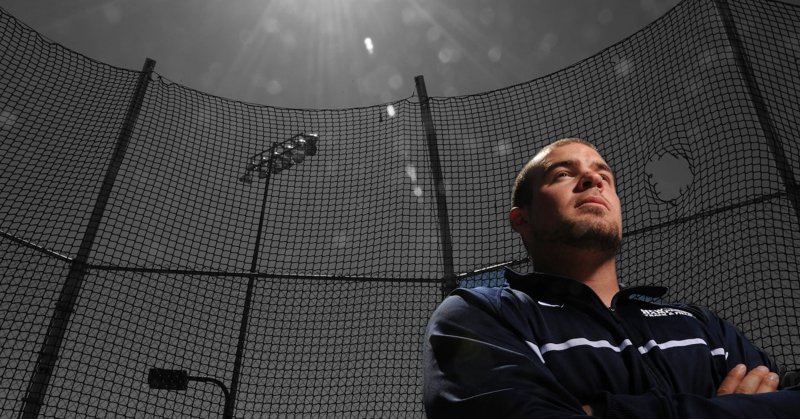
1. Cameron Lyle, a college senior track and field athlete, received the NCAA’s Award of Valor in 2013 after ending his college career one month early and giving up his chance at a gold medal so he could become a bone marrow donor for a 28-year-old father with acute lymphoblastic leukemia.
2. During the Korean War, U.S. Medal of Honor recipient Herbert K. Pililaau chose not to retreat when ordered. He fired his automatic weapon at the attackers, used all of his grenades, and, after his ammunition was gone, closed with the enemy in hand-to-hand combat, fighting bravely with his trench knife and bare fists until he was finally overpowered and mortally wounded. When the position was later regained, more than 10 enemy dead were counted in the area he had so heroically defended.
3. In 1976, Mitsuyasu Maeno, a Japanese ultranationalist porn actor, died after crashing a plane into the home of a yakuza boss to punish him for taking millions of dollars in bribes from Lockheed and violating the samurai code.
4. Three men broke into the home of Kenneth Byrd, a 67-year-old man. They planned to rape his granddaughter and steal the money in his safe. He said he would open the safe and remove the cash, but instead he drew his gun and shot all three of them. One of them shot him 8 times. One died, and the other two were wounded and captured. Byrd recovered.
5. General George S. Patton was instructed to go around the German city of Trier because a successful attack was thought to require 4 divisions, but he had already captured Trier by the time the order reached him. He replied, ‘Have taken Trier with 2 divisions, do you want me to give it back?’
6. Ana Lezama de Urinza and Dona Eustaquia de Sona, known as “The Valiant Ladies of Potosi”, were two 17th century aristocratic lesbian lovers who dressed as cowboys and fought to clean up Potosi in Peru, one of the toughest towns in all of South America.
7. In 2006, 22-year-old skydiver Robert Cook saved his student’s life by using his own body as a shield. Knowing the plane was in free fall, he soothed the girl by speaking to her, put his arms around her and held up her head, then twisted his body during the crash so he absorbed the impact. She lived, but everyone else on the plane died.
8. Franz Von Werra was a Nazi POW who was moved to Canada in an effort to stop his repeated escapes and recaptures. He escaped again in under a month from Canada, then made his way through the USA, Mexico, Brazil, Spain, and Italy to become the only Western-held POW to get back to combat.
9. Airey Neave was a British soldier in WW2 who was taken prisoner by the Germans, escaped from POW camps twice, and was sent to Oflag IV-C Castle for troublesome prisoners. He once tried to get away by painting his uniform to resemble a German one and walking out the front door, but he was captured again. Five months later, he put on a fake German uniform made from cardboard and cloth, pretended to be a German officer, and escaped the castle. He then reached Switzerland posing as a Dutch worker with documents and finally got back to Britain.
10. As a Navy teletype operator, Richard “Demo Dick” Marcinko had to punch an officer to get into elite Special Forces after his requests were refused. While he was serving as a Navy SEAL, Vietcong offered a reward of 50,000 piasters to have him killed. He once body-surfed behind a military patrol boat while under enemy fire. He also led Red Cell, whose task was to infiltrate U.S. bases around the world and test their security. He once succeeded in kidnapping a high-ranking officer, his family, and “mildly tortured” them to obtain nuclear codes. Out of embarrassment, the Government spent $60 million trying to find something to charge him with and convicted him on trumped-up charges, giving him a year in a minimum-security prison, during which he wrote Rogue Warrior, which embarrassed the military again. He is now legally barred from writing anything about the military, so he writes popular “fiction” about the adventures of an elite badass who is “totally not him.”
Orphans Through Wartime Escape
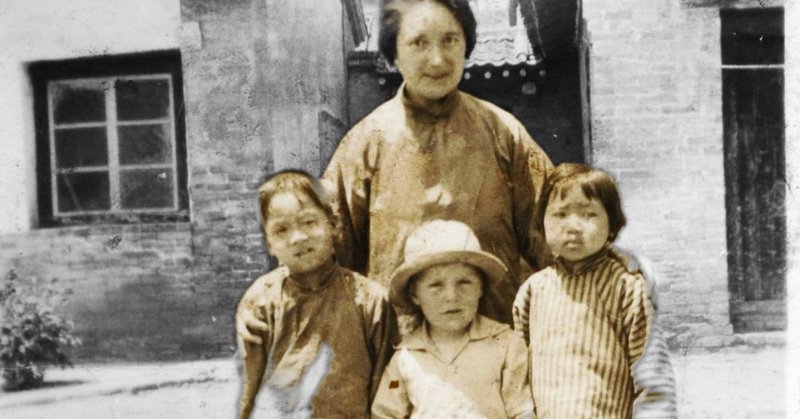
11. During the Second Sino-Japanese War, Gladys May Aylward, a British missionary in China, sheltered orphans and soldiers and gathered intelligence for the Chinese. After she was wounded in a strafing attack and struck with a gun, she got away and led 94 orphans to safety, traveling from Yangcheng to Sian, a journey of 240 miles across mountains and a river.
12. In 1960, a Russian terrorist carrying a bomb attempted to seize Trans Australia flight 408. Co-pilot Tom R. Bennett saved 49 lives by punching him in the face and tearing the bomb’s wires loose.
13. In the 2011 Tohono tsunami in Japan, Miki Endo gave up her life while warning people about the approaching wave on the Emergency Broadcast System and saved thousands of lives. She stayed at her post and continued broadcasting until the tsunami swept her away.
14. Theodore Roosevelt loved boxing and was the first American to earn a brown belt in judo. He covered the White House basement with practice mats and sparred with anyone willing, including boxing champion John Sullivan, his wife, and a Swiss minister.
15. Boudica, a Celtic queen, led a revolt against the Romans in 60 A.D., burning three cities and killing 80,000 Romans. She was seeking revenge after Rome annexed her kingdom when her husband died, publicly flogged her, and ordered her daughters raped. It took more than three legions for Rome to defeat her.
16. In 2002, Navy SEAL Stephen “Turbo” Toboz took part in Operation Anaconda in Afghanistan, where the mission was to rescue a captured teammate. The team was ambushed. Turbo was hit in the leg, breaking the bones and leaving a fist-sized hole in his calf. Despite severe pain, blood loss, and -20 degree weather, he crawled through 3 feet of snow while giving cover fire for his team. They escaped 18 hours later, and Turbo had lost 3 liters of blood. During recovery, frustrated by how slowly he was healing, he asked the doctor to amputate his leg and replace it with a bionic one. Nine months later, he returned to his team and resumed active missions.
17. Belgian flying ace Willy Coppens was recognized for his balloon-busting ability, with 34 kills to his name. In World War I, Germany used observers in hot air balloons to send radio reports about enemy activity. Each balloon was protected by anti-aircraft batteries and fighter squadrons. Some were also fitted with booby traps involving silk-covered kites. Coppens once landed on a balloon and took off again before destroying it. To kill him, the Germans devised a scheme to fill a balloon with explosives so that when he destroyed it, the blast and fireball would kill him. Even though he knew about the plan, he destroyed the balloon and got away, but the explosion and fireball killed a dozen German officers watching from below.
18. Gene Roddenberry, the creator of Star Trek, was once in a plane crash in the Syrian desert. With two broken ribs, he kept going back into the burning aircraft to get passengers out. After that, he organized search parties to find civilization.
19. When a California elderly care home went bankrupt, around 16 elderly residents were left behind. Although all the staff departed, a janitor and the cook, Maurice Rowland and Miguel Alvarez, remained to look after the residents using their own money.
20. Ten days after the Chernobyl 4 disaster, it was discovered that there was still a risk of a huge thermal explosion. Three men, later called the Chernobyl divers, volunteered to swim through radioactive pooled water beneath the leaked reactor to locate and open the safety valves. The water reached their knees, but the men lived long lives.
Braving Bombs Under Fire
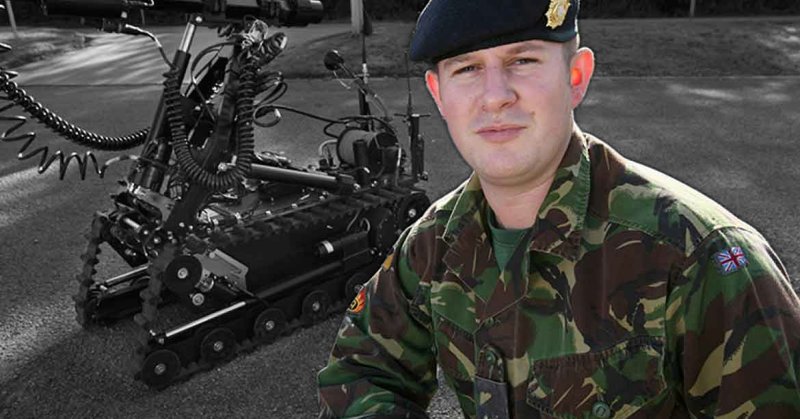
21. In 2009, a bomb disposal officer called Kim Hughes rescued a group of badly injured soldiers after they were trapped in a field filled with IEDs. With insurgent fire in the background, the sergeant skipped protective clothing to save time and neutralized 7 bombs in a row, opening a safe route for the wounded.
22. During World War 2, German field marshal Erwin Rommel often flew a reconnaissance plane himself over the battlefield to inspect the situation. Even though Rommel had no pilot’s license, his mechanical expertise made him an able pilot, and none of the Luftwaffe officers dared to stop him.
23. New Zealand Victoria Cross winner James Ward received the award for what he did during a raid over Germany in July 1941. After his aircraft caught fire, his copilot told him to try extinguishing it. Ward climbed out onto the wing, thousands of feet above the ground, cut holes in the plane’s fabric with a fire ax to create hand and foot holds, and put the flames out using a canvas cover. The bomber returned to the United Kingdom.
24. A murder attempt on Philadelphia mobster John Veasey failed because the two .22 caliber bullets fired into his head did not faze him, and he asked the man trying to kill him, “What the f**k are you doing, Frank?” He seized the gun and a knife from his attackers and was able to flee and survive.
25. During World War 1, Henry Johnson saved his friend from more than 20 German soldiers entirely on his own by using his rifle as a club until the stock splintered, then charging them with his only remaining weapon, a bolo knife. He was still battling when additional French and American troops arrived, which made the Germans retreat.



Add Comment