

Nature is often stranger than anything humans could invent. These WTF animal facts showcase bizarre behaviors, unbelievable survival strategies, and biological quirks so weird that they sound completely made up, yet every one of them is rooted in the real animal world.
Odd Flightless Parrot Behaviors
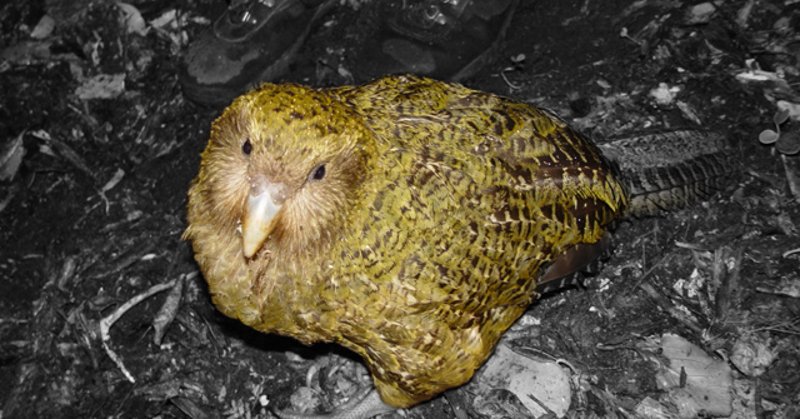
1. The kakapo is a large nocturnal ground-dwelling parrot. If attacked, the bird will either remain motionless or jump onto a high branch and throw itself, which is odd since it cannot fly. Only around 100 remain in the wild, yet it rigidly adheres to a spectacularly convoluted and almost entirely ineffective mating ritual. It wobbles through the valleys of New Zealand dangerously unafraid of its predators. Males have a mating call that can be heard four miles away, but females cannot tell where it is coming from.
2. Greenland sharks have the longest known lifespan of all vertebrates. Their average lifespan is 400 years. Sadly, they spend most of that long life swimming blind despite being born with fully functioning eyes. Most of these sharks are blind because parasites hang from their eyes. These pinkish-white parasites are called copepods, and they attach themselves to the Greenland sharks’ cornea, rendering them blind.
3. Wombat feces are cube-shaped. Wombats produce 80 to 100 cubes per day, and they carefully place them on rocks, logs, and in front of burrows to mark their territory. The unique shape prevents the droppings from rolling away.
4. Although commonly called ‘mosquito eaters’ and resembling giant mosquitos, adult crane flies are anatomically incapable of harming mosquitoes. In fact, their lifespans are so short (less than a week) that they typically do not eat anything at all.
5. Male mice tend to woo females by directing their urine toward the female. Their urine contains pheromones, and if a pregnant female rat is exposed to the scent of an unfamiliar male she will automatically abort her child if she has conceived one. This phenomenon is called ‘The Bruce effect’.
6. Honey bees may begin with as many as 21 virgin queens who fight to the death until only one remains. When male honeybees mate with the queen, their penises explode with a sound audible to the human ear and the males die. During the queen’s nuptial flight she mates with about a dozen partners and leaves a trail of dead, penisless bees behind her.
7. Berry bugs, commonly called chiggers, do not burrow into your skin. They drill holes and inject enzymatic saliva that liquefies your skin cells, which they then feed on.
8. During mating, hermaphroditic flatworms engage in penis fencing, violently battling to decide which of the two will act as the father. The winner stabs his penis into the loser to inseminate it.
9. Australian jewel beetles are threatened because they attempt to mate with beer bottles that look or feel like female beetles, and they subsequently die of sun exposure.
10. Female spotted hyenas have the largest clitoris of all mammals. It is shaped like and larger than the male hyena’s penis, and is referred to as the pseudo-penis. This makes it very difficult for males to have sex with a female who is not receptive. A drawback is that they give birth to live young that must pass through that long, not very stretchy pseudo-penis. It is not uncommon for the pseudo-penis to split during childbirth and for the mother to bleed out. Many hyena cubs die before they are actually birthed because they suffocate on their way out.
Clever Hiding in Sea Cucumbers
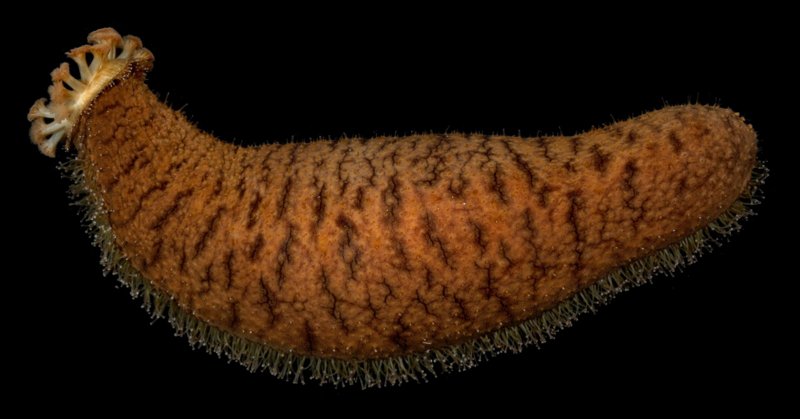
11. Sea cucumbers eject their internal organs through their anus as a defense. Because pearlfish lack their own defenses, they avoid predators by entering a sea cucumber’s anus. While inside, a pearlfish may feed on the cucumber’s gonads. Although the cucumber normally defends itself by expelling its organs, the pearlfish does not trigger this response, possibly because it is not worth the effort.
12. Ophiocordyceps unilateralis is a parasitic fungus that infects certain ant species and exerts mind control. It hijacks an ant’s central nervous system and forces the ant to climb vegetation and anchor itself. The fungus then grows a stalk from the ant’s head that releases spores to infect ants below. It can destroy entire ant colonies. In response, ants have evolved the ability to detect infected members, and healthy ants will carry a dying individual far from the colony to avoid exposure to the fungal spores.
13. Cicadas evolved to be large, tasty, and numerous. Predators eat cicadas until they are full, and the survivors are enough to reproduce. Broods emerge after 13 or 17 years because those prime intervals rarely align with other cycles, making it unlikely they will breed in sync with predators, so predators cannot easily adapt to the periodic abundance. Therefore the cicadas’ entire survival strategy is to get eaten.
14. A male sea louse essentially captures and drags a female into a cave, then impregnates her by piercing her. The resulting offspring then consume her from the inside and nearly devour her.
15. Peppered moths originally evolved to blend with tree bark. During the industrial revolution, soot covered trees and made the moths stand out, increasing bird predation. That created selection for dark pigmentation, making them darker. After pollution regulations reduced sooty coal emissions, they are now lighter again.
16. Sea otters have been observed drowning baby seals and sexually assaulting them. They also rape dead female otter corpses. Their mating ritual reportedly involves clawing the female and often forcing her head underwater until she submits. Sometimes the females drown and the male continues because he interprets her lack of resistance as submission. Necrophilic behavior among otters occurs frequently enough that it is beginning to affect their populations.
17. A giraffe starts its life by falling about 2 meters (6 ft) to the ground. Because they must get blood up their long necks, they have very large hearts. Consequently their blood pressure is extremely high, the highest of any animal at 280/180, and their resting heart rate is about 170 beats per minute. The Humr people of Sudan consume a hallucinogenic drink made from the liver and marrow of giraffes.
18. Immediately after sexual intercourse, a female praying mantis will rotate her head 180 degrees and eat the head of the male. Therefore the male praying mantis has an extra “brain” in its rear which controls the motions necessary for copulation, allowing him to continue mating after the female has eaten his head.
19. The tapir is a large, herbivorous mammal that looks similar to a pig. They are so well endowed that during mating they can step on their penises and trip as a result.
20. Koalas have a scent gland on their chest that they use to mark their territory by aggressively hugging trees. At the culmination of the violent tantrum which is koala coitus, the male leaves a seminal plug which blocks the female’s multiple vaginas from being entered by the hemipenis of another koala. Female koalas are also infamous for engaging in lesbian sex. Females often overlook males and participate in sexual acts with other females, sometimes in orgies with up to 5 female koalas. Also, koalas are riddled with chlamydia.
Bone-Eating Worms Host Males
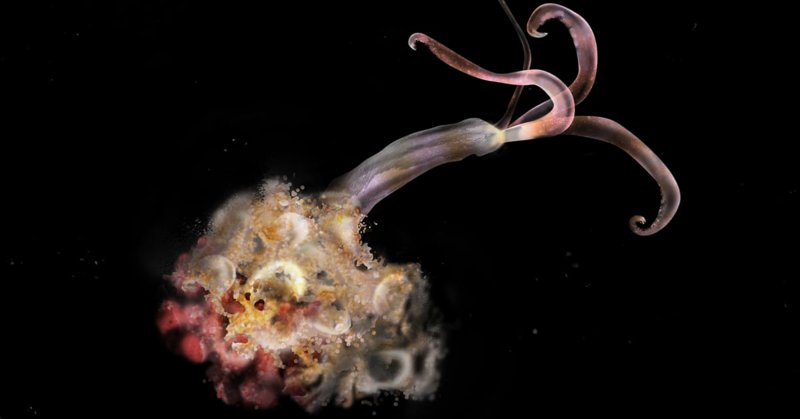
21. Osedax worms, also known as zombie worms, are deep-sea worms that consume the bones of whale falls, and the microscopic males live inside the females to avoid the effort of searching for a mate. One female zombie worm was found to have 111 males living inside her.
22. Deathwatch beetles start their life as a pupa emerging from an egg and eat wood for 10 to 15 years, at the end of which they emerge as an adult beetle. At this point, they are blind and have less than a week to find a mate and have sex. So the male starts banging his head against the wood and hopes for a female to answer his calls. If he is lucky and finds a female, there are chances that she may reject him.
23. Goats can be affected by a genetic condition called myotonia congenita which causes them to tense up and faint when startled. These goats are bred for food since less effort is required to keep them enclosed, they have greater muscle mass, less fat and a higher meat-to-bone ratio compared to other goats.
24. Slow loris tears are used in traditional Asian medicine. To obtain the tears of these big-eyed lorises, skewers are inserted into the animals’ anuses and run through their bodies until they exit the mouth. The still-living animals are then roasted over a fire and the tears that stream from their eyes are collected.
25. The net-casting spider, or ogre-faced spider, possesses some of the best low-light vision in the world because of a pair of hind eyes that have an aperture of F.58 and a very delicate light-sensitive retina. Their eyes have no irises and therefore sunlight destroys their sensitive retina every single morning only for it to be regrown in the evening.


Add Comment