

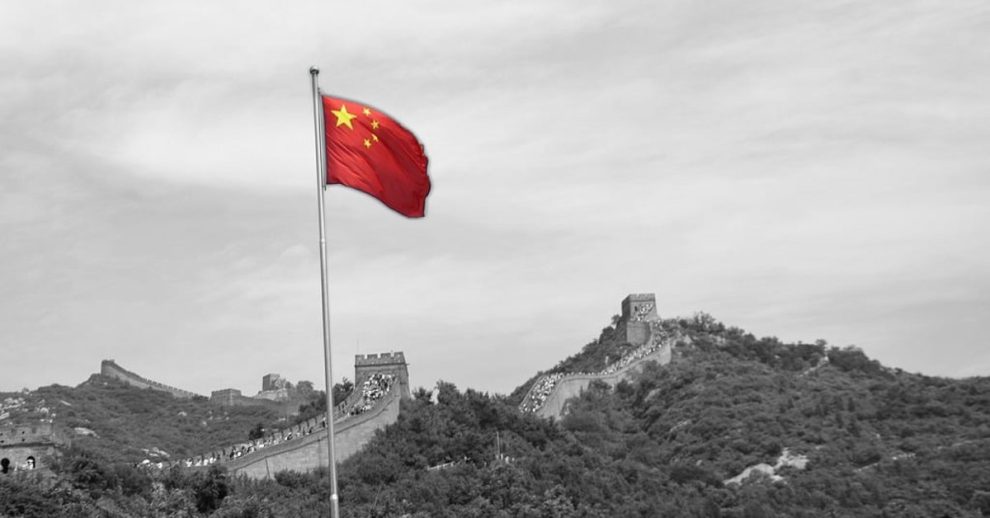
China’s history stretches back thousands of years, and along the way it has produced some of the most surprising stories in human civilization. 25 Unusual Facts About China and Its History explores strange traditions, remarkable discoveries, and little-known events that reveal a different side of the country. From emperors seeking immortality and ancient scientific inventions to modern urban oddities, these facts highlight just how complex and fascinating China’s past and present can be.
Bricks Vanishing From Wall
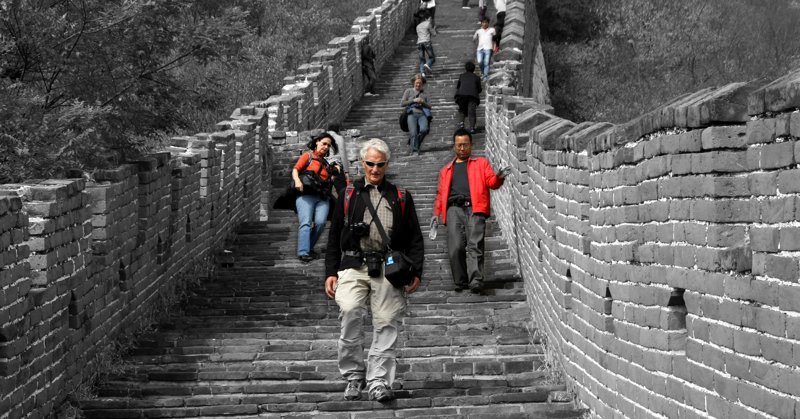
1. Locals are removing bricks from the Great Wall of China to construct houses, and visitors also take the bricks as souvenirs.
2. A tombstone dated to 1342 A.D. was discovered in eastern China for a woman named “Katarina Vilioni”, sister of Antonio and daughter of Domenico, which suggests a thriving Italian community in 14th century China.
3. Wearing green hats is taboo in China because it signals that the wearer is a cuckold.
4. The Last Emperor of China, Pu Yi, lived until 1967 and spent years as a communist prisoner tending a vegetable garden, known simply as “Prisoner No. 981”.
5. In Hong Kong and Japan, people who cannot afford housing take advantage of McDonalds’ “doors are always open” policy to live inside the restaurants; these people are known as McRefugees.
6. In Nanjing, China, several ancient tombs dating back 1,800 years were discovered and then destroyed when an IKEA was built on the site.
7. Hong Kong’s subway system, one of the world’s most efficient, maintains a 99.9% on-time rate and is entirely managed using artificial intelligence.
8. In China during the Ming Dynasty, powdered smallpox scabs were blown up the noses of healthy people. Those exposed then developed a mild form of the disease and subsequently became immune. The practice had a 0.5 to 2.0% mortality rate, which was lower than the disease’s 20 to 30% mortality rate.
9. Hong Xiuquan, who believed he was Jesus’s younger brother, led a rebellion in 1850 to create his ‘Heavenly Kingdom’ in China. The conflict resulted in 20 million deaths, exceeding the toll of World War I.
10. China uses mobile ‘execution vans’ that travel to carry out the death penalty. The government says this is both more cost-effective and more humane than traditional methods. China executed at least 1,634 people in 2015.
Chinese Preference For US Goods
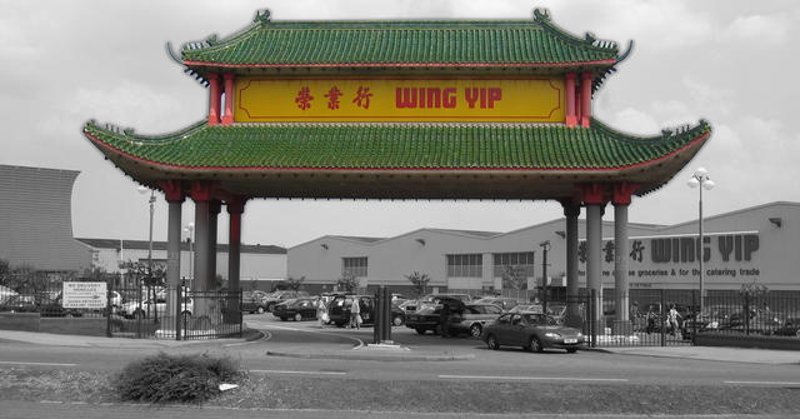
11. Over 60% of Chinese consumers say they are willing to pay more for products labeled “Made in the USA” than for those labeled “Made in China”.
12. Built in 132 A.D., it consisted of 8 metal dragons holding 8 carved balls over 8 frogs. If an earthquake made the ground vibrate, the dragon facing the quake’s source would drop a ball into the mouth of its corresponding frog.
13. In Zhengzhou city, China, a Korean eatery allows people to dine free of charge if they happen to be among the five most beautiful patrons of the day.
14. China’s top ranking in the international student assessment is controversial. Only the three richest Chinese school districts participate in the international student assessment.
15. In ancient China, tickling was a form of torture used on nobility because it left no mark and recovery was quick.
16. Yao Ming’s conservation efforts have reduced shark fin soup consumption in China by 50%.
17. In 2010, a six-year-old boy named Along who was HIV positive was forced to live alone in rural southwest China.
18. Emperor Qin of China sent his magician Xu Fu to seek the elixir of life; the magician sailed away with the ‘sacrifice’ of 6,000 boys and girls and large amounts of wheat and never returned, and some believe he settled in Japan and became that nation’s first emperor.
19. In China, a man named Hu Songwen built his own dialysis machine to keep himself alive.
20. In Shaanxi, China, a man recently discovered that the long-handled, blunt-ended implement he had used for 25 years to crack walnuts was actually a live hand grenade.
Carrier’s Long Towed Journey
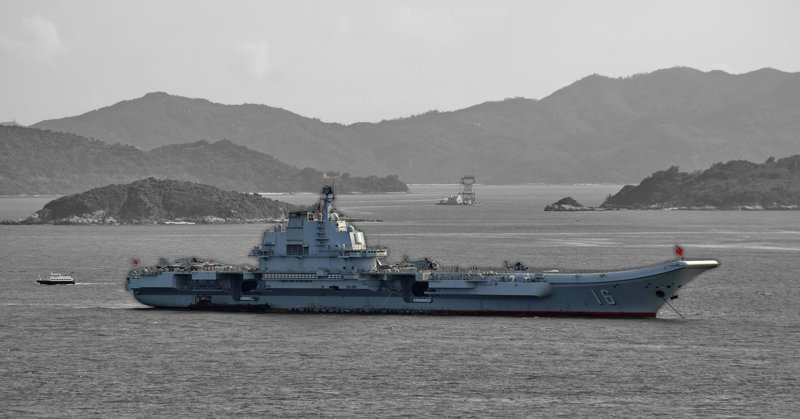
21. A Chinese businessman purchased a non-operational aircraft carrier from Ukraine, reportedly intending to convert it into a floating hotel and casino. Towing it to China took more than four years. Later the Chinese government bought and modernized the carrier, and it is now the only aircraft carrier owned by its navy.
22. China has prohibited time travel programs on television, saying that they “disrespect history”.
23. In the 1400s China possessed the greatest seagoing fleet in the world. But by 1525 all of China’s Treasure Fleet ships had been destroyed after political elites, alarmed by the rise of a newly rich merchant class, urged their destruction.
24. Subway beggars in China have established a system that determines which turf they are allowed to work. Novice beggars who encroach on spots reserved for the disabled or elderly receive a beating.
25. Some restaurants in China deliberately add opiates to their food to make customers addicted to the dishes so they will return for more.








Add Comment