

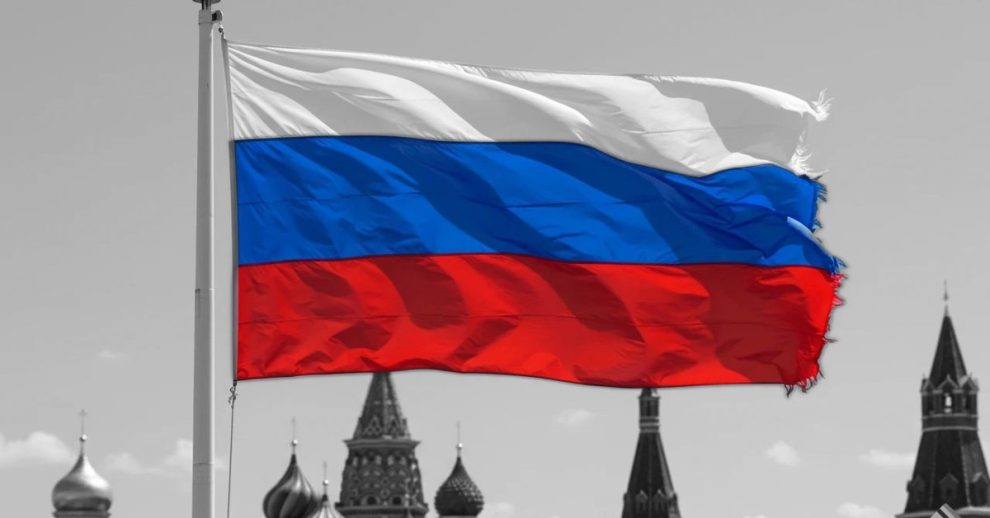
Russia’s history is filled with extremes, contradictions, and stories that often sound unreal until you discover they are true. From Cold War near-disasters and radical scientific experiments to remarkable survival stories and hidden environmental crises, these facts reveal a country shaped by ambition, hardship, and resilience. This collection brings together moments of brilliance, tragedy, curiosity, and innovation that show how Russia’s past and present continue to surprise the world.
Wild experiment

1. In the 1940s, Russian scientists carried out studies on animal organs and tissues and reportedly managed to revive a dog’s severed head. The dog’s head responded to light, smell, and sound and even attempted to bark.
2. In 2014, three-year-old Karina Chikitova survived for 11 days in the Siberian taiga by drinking from a creek and eating berries while her dog protected her; the dog left after nine days to fetch help and returned with rescuers.
3. Russia opened a “Military Disneyland” that will let guests fire military-grade weapons and test various military simulators.
4. Russia remained the sixth-largest holder of enslaved people, with an estimated 516,000 in 2013.
5. In Russia there is a mountain called Magnitogorsk that is composed almost entirely of iron and is estimated to contain between 7 and 10 billion pounds of iron ore.
6. In 1978, Anatoli Bugorski, a Russian scientist, was struck in the head by a proton beam inside a particle accelerator and lived to recount the incident.
7. In the 1700s, a Russian woman called Mrs. Vassilyeva delivered 16 pairs of twins, seven sets of triplets and four sets of quadruplets over a 40-year period with the same man, Feodor Vassilyev.
8. Seven months after Russia declared war on Germany in 1914, a small band of Georgian warriors from a remote part of Georgia, clad in medieval armor, rode into the capital of Tiflis and up to the governor’s palace to report for military duty, saying: ‘We hear there’s a war’ ‘Where’s the war’.
9. During the Cold War, Russia secretly produced maps of the Canadian Arctic so detailed that other ships still use them instead of official charts.
10. During the Cuban Missile Crisis, a Soviet submarine came under depth charge attack; the captain believed World War III had begun and prepared to launch a nuclear weapon, but his executive officer overruled him. The depth charges were training rounds used to signal the submarine to surface.
Russian Men

11. Eighty percent of men born in the Soviet Union in 1923 did not survive World War II.
12. An abandoned Russian cruise liner named Lyubov Orlova has been drifting in international waters since January 2013.
13. Russian scientists observed that cockroaches conceived in space differed from those bred on Earth: the space-conceived insects developed faster and became quicker and tougher.
14. Some medals from the 2014 Winter Olympics will contain fragments of the meteorite that struck Russia in 2013.
15. In 1967 the United States and Russia signed a treaty promising not to nuke the Moon.
16. Soviet authorities initially permitted cinemas to show Grapes of Wrath because it portrayed the suffering of the poor under capitalism, but later pulled it after audiences were astonished that even the poorest Americans owned cars.
17. A man in Russia bred foxes that now fetch about $9,000. Interestingly, the tameness gene was linked to other physical traits that made the foxes resemble domestic animals, such as curly tails, white facial markings, and drooping ears. The species was fully domesticated in roughly 35 years.
18. Although the Soviet Tsar Bomba is the largest nuclear device ever exploded, it was also the cleanest, because modifications eliminated 97% of its radioactive fallout.
19. In 1933 Soviet authorities dumped 6,200 people on a Siberian island, providing only flour, a few tools, and no shelter; about 4,000 of them were dead a month later.
20. The regime runs a network of restaurants across China, Southeast Asia, and Russia. Each outlet channels roughly $100k – $300k per year back to the DPRK.
Mir diamond mine
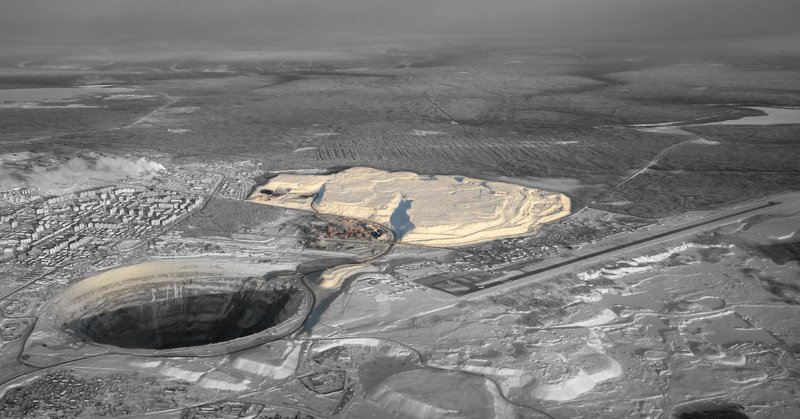
21. The Mir diamond mine in Siberia, Russia is so enormous that it produces air currents strong enough to pull a helicopter down into the pit.
22. California earns roughly the same amount of money each year as Italy, and Texas brings in about as much as Russia.
23. Russia developed an anti-ship cruise missile designed to be launched in groups of about eight. En route most missiles fly very low to evade radar, while one climbs higher to act as a spotter and guide, using its radar to search for ships and direct the others. If that guiding missile is shot down because it is easier to detect at altitude, another in the group will rise and assume the guide role, and this repeats if it is also destroyed. The guiding missile also evaluates multiple contacts, ranks them, and assigns targets to the rest; if a ship is sunk it reallocates assignments. They were created to take out carrier task forces and have been operational since 1985. Basically, the Russians have had suicidal, swarming, cooperating drones for thirty years.
24. In 1980 the Swedish Navy picked up underwater noises they suspected were hostile Russian submarines. That suspicion escalated into a diplomatic dispute between Sweden and Russia. A researcher later determined the sounds were caused by gas emissions from fish, and he won an Ig Nobel Prize, the American parody of the Nobel Prizes, for the discovery.
25. Norilsk is a city in Russia where pollution is so severe that digging up the topsoil has become economically viable because it contains large concentrations of heavy metals.








Add Comment